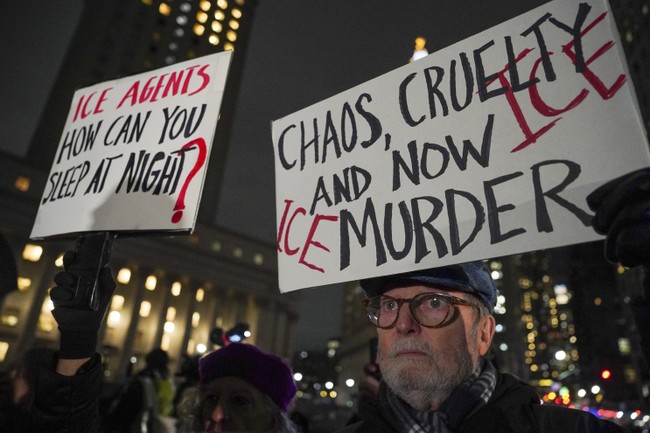
Protesters gathered in New York City on Wednesday to express their outrage following an incident involving an ICE agent who shot a female driver in Minneapolis. The demonstration, characterized by intense rhetoric, included chants calling for the execution of ICE agents and the hanging of Kristi Noem, the Secretary of Homeland Security.
The protest unfolded in the streets of Manhattan, where participants voiced their anger over the shooting, which the ICE agent reportedly defended as an act of self-defense. Footage from the event, shared widely on social media, captured demonstrators shouting slogans such as “Kristi Noem will hang” and “Save a life, kill an ICE.”
Some individuals attempted to counter the hostile chants. One woman expressed her disapproval, stating, “two wrongs don’t make a right.” Her voice, however, was quickly drowned out by the crowd. The protest included derogatory phrases aimed at public figures, notably a chant of “F*ck Charlie Kirk,” a conservative commentator.
Responses and Reactions
Critics of the protest highlighted the alarming nature of the calls for violence. Many commentators questioned whether New York City Mayor Zohran Mamdani would address the aggressive rhetoric displayed by the protesters. Concerns were raised about whether his administration would condemn such actions against federal law enforcement officials.
Some observers suggested that the unrest reflects a broader societal issue, citing the escalating tensions in various cities across the United States. They pointed to ongoing debates about the role of law enforcement and the implications of political rhetoric on public safety.
Meanwhile, supporters of the protests argue that they represent a necessary outcry against perceived injustices within the immigration system. They believe that highlighting such incidents is crucial for enacting change.
Broader Implications
The protests in New York City mirror similar demonstrations occurring nationwide, where calls for police reform and changes to immigration policies have sparked heated debates. Activists express frustration over the treatment of undocumented immigrants and the actions of federal agencies like ICE.
The rhetoric used during the NYC protest, however, raises concerns about the potential normalization of violent speech in political discourse. This has prompted discussions among both political leaders and community members about the boundaries of protest and the responsibilities of public figures in addressing inflammatory language.
As the situation evolves, the implications of these protests may resonate far beyond the streets of New York City, affecting the national conversation surrounding immigration policy and law enforcement practices.