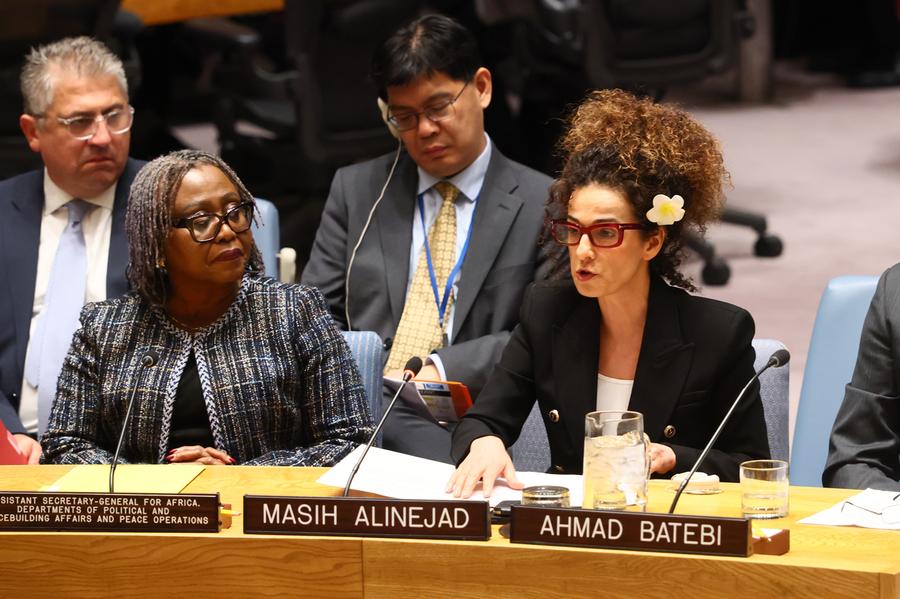
Masih Alinejad, an Iranian dissident, delivered a poignant critique of the United Nations (UN) during her address to the UN Security Council, highlighting the organization’s perceived moral failures regarding Iran’s ongoing human rights abuses. This marked a significant moment, as it was the first time the Security Council convened to discuss the unrest in Iran since demonstrations began several weeks ago.
Alinejad’s speech underscored the UN’s reluctance to confront the Iranian regime directly, particularly in light of its handling of the uprisings that have swept the nation. António Guterres, the UN Secretary-General, has faced criticism for not publicly condemning the regime’s actions, which some observers argue amount to a form of complicity in the face of systemic violence against protestors.
Alinejad’s Call for Action
During her emotional address, Alinejad, who has survived multiple assassination attempts orchestrated by the Iranian government, challenged Guterres’ leadership. She implored him, “Why are you afraid of the Islamic Republic?” Her powerful testimony included personal accounts of her family’s suffering, underscoring the urgency of the situation in Iran. “My sister was paraded on state TV to publicly disown me. My brother was imprisoned as punishment,” she stated, shedding light on the regime’s brutal tactics against dissenters.
The Iranian representative at the meeting, Afsaneh Nadipour, drew attention as Alinejad spoke, with reports indicating visible distress. Observers noted that his legs were shaking under the table, suggesting an awareness of the regime’s precarious position amid growing international scrutiny.
The UN’s historical relationship with Iran has raised questions about its commitment to human rights. Critics point to past instances where the UN has been accused of bias, particularly in its treatment of Israel and its failure to hold Iran accountable for its actions. For instance, prior to the recent unrest, the UN Human Rights Council had condemned Israel more than twice as often as any other nation, a pattern that has fueled allegations of partisanship.
The Broader Implications
As Alinejad’s remarks resonated worldwide, they also highlighted a deeper issue: the UN’s ability to act decisively in the face of humanitarian crises. The organization has been criticized for its muted response to the violence in Iran, raising concerns about its effectiveness as a global peacekeeping body. The juxtaposition of the UN’s actions—or lack thereof—against oppressive regimes versus its stances on democratic nations has become increasingly difficult to ignore.
While Alinejad’s address brought significant attention to the plight of Iranian citizens, it also exposed the broader hypocrisy present among various political figures and public figures who have remained silent on the issue. Many have chosen to downplay the Iranian uprisings or have been conspicuously absent from discussions surrounding them.
The international community faces a critical moment: whether to prioritize genuine human rights advocacy or to allow political biases to dictate responses to global crises. Alinejad’s testimony serves as a reminder that the fight for freedom and justice persists, even when drowned out by political maneuvering.
As the world watches the developments in Iran unfold, the question remains whether the UN will recognize its moral responsibilities and act decisively to support those demanding change. The implications of its inaction could reverberate far beyond the borders of Iran, impacting global perceptions of justice and accountability.