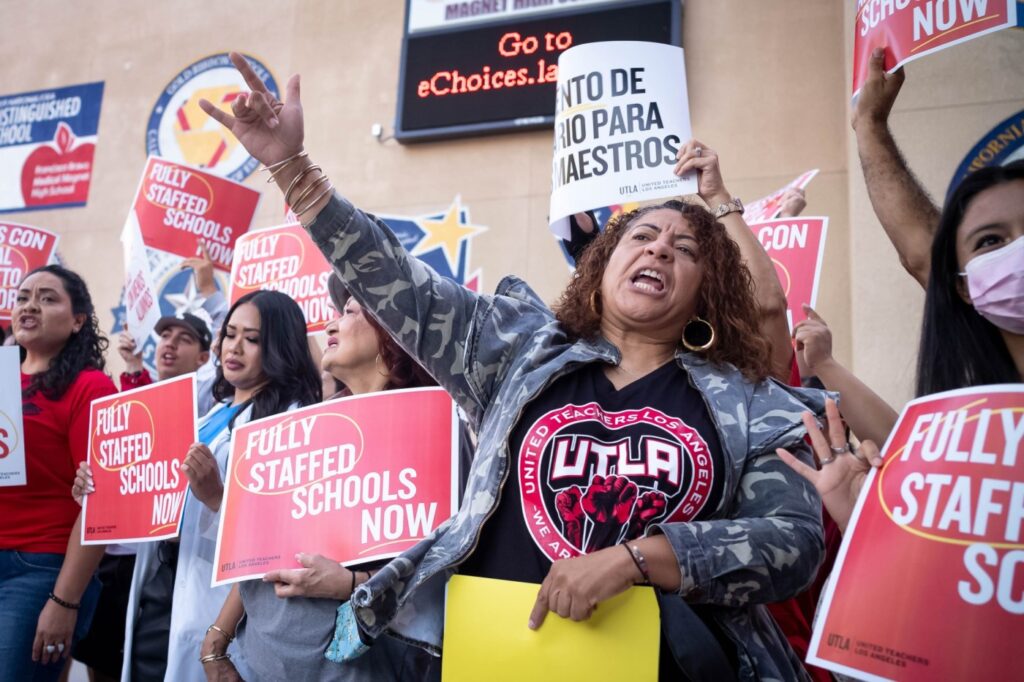
The United Teachers Los Angeles (UTLA) has taken a significant step toward a potential strike, as 94% of its members voted in favor of authorizing a strike on January 31, 2024. This overwhelming support follows months of stalled negotiations with the Los Angeles Unified School District (LAUSD) over various contract demands, including salary increases, smaller class sizes, and enhanced support for immigrant students.
Among the key issues raised by UTLA are the need for more counselors, funding for classroom supplies, and the use of vacant LAUSD-owned land for affordable housing. While the union emphasizes these demands as essential for improving educational environments, it is important to consider the context surrounding teacher compensation.
Currently, new teachers in Los Angeles earn approximately $68,896 annually, with salaries exceeding $100,000 after a decade of service. Additionally, a report from Transparent California indicates that the average teacher in the district received total pay of $102,000 along with benefits amounting to $35,652 in 2024. Critics argue that these figures do not reflect the full extent of compensation due to generous health care and pension benefits, which can significantly raise the total remuneration package for educators.
As educational outcomes continue to falter, questions arise regarding the effectiveness of this funding. The latest results from the National Assessment of Educational Progress (NAEP) reveal troubling statistics: only 22% of eighth graders in Los Angeles scored at or above proficient in reading, while just 18% achieved that level in math. Furthermore, enrollment in the district has plummeted to 391,588 for the 2024-2025 school year, marking a decline of over 40% since 2002.
Beyond these financial discussions, UTLA is focusing on broader social issues. In a direct response to political shifts, particularly those initiated by former President Donald Trump’s administration, the union is advocating for targeted investments in recruiting and retaining Black, Indigenous, and people of color (BIPOC) educators. They are also calling for policies to support LGBTQIA+ students and staff, emphasizing the need for inclusivity within educational frameworks.
UTLA’s political stance has not been without controversy. In October 2024, the union passed a resolution urging the United States to cease military support to Israel, a move that has strained relations with certain Jewish organizations and members within the teaching community. Subsequently, in December 2025, UTLA reaffirmed its position by declaring it would not endorse candidates who voted to send weapons to Israel, citing concerns over human rights violations.
The union’s political agenda extends to its leadership’s rhetoric. UTLA President Cecily Myart-Cruz has made headlines for her comments regarding learning loss during the COVID-19 pandemic, asserting that students did not experience a decline in learning. Instead, she claimed they developed resilience and critical thinking. This perspective has drawn criticism, particularly given the documented academic challenges faced by students during lockdowns.
As negotiations between UTLA and LAUSD continue, the potential for a strike looms large. The union’s demands, coupled with its broader social initiatives, reflect a complex interplay of educational priorities and political advocacy. Whether these efforts will lead to improved conditions for teachers and students remains to be seen, but the stakes are undoubtedly high for educators and families in Los Angeles.