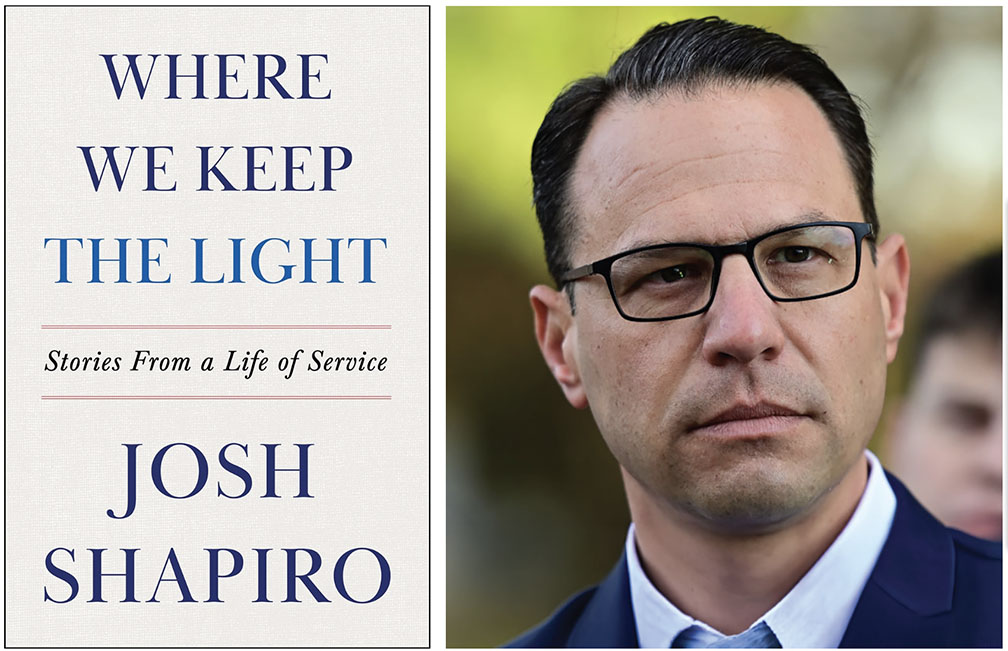
In his new book, “Where We Keep the Light,” Pennsylvania Governor Josh Shapiro shares personal insights and political reflections, including a harrowing incident involving the firebombing of his family home shortly after the first Seder of Passover. This experience prompted his son Max to question if the attack was motivated by their Jewish identity. Shapiro’s storytelling blends humor and seriousness, making for a compelling read that captures his journey as a politician navigating complex challenges.
The book delves into Shapiro’s aspirations for higher office, highlighting the hurdles he faces. To secure a potential run for the U.S. presidency, he must first win reelection as governor in November, where he is anticipated to confront a formidable opponent in California Governor Gavin Newsom. Speculation surrounds why Vice President Kamala Harris did not choose Shapiro as her running mate in the past, especially given the strategic importance of Pennsylvania. Some analysts suggest that his Jewish heritage and outspoken support for Israel could have influenced her decision, particularly amid the ongoing tensions in Gaza.
Shapiro recounts a significant moment during his discussions with Harris and her team. He details a conversation with White House counsel Dana Remus, who inquired about his connections to the Israeli government, raising eyebrows about the implications of such questions. Shapiro reflects on Harris’s assessment of his candidacy and her concerns about winning Pennsylvania without him, which he found uncertain. While he declined to apologize for his statements regarding protests, he emphasized his commitment to free speech.
The narrative of “Where We Keep the Light” begins with the firebombing incident, which, while fortunately not harming his family, serves as a stark reminder of the threats faced by public figures. The perpetrator, Cody Balmer, pleaded guilty to the attack and mentioned Palestine during his actions, although it was not classified as a hate crime. Shapiro expresses gratitude that his family was unharmed, highlighting the potential tragedy if circumstances had been different.
Shapiro’s personal life is also a focal point in the book. He recounts his long-standing relationship with his wife, Lori, whom he met in a Jewish day school. Their shared commitment to their faith is evident in their decision to send their four children—Sophia, Jonah, Max, and Rueben—to the same school they attended. In light of recent events, Shapiro articulates a deep sense of responsibility and pride in openly expressing their Jewish identity, stating, “since the tragic events of October 7, we feel both a responsibility and pride demonstrating our faith.”
As Shapiro reflects on his political career, he boasts an impressive record of 12-1 in electoral contests, with his only loss occurring in a school election. His academic journey took him from the University of Rochester to Georgetown Law School, showcasing his dedication to education and public service. He recalls receiving an endorsement from President Barack Obama during his campaign for attorney general, which further solidified his prominence in Pennsylvania’s political landscape.
The book also touches on the complexities of Shapiro’s relationship with former President Donald Trump. He recounts a thoughtful phone call from Trump following the firebombing, in which the former president warned him about the dangers of high office. Shapiro has been critical of Trump, having sued him multiple times and emerged victorious, yet he continues to engage with constituents in areas where Trump has significant support. His strategy is clear: he aims to connect with voters across the political spectrum, emphasizing that he will advocate for all Pennsylvanians, regardless of their political affiliations.
In the backdrop of Shapiro’s narrative is the tragic shooting at the Tree of Life synagogue in Pittsburgh, which stands as one of the most devastating antisemitic attacks in America. Shapiro recounts his experiences of mourning with the community, reflecting on the responsibilities of being a public figure during times of heightened antisemitism. He candidly shares his internal struggles regarding his visibility as a Jewish leader in a challenging climate, acknowledging the delicate balance of faith and public duty.
As Shapiro prepares for the upcoming election, the landscape is shifting. Although he faces a strong contender in Gavin Newsom, political analysts caution that the dynamics of the race could change rapidly. Public relations expert Hank Sheinkopf suggests that while Newsom may present a formidable challenge, Shapiro’s eloquence and political acumen cannot be underestimated. He notes, “I wouldn’t bet on Shapiro winning, but he is a talented speaker and a gifted politician.”
In the concluding lines of his book, Shapiro emphasizes the importance of hope in difficult times, stating, “When the dark feels like it could consume us whole and churn us up and lose us, it is where we keep the light.” This sentiment encapsulates the central theme of his political philosophy—a vision of unity and resilience amidst adversity. As Shapiro navigates the complexities of his political ambitions, his reflections offer readers a glimpse into the challenges of leadership in today’s polarized environment.