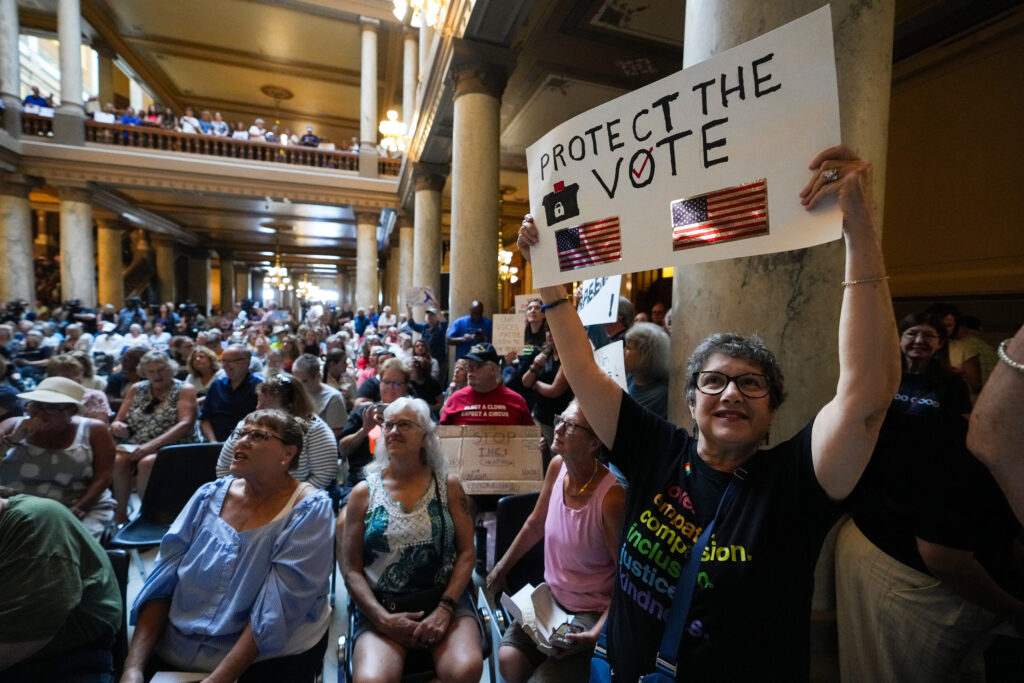
FILE - Annette Groos holds a sign before the start of a rally at the Statehouse in Indianapolis, Sept. 18, 2025. (AP Photo/Michael Conroy, file)
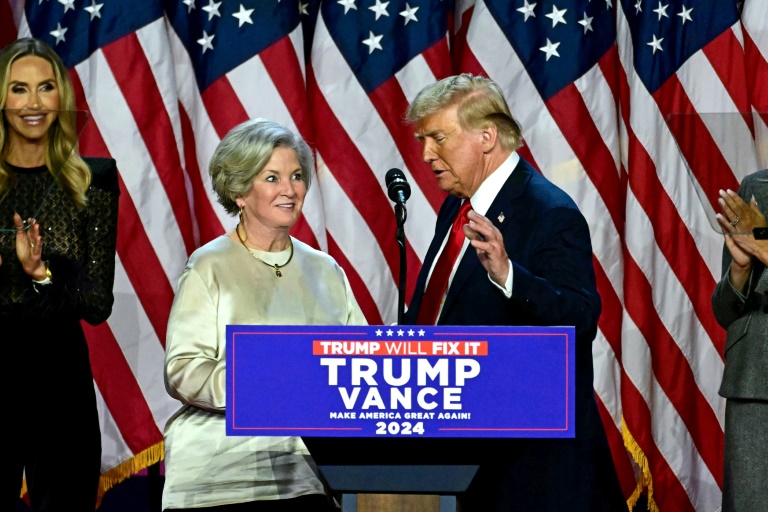
The Indiana Republican Party has taken a bold step by rebuking former President Donald Trump, a move that may lead to a temporary pause in the contentious redistricting process. This decision emerges as party leaders navigate their strategy ahead of the 2024 elections, amidst ongoing internal divisions regarding the direction of the party.
Following a meeting on March 15, 2024, party officials expressed their concerns about Trump’s influence on local candidates. The Indiana GOP’s resolution criticizes Trump’s rhetoric, suggesting it has alienated some voters. This development signals a potential shift in the party’s focus, as it seeks to unify its ranks before the upcoming elections.
The redistricting process, which involves drawing new district lines for the U.S. House and state legislature, is often fraught with political tension. In Indiana, the GOP has traditionally held significant power, but the party’s internal strife could impact their redistricting strategy.
Party chair Kyle Hupfer emphasized the need for unity, stating that “we must prioritize the interests of all Hoosiers over any individual’s agenda.” His comments underline the party’s intent to shift away from divisive politics and focus on broader electoral success.
While this rebuke of Trump may lead to a short-term detente in redistricting, it does not signify an end to the ongoing disputes within the party. The Indiana GOP remains concerned about the repercussions of Trump’s national influence and how it may affect local elections.
Analysts suggest that this internal conflict could shape the party’s approach to redistricting. If the GOP cannot reconcile its differences, it risks losing critical seats in the U.S. House. The stakes are high, as the party aims to maintain its majority in the state legislature and the House of Representatives.
As the Indiana GOP prepares for the upcoming election cycle, party leaders will need to navigate these internal challenges carefully. The balance between loyalty to Trump and the broader interests of the party will be crucial in determining their success in both redistricting and the elections ahead.
In conclusion, while the Indiana GOP’s recent actions may indicate a temporary pause in the redistricting wars, the internal dynamics of the party suggest that the conflict is far from over. The outcome of this struggle will likely have significant implications for the 2024 elections and the future of Republican politics in Indiana.