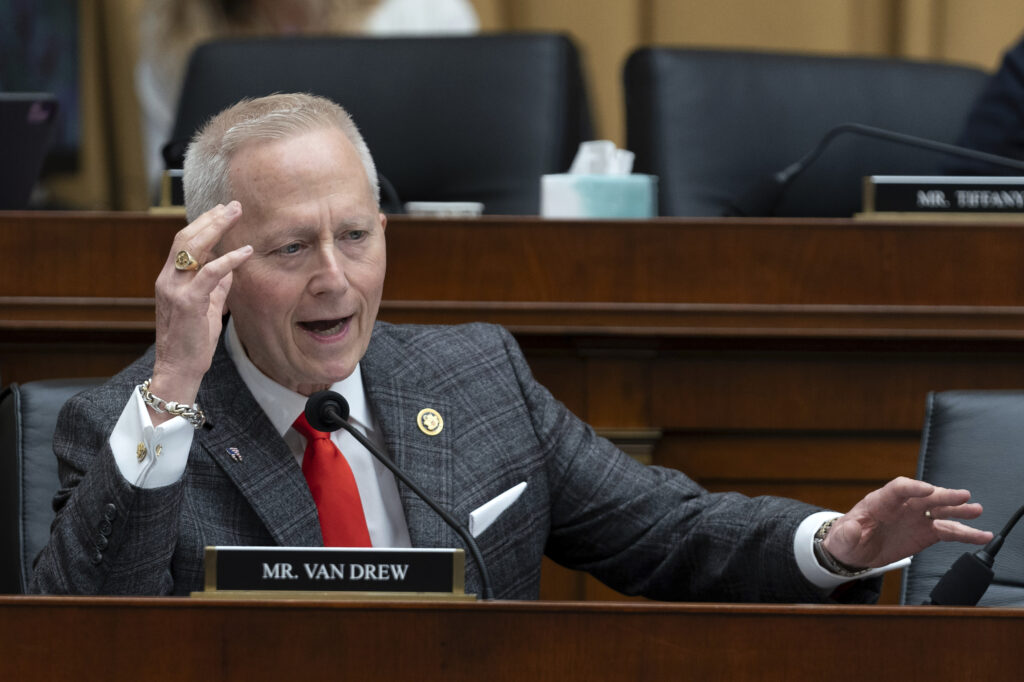
Rep. Jeff Van Drew, R-N.J., speaks during the House Judiciary Committee markup hearing to hold Attorney General Merrick Garland in contempt of Congress, Thursday, May 16, 2024, on Capitol Hill in Washington. (AP Photo/Jose Luis Magana)
A faction of House Republicans is expressing strong opposition to proposed legislation concerning offshore wind projects. The leadership aimed to bring this bill to a vote next week, but dissenting members are pushing back, seeking to reshape key provisions and influence the future of energy policy in the United States.
The proposed legislation would streamline the permitting process for offshore wind projects, which has been a significant focus of the Biden administration. Proponents argue that reducing bureaucratic hurdles is essential for meeting the nation’s renewable energy goals. However, a group of Republicans, particularly those aligned with former President Donald Trump, are concerned about the implications of the bill for local economies and energy independence.
September 2023 marks a critical time in Congress, as lawmakers attempt to navigate the complexities of energy policy amidst a divided political landscape. The disagreement highlights the broader tensions within the Republican Party, particularly between traditional conservatives and those who prioritize energy independence over environmental initiatives. Members of this dissenting faction argue that the bill could lead to increased reliance on foreign energy sources, contradicting the party’s long-standing stance on energy sovereignty.
In a joint statement, several House Republicans emphasized their commitment to ensuring that any legislation reflects the interests of their constituents. They call for amendments that would provide more local control over offshore wind projects and ensure that communities receive economic benefits from such initiatives. This push comes as many coastal regions have begun to explore the potential of offshore wind as a clean energy source, leading to a heated debate over the best path forward.
The leadership’s plan to bring the bill to the floor has faced delays, and it remains uncertain whether they can secure enough votes to pass the measure. The outcome of this legislation could have significant implications for the future of renewable energy in the United States, particularly as the nation seeks to transition to cleaner sources of power.
As discussions continue, the stakes are high for both the Republican Party and the broader energy sector. The outcome will not only affect energy policy but also reflect the party’s unity as it approaches upcoming elections. Lawmakers are keenly aware that their positions on energy will resonate with voters who are increasingly concerned about climate change and energy costs.
In summary, the internal conflict among House Republicans over the offshore wind legislation underscores the complexities of energy policy in the United States today. As the leadership attempts to navigate these challenges, the coming days will be pivotal for determining the future direction of energy initiatives under the current administration.