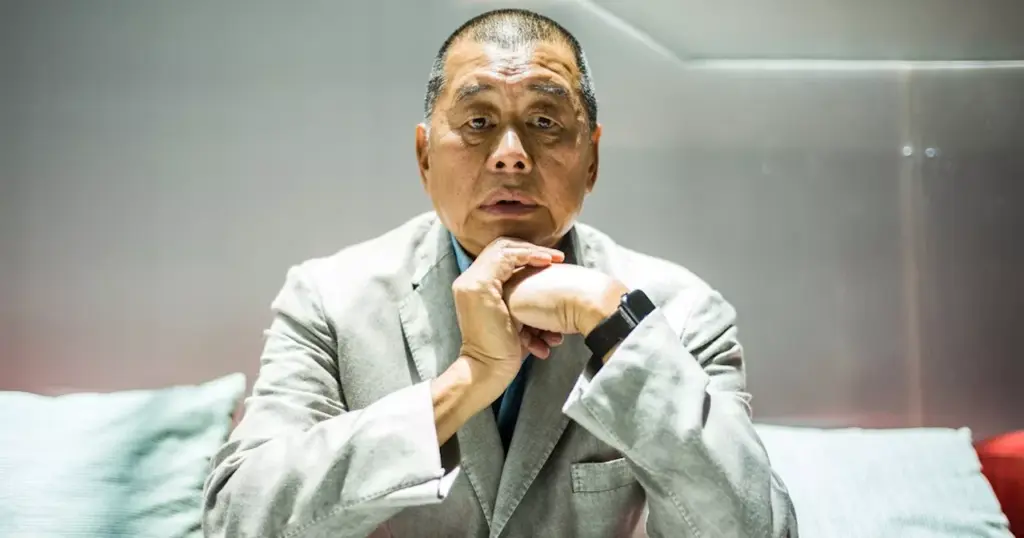
A Hong Kong court is poised to announce its verdict in the high-profile national security trial of Jimmy Lai, a prominent pro-democracy activist and media mogul. The ruling is anticipated at 10:00 a.m. local time, a decision that has attracted significant international attention and scrutiny. Lai’s case has become emblematic of the ongoing crackdown on dissent in Hong Kong following the implementation of Beijing’s national security law in June 2020.
Lai, who was arrested shortly after the law was enacted, faces serious charges that could lead to a life sentence if convicted. He has pleaded not guilty to two counts of colluding with foreign forces and one count of conspiracy to publish seditious materials, a charge rooted in legislation from Hong Kong’s colonial past. His trial, which commenced in December 2023, has been overseen by three judges specifically selected for national security cases, raising concerns about judicial independence.
The trial has drawn condemnation from various Western governments and human rights organizations, who argue that it is politically motivated. Both the United States and the United Kingdom have called for Lai’s release, with former U.S. President Donald Trump pledging to “free” him. This commitment prompted a warning from John Lee, Hong Kong’s Chief Executive, against foreign interference in local matters. Recently, a White House official confirmed that Trump discussed Lai’s situation with Chinese President Xi Jinping during their meeting in South Korea in October.
Implications for Press Freedom
Lai’s trial is viewed as a critical test of press freedom and judicial independence in Hong Kong, which was promised autonomy and civil liberties for 50 years upon its return to Chinese sovereignty in 1997. The Hong Kong and Chinese governments maintain that Lai has received a fair trial and characterize international criticism as an undermining of the city’s legal system. A spokesperson for the Chinese Foreign Ministry reiterated support for Hong Kong authorities in their efforts to “bring criminals who endanger national security to justice.”
Since his arrest, Lai has endured nearly five years in solitary confinement. His health has become a growing concern for family and supporters, as he grapples with diabetes, high blood pressure, and heart palpitations. The Hong Kong government asserts that Lai has received “adequate and comprehensive” medical care while in custody, including separation from other prisoners at his request for safety reasons.
Prosecutors have labeled Lai as the “mastermind” behind an alleged conspiracy to solicit foreign sanctions against China and Hong Kong. They cite meetings he held with U.S. officials, including then-Vice President Mike Pence, during the 2019 protests that shook Hong Kong. Additionally, Lai is accused of using his media outlet, Apple Daily, to publish articles deemed seditious, which prosecutors argue incited hatred against the local and national governments.
Throughout the trial, Lai maintained that he never aimed to influence foreign policy or “pollute” his readers’ minds but only sought to provide factual commentary.
Broader Context of Human Rights in Hong Kong
The verdict in Lai’s case comes at a time when open dissent has been significantly suppressed in Hong Kong under the national security law. Many pro-democracy activists have either been imprisoned, exiled, or have chosen to leave politics altogether. This erosion of civil liberties has raised alarms among international observers regarding the future of free expression in the region.
The trial’s culmination follows the recent disbanding of Hong Kong’s last major opposition party, the Democratic Party, which cited pressures from Chinese officials during its dissolution vote. This event highlights the decreasing space for political opposition in the city. Furthermore, the recent “patriots only” legislative elections, held under tightened rules that include national security vetting for candidates, have been criticized for effectively sidelining meaningful opposition. The voter turnout was notably low at 31.9%, reflecting widespread disillusionment with the political process.
As the world awaits the ruling on Jimmy Lai, the case serves as a poignant reminder of the shrinking avenues for dissent and the ongoing struggle for democratic expression in Hong Kong.