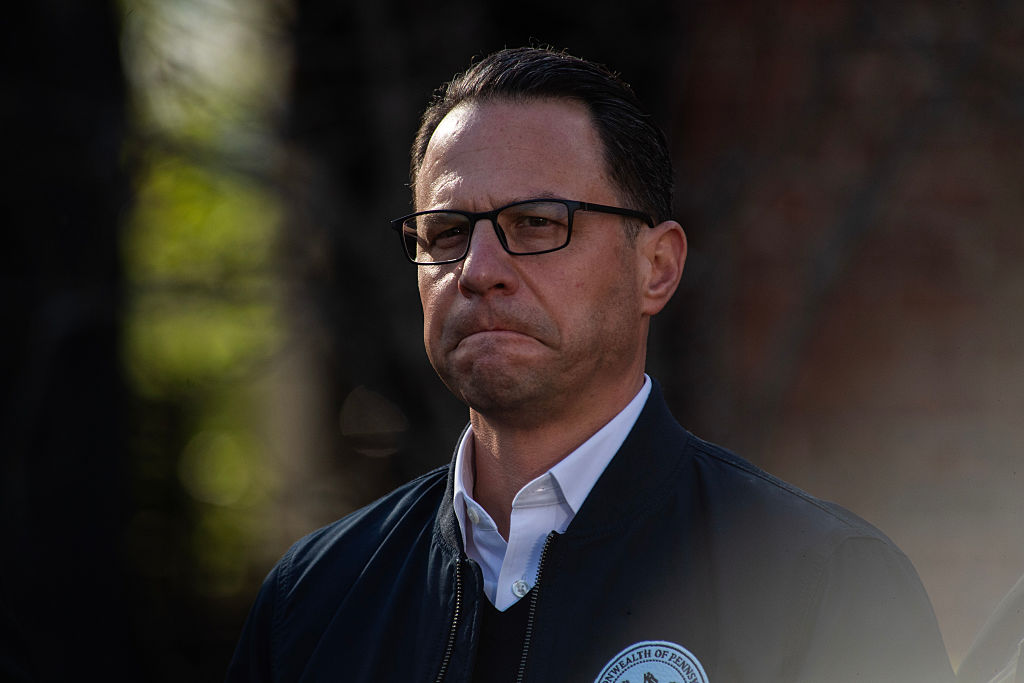
HARRISBURG, PENNSYLVANIA - APRIL 13: Pennsylvania Gov. Josh Shapiro speaks during a press conference outside of the Governor's Mansion after a portion of the property was damaged in an arson fire on April 13, 2025 in Harrisburg, Pennsylvania. Shapiro and his family escaped unharmed and police have a suspect, Cody Balmer, in custody. (Photo by Matthew Hatcher/Getty Images)
Governor Josh Shapiro of Pennsylvania recently shared insights into his vice presidential interview, which he described as unexpectedly contentious. During a discussion with reporters, he revealed that the interview turned confrontational, with implications of dual loyalty emerging as a significant point of contention.
Shapiro, who has served as governor since January 2023, indicated that a portion of the conversation focused on his support for Israel. He characterized the dialogue as leading to “blunt suggestions” that his commitment to Israel could reflect a conflict of interest related to his responsibilities to the United States. This assertion has sparked discussions about the implications of perceived dual loyalty in American politics.
The governor’s comments come at a time when the political landscape is increasingly polarized. His remarks have raised questions about the expectations placed on public officials regarding their support for foreign nations. Shapiro emphasized that he has always prioritized his duty to Pennsylvania and the United States.
In his recounting of the interview, which took place in early March 2024, Shapiro did not disclose the identities of those involved in the conversation. Still, he expressed concern over the implications of such accusations, viewing them as detrimental to open political discourse. “We cannot allow this narrative to take root in our political dialogue,” he stated, underscoring the need for unity in addressing pressing issues facing the nation.
The topic of dual loyalty has surfaced in various political contexts, particularly among Jewish politicians and those who advocate for strong ties with Israel. Critics argue that insinuations of dual loyalty can perpetuate harmful stereotypes and undermine the contributions of American leaders who maintain strong relationships with foreign allies.
Shapiro’s experience reflects broader tensions in political discussions, particularly within the Democratic Party, where differing views on foreign policy can lead to intense disagreements. As he prepares for potential future political aspirations, Shapiro’s comments may influence how candidates navigate similar issues in their campaigns.
This incident serves as a reminder of the complexities surrounding foreign policy discussions in American politics. As political figures continue to engage with international allies, the challenge remains to balance loyalty to one’s own country with the importance of global partnerships.
Shapiro’s statements have drawn support from various political leaders who stand against the insinuation of dual loyalty. They argue that such claims can discourage capable individuals from seeking public office and diminish the diversity of perspectives in political discussions.
As the political landscape continues to evolve, Governor Shapiro’s experience may resonate with many who have faced similar challenges in navigating the intersection of domestic and foreign obligations. The ongoing discourse will likely shape the way future candidates approach these sensitive topics in their campaigns.