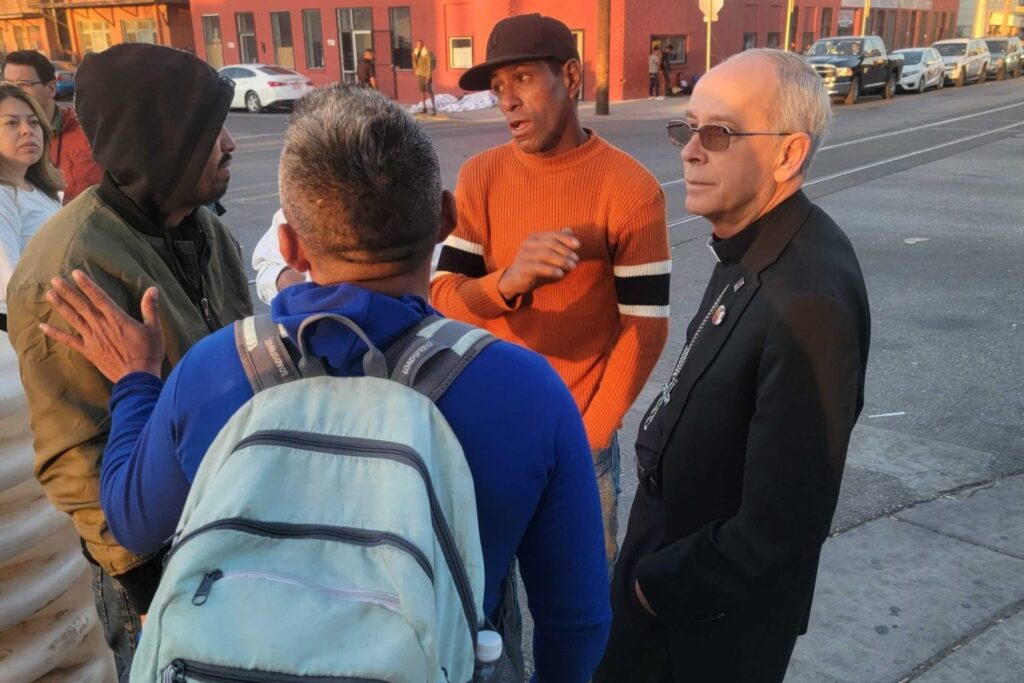
El Paso Bishop Mark Seitz has condemned mass detention and deportation practices as a “grave moral evil,” urging individuals in the diocese who work in immigration enforcement to prioritize their moral duties over directives from the federal government. In a pastoral letter released on Sunday during the holy season of Lent, Seitz emphasized that no one is required to follow immoral orders, calling for a thoughtful discernment of the moral implications of the Gospel.
This letter marks a significant moment, as it is the first issued by a U.S. bishop addressing the issues of mass detention and deportation of undocumented immigrants. The El Paso diocese noted that bishops traditionally use pastoral letters to guide their communities on pressing faith-related matters. Seitz implored those affected by immigration enforcement to recognize the Church’s support, stating, “As your Bishop, I carry your pain daily in my heart and in my prayers.”
The U.S. Department of Homeland Security responded to Seitz’s remarks by asserting that the true moral evil lies with individuals who harm Americans after entering the country unlawfully. A spokesperson for the department remarked, “Open borders have deadly consequences,” emphasizing the need for strict immigration enforcement.
Seitz’s pastoral letter highlighted the fears and hardships faced by immigrants within the community. He recounted alarming instances of individuals being apprehended during immigration court proceedings and workers being detained at construction sites. The letter also referenced the tragic deaths of three individuals at the Fort Bliss detention center, underscoring the human cost of current immigration policies.
In a direct message to El Paso Catholics involved in immigration enforcement, Seitz acknowledged the essential role these individuals play in community safety but condemned the consequences of mass deportation. He stated, “Mass deportations will not make our communities safer. They separate families, divide neighbors, and threaten our economic wellbeing.”
Seitz called for a transformation of the immigration system, noting that the ongoing campaign of mass detention and deportation must be opposed through prayer, peaceful action, and solidarity with those impacted. He assured those working in immigration enforcement of the Church’s pastoral support as they grapple with their moral responsibilities.
As a prominent figure in U.S. Catholicism, Seitz has consistently advocated for immigrant rights. He recently completed his term as chair of the U.S. Conference of Catholic Bishops Committee on Migration, where he previously characterized the broken immigration system as a significant issue affecting the border community.
The pastoral letter refrains from directly naming the Trump administration but instead frames the matter as a spiritual and moral challenge. Seitz illustrated this by referencing the life of Jesus, who experienced exile and homelessness, urging Christians to recognize their shared humanity with migrants.
To further advocate for humane immigration practices, the El Paso diocese, along with other Catholic organizations, plans to hold a march and vigil “for human life and an end to mass deportations” on March 24, 2025, at San Jacinto Plaza. Auxiliary Bishop Evelio Menjivar, a former refugee from El Salvador, will join Seitz in this event, reinforcing the Church’s commitment to supporting vulnerable communities.
Seitz’s pastoral letter is part of a broader movement within the U.S. Catholic Church that has increasingly opposed stringent immigration policies. In November 2025, the U.S. Conference of Catholic Bishops issued a statement denouncing mass deportations, urging bishops to assert their voices in defense of migrants.
In conclusion, Bishop Mark Seitz’s message resonates as a call to conscience for both the faithful and immigration enforcement agents, emphasizing the need for compassion and justice in the treatment of migrants.