The United States’ recent seizure of a Russian-flagged oil tanker has drawn condemnation from China, which labeled the action as “arbitrary” and a serious violation of international law. This incident occurred on March 27, 2024, when U.S. officials intercepted the tanker, known as the Marinera, in the North Atlantic Ocean. According to Chinese Foreign Ministry spokeswoman Mao Ning, such unilateral actions undermine the sovereignty of nations and violate established legal norms.
During a briefing in Beijing, Mao stated that China “opposes illegal and unilateral sanctions” that infringe on the rights of other states. She emphasized the seriousness of the U.S. operation, which was conducted without United Nations approval, asserting that it “seriously violates international law.” This reflects a broader concern regarding the enforcement of unilateral sanctions without international consensus.
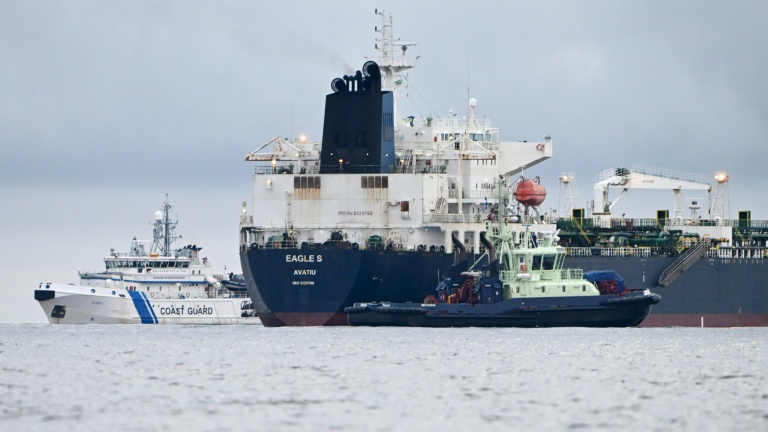
The seizure of the Marinera, previously identified as the Bella 1, was executed on the basis of a federal court warrant after the vessel had been tracked by the U.S. Coast Guard cutter Munro. Officials from the Departments of Justice, Homeland Security, and Defense coordinated the operation, showcasing a unified front in the U.S. government’s efforts to monitor and control what it describes as illicit oil transportation linked to countries like Iran and Venezuela.
Defense Secretary Pete Hegseth remarked that the operation highlights the continued enforcement of sanctions against Venezuelan oil, declaring that such measures remain “in full effect — anywhere in the world.” The Marinera had been under U.S. sanctions since 2024 for its involvement in a so-called “shadow fleet” that allegedly transported illicit oil.
After an earlier attempt to board the vessel in the Caribbean while it was flying a Guyanese flag, the tanker reportedly changed course into the Atlantic, re-registered under its new name, and repainted its hull with the Russian flag. This maneuver was noted by ship-tracking data and U.S. officials.
In response, Russia’s Transport Ministry asserted that the Marinera was operating in international waters “under the state flag of the Russian Federation and in full compliance with the norms of international maritime law.” The Russian Foreign Ministry has demanded the humane treatment and rapid return of the Russian crew members aboard the ship. Some lawmakers in Russia have characterized the U.S. action as an act of piracy.
The operation took place approximately 190 miles south of Iceland after weeks of surveillance. Reports indicate that special operations forces boarded the vessel with logistical support from the United Kingdom at the request of the U.S. government.
China, which is a significant importer of Venezuelan crude oil, voiced concerns that such actions threaten freedom of navigation and the integrity of the international legal order. Mao reiterated that disputes regarding sanctions and their enforcement should be resolved through multilateral channels rather than through unilateral force.
The situation underscores the growing tensions between major nations over maritime rights and the enforcement of international laws, illustrating the complex interplay of global politics and trade.