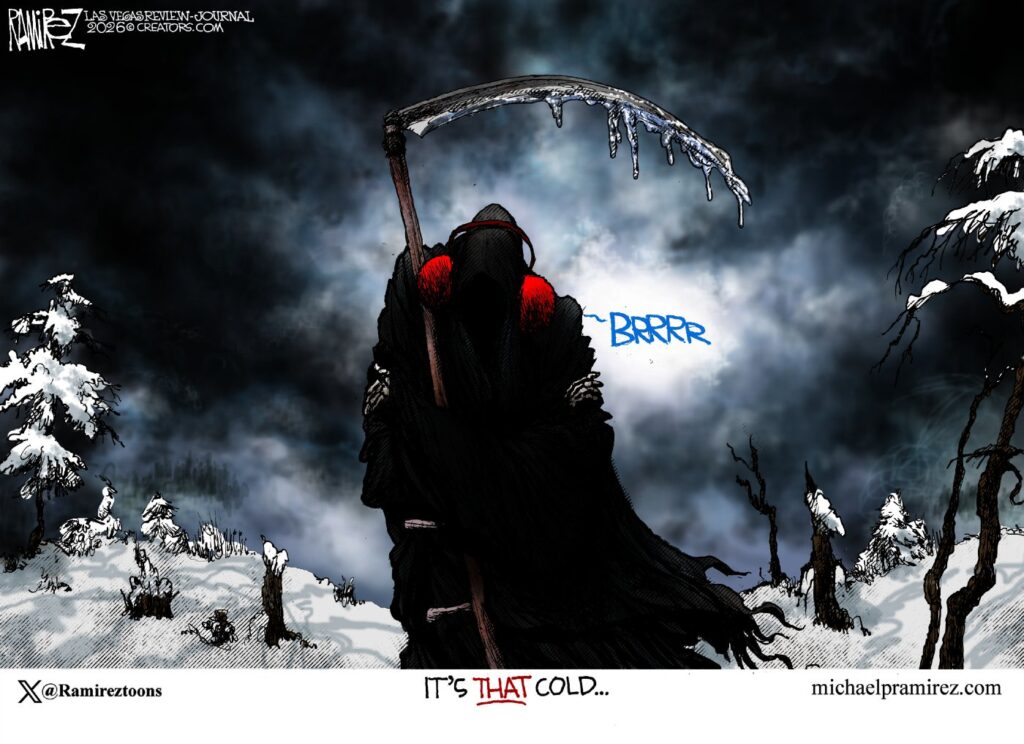
A recent political cartoon by Michael Ramirez, published on January 31, 2026, captures the biting cold gripping many regions of the United States. The illustration humorously depicts the stark realities faced by citizens as they navigate one of the harshest winters in recent memory.
The cartoon resonates particularly well during a season marked by extreme weather conditions, including significant snowfall and sub-zero temperatures affecting millions. Ramirez’s work serves as a sharp commentary on not only the weather but also its broader implications for daily life, public policy, and climate change discussions.
Art Reflecting Reality
In the illustration, Ramirez uses satire to convey the frustrations and challenges of enduring such intense cold. It highlights the struggle of many Americans dealing with disrupted routines, transportation issues, and increased energy costs as they attempt to keep warm. The cartoon poignantly underscores the intersection of everyday life and environmental factors, calling attention to the ongoing discourse surrounding climate resilience.
The winter season of 2026 has already seen record-breaking low temperatures in several states, resulting in increased demand for heating resources. Observers note a marked rise in energy consumption, which may lead to higher utility bills for households. Ramirez’s cartoon serves as an effective reminder of these pressing issues, encouraging viewers to consider the long-term implications of fluctuating weather patterns.
Public Reactions and Impact
Public response to Ramirez’s cartoon has been varied, with many finding humor in the illustration while simultaneously reflecting on the seriousness of the current weather conditions. Social media platforms have seen a surge in discussions about the cartoon, with users sharing their personal experiences related to the cold and engaging in conversations about climate change.
As communities across the nation grapple with the impacts of winter storms, Ramirez’s artwork stands out not only as a source of entertainment but also as a catalyst for dialogue. By intertwining humor with a critical view of contemporary challenges, the cartoon provides a platform for discussing how individuals and policymakers can better prepare for future climate-related events.
Through this lens, Ramirez’s work contributes to a broader understanding of the relationship between art, society, and the environment, illustrating how even a single cartoon can spark vital conversations about our world.