Walter Isaacson’s latest work, titled The Greatest Sentence Ever Written, delves into the profound impact of one iconic phrase from the Declaration of Independence. The sentence, “We hold these truths to be self-evident, that all men are created equal, that they are endowed by their Creator with certain unalienable Rights, that among these are Life, Liberty and the pursuit of Happiness,” has been described by notable figures, including documentarian Ken Burns, as among the most significant in the English language.
In this concise yet illuminating book, Isaacson breaks down the sentence’s components, exploring the implications of terms like “We” and “all men.” He contrasts the meanings of “unalienable” and “inalienable,” and reflects on the philosophical weight behind the concepts of “Life, Liberty, and the pursuit of Happiness.” His analysis extends to the contributions of Thomas Jefferson and the edits made by Benjamin Franklin before the Continental Congress ratified the document.
Isaacson’s reputation is well-established, with extensive biographies on figures such as Albert Einstein and Steve Jobs. Yet, The Greatest Sentence Ever Written distinguishes itself as a brief read, likely to fit into a lunch hour or a quiet morning. This accessible format invites readers to ponder the sentence’s significance long after finishing the book.
Bret Baier Explores Theodore Roosevelt’s Legacy
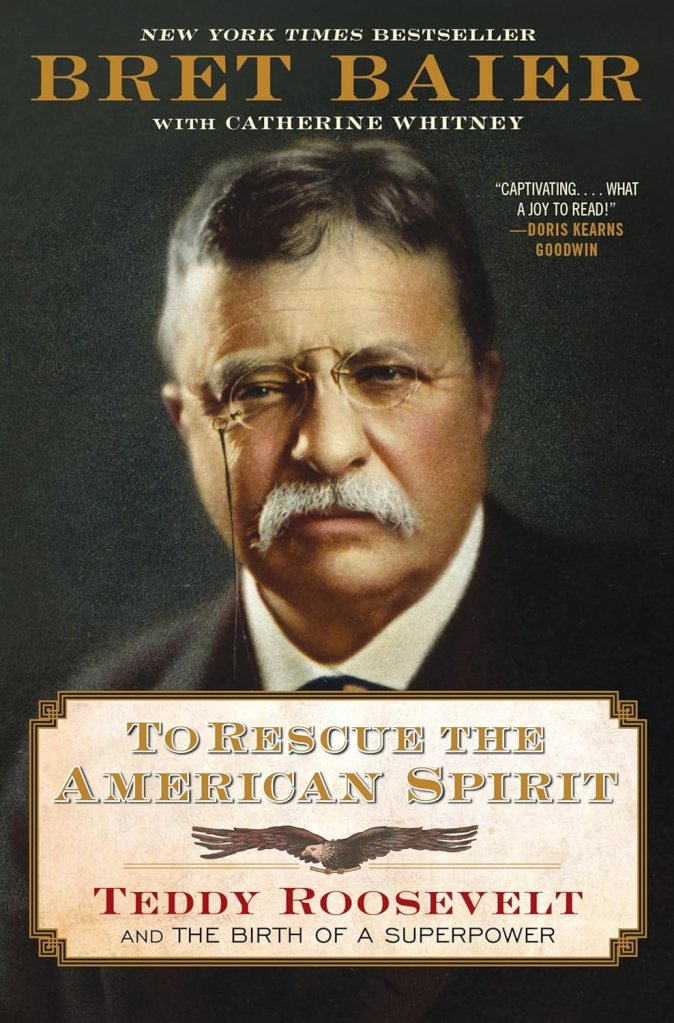
In addition to Isaacson’s analysis, Bret Baier has released a new biography titled To Rescue the American Spirit: Teddy Roosevelt and the Birth of a Superpower. This work provides a detailed account of Roosevelt’s transformative presidency, beginning with the moment he assumed office after the assassination of President William McKinley.
Baier recounts Roosevelt’s ascent from a challenging childhood, marked by asthma and family loss, to a prominent political figure. The narrative highlights Roosevelt’s pivotal actions, such as his role in brokering peace between Russia and Japan, the construction of the Panama Canal, and his efforts in establishing America as a global power.
While Baier’s book aligns with his previous series focusing on presidential figures, it uniquely centers on Roosevelt’s contributions to American history. This biography is not just a recounting of events; it encapsulates the spirit of an era and the challenges Roosevelt faced.
Both Isaacson and Baier provide readers with thought-provoking insights into pivotal moments in American history. These works not only reflect on the past but also encourage readers to consider the enduring relevance of these historical figures and their legacies in contemporary society.