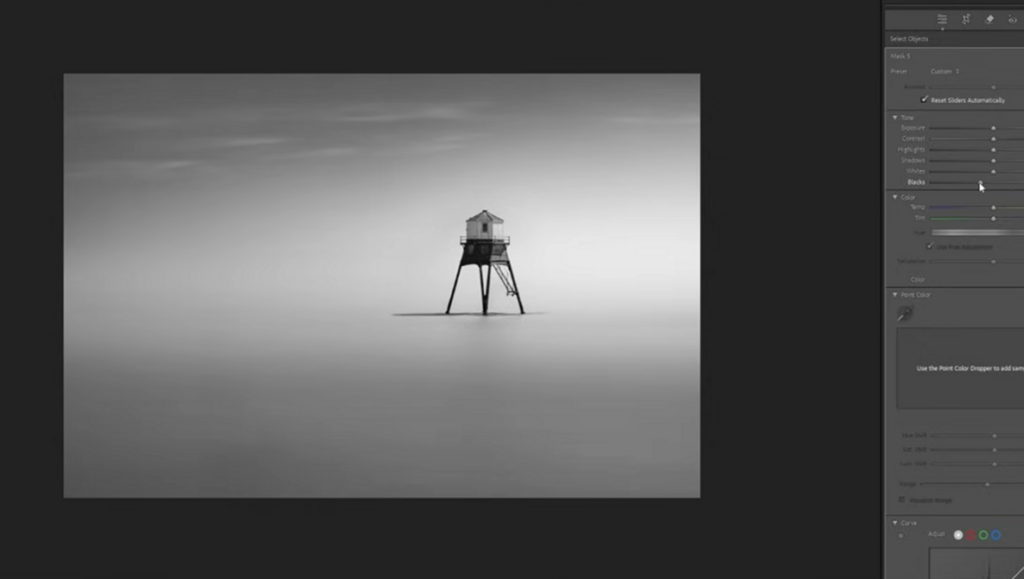
Fine art photography can transcend mere representation, evolving into a minimalist masterpiece through thoughtful post-production techniques. In a recent tutorial, photographer and educator Steve Stain showcased a method for transforming ordinary images into striking fine art, specifically using a shot of Dover Court Lighthouse as his subject.
Stain emphasizes the importance of creating a sense of stillness and mood in his work. He often draws inspiration from iconic lighthouses, like Poolbeg Lighthouse in Dublin and others along the coasts of Portugal. His process encourages photographers to look beyond the initial raw file, which often contains distractions that can detract from the intended vision. “The raw file is rarely the final destination,” Stain notes, highlighting the essential role of post-production in fine art photography.
Mastering Minimalism with Innovative Tools
Utilizing Lightroom and Photoshop in tandem, Stain’s workflow exemplifies how to refine an image by focusing on essential elements. He demonstrates how the newly developed AI landscape selection in Lightroom can significantly enhance the editing process. This tool allows photographers to separate components of the image quickly—such as water and sky—enabling them to adjust exposure levels effectively.
Stain’s approach to using Photoshop is equally noteworthy. Rather than viewing it as an intimidating software, he treats it as a precise instrument for enhancement. By isolating the lighthouse and the sky into separate layers, he achieves a seamless blend that feels organic. This method allows for stretching the horizon while maintaining natural aesthetics, steering clear of an overly manipulated appearance.
Adding a radial gradient that simulates the direction of natural light, Stain creates a three-dimensional glow that draws the viewer’s eye to focal points within the image. His admission of often producing three distinct versions of an image—a color variant, a high-contrast black and white, and an intermediate option—serves as a reminder to photographers that exploration is part of the creative process.
The Art of Subtraction
Stain’s philosophy underscores the significance of subtraction in fine art photography. He emphasizes that often, what is removed from an image is just as important as what is retained. This principle encourages photographers to reconsider what might initially seem like a cluttered raw file. Instead of discarding such images, Stain advocates for taking time to explore their potential.
His tutorial serves as a masterclass in minimalism, demonstrating that there may be a hidden masterpiece beneath the surface of a seemingly chaotic image. As photographers engage with their craft, they are reminded to embrace the journey through editing settings, similar to how one might wander through a landscape.
Neil, another avid photographer and educator, shares a similar passion for capturing fleeting moments in nature. His adventures across the diverse landscapes of Ireland fuel his work, inspiring others to connect with the outdoors and appreciate the beauty of their surroundings.
In conclusion, the process of crafting a minimalist fine art photograph is as much about the exploration of tools and techniques as it is about the final image. With the insights provided by Stain and the integration of innovative editing software, photographers can elevate their work beyond traditional boundaries, discovering the art hidden within the raw files.