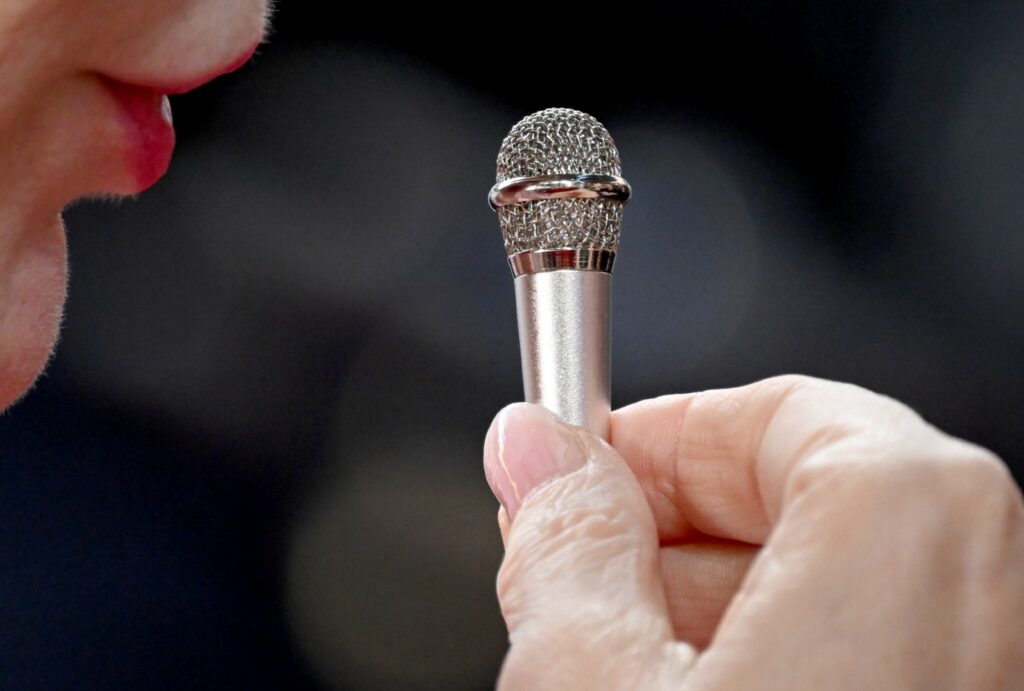
A growing trend involving tiny microphones is increasingly disrupting red carpet events, diminishing the prestige associated with such high-profile appearances. These small devices, often wielded by interviewers, have become a source of frustration for many actors who feel they overshadow more meaningful discussions about their work.
In recent months, the prevalence of tiny microphones in various entertainment settings, including award shows and film premieres, has caught the attention of industry insiders. Actors are frequently asked to hold these diminutive devices while responding to superficial questions, often focusing on trivial aspects of their lives rather than their artistic achievements. This practice has been criticized for reducing significant moments to gimmicks, with many feeling it detracts from the gravity of their performances.
Emily Blunt, a prominent actress, recently voiced her discontent at a film premiere, stating, “Tiny little mic, oh my god, these are so weird.” Her commentary reflects a broader sentiment among her peers, who believe that the emphasis on such trivialities undermines the artistry they strive to convey on screen.
From the Red Carpet to Everyday Life
The issue extends beyond celebrity events. Reports suggest that tiny microphones have infiltrated various social settings, making their way into street interviews and popular social media platforms. A study conducted by an independent researcher indicated that individuals scrolling through social media late at night frequently experience anxiety about unexpected encounters with interviewers holding these small devices.
Many industry observers argue that the focus on these microphones and the accompanying questions has turned red carpet interviews into a spectacle rather than a genuine exploration of an actor’s craft. Questions like “Which of your fellow cast members would you want to have with you on a deserted island?” have replaced more substantive inquiries. The shift raises concerns about the direction of entertainment culture, as it prioritizes sensationalism over meaningful dialogue.
Moreover, this trend is not limited to red carpets. The rise of merchandising tied to films, such as the “Marty Supreme” jackets created by the sportswear brand Nahmias, has become emblematic of a culture that values consumerism over artistic integrity. Lines for these merchandise pop-ups have stretched around the block, with fans waiting hours to purchase items that often end up as status symbols rather than cherished memorabilia.
Timothée Chalamet, who has been associated with the “Marty Supreme” campaign, exemplifies this blend of celebrity and consumer culture. While such initiatives may drive ticket sales, they often feed the fear of missing out, prompting individuals to spend money on items that may quickly lose their novelty.
A Call for Change in Film Culture
As the film industry continues to evolve, there is a growing call for a return to decorum and professionalism on the red carpet. The use of full-sized microphones could signal a shift back to serious conversations about cinema, as actors and filmmakers seek to share their stories without the distractions of superficiality.
Critics of the current trend argue that these small devices and the accompanying frivolous questions do not serve the artistic community. They suggest that filmmakers should focus on meaningful storytelling rather than pandering to fleeting social media trends. A recent example is Ryan Coogler‘s film “Sinners,” which faced criticism for including unnecessary post-credits scenes that some felt diluted the film’s message.
The intertwining of entertainment and consumerism, underscored by the rise of tiny microphones, raises important questions about the future of film culture. Actors and filmmakers are encouraged to reclaim the narrative, prioritizing artistic expression over commercial gimmicks. As audiences become increasingly aware of these trends, the industry may find itself at a crossroads, where the choice between authenticity and spectacle becomes more pronounced.
For now, the tiny microphone continues to dominate, reminding us that while technology evolves, the essence of storytelling and the integrity of the artistic process remain paramount.