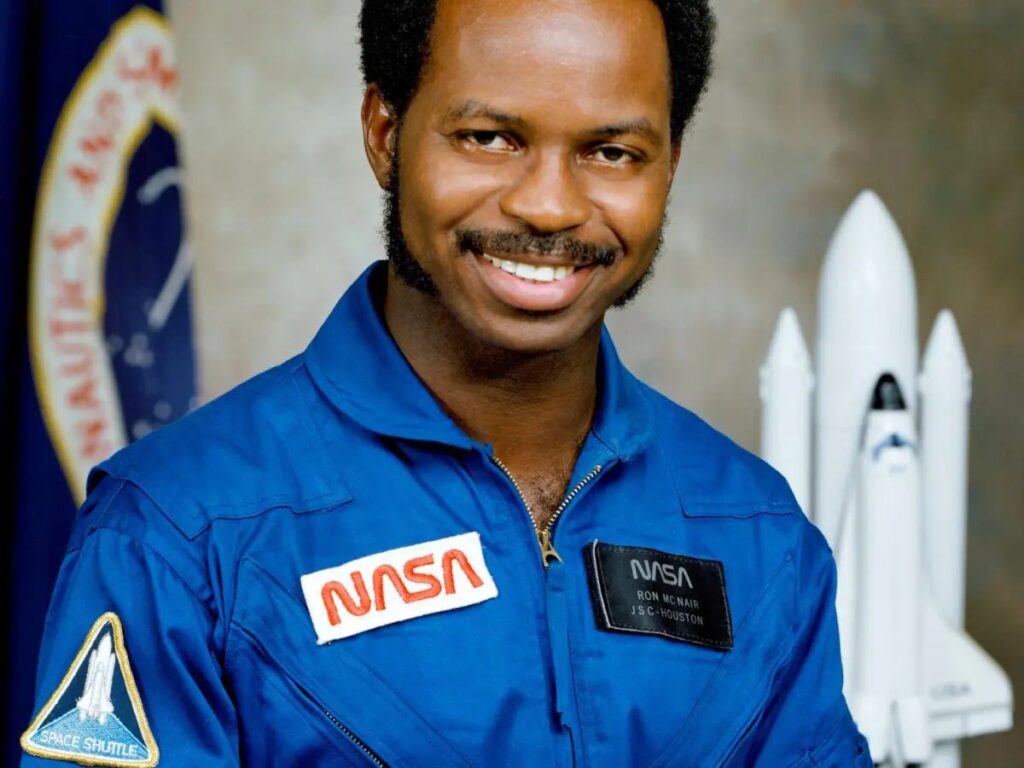
Ronald McNair, an esteemed astronaut and physicist, is being remembered this week as the world marks the 40th anniversary of the tragic Challenger disaster. On January 28, 1986, the NASA space shuttle Challenger exploded just 73 seconds after liftoff, claiming the lives of all seven crew members, including McNair, who was just 35 years old. This incident remains one of the most somber moments in space exploration history.
In a poignant reflection during a 2013 conversation with the nonprofit StoryCorps, McNair’s older brother highlighted the visionary nature of Ronald’s ambitions. He stated that while many viewed space exploration as “science fiction,” Ronald saw it as “science possibility.” This belief propelled Ronald into a distinguished career in science and aerospace.
A Trailblazer in Space Exploration
McNair’s journey began in 1978 when he became one of the first Black astronauts selected by NASA. His commitment to breaking barriers was evident when he made history as the second Black man to travel into space during the STS-41-B mission in 1984. This mission not only marked a significant achievement for McNair but also served as an inspiration for countless individuals aspiring to enter the fields of science and technology.
Beyond his impressive credentials as an astronaut, McNair had a diverse range of interests. He was an accomplished jazz saxophonist and a skilled karate practitioner. His multifaceted talents showcased a passion for both the arts and sciences, reflecting a well-rounded individual dedicated to personal growth and exploration.
The Challenger mission, designated STS-51-L, was intended to demonstrate NASA’s ongoing commitment to advancing space research and education. Tragically, a failure in one of the rocket boosters led to the shuttle’s catastrophic disintegration. The loss of McNair and his fellow astronauts left a profound impact on the nation and the future of space exploration.
Honoring a Legacy
In the years since the Challenger disaster, McNair’s legacy has continued to inspire. Various initiatives and programs have been established to promote STEM education, particularly among underrepresented communities. Educational institutions have honored McNair by naming scholarships and programs after him, ensuring that his memory lives on through future generations of scientists and explorers.
McNair’s dedication to education and science is exemplified by his commitment to lifelong learning. He earned a Ph.D. in physics from the Massachusetts Institute of Technology and contributed to significant research before his career with NASA. His life serves as a testament to the importance of perseverance, courage, and the pursuit of knowledge.
As we reflect on the legacy of Ronald McNair, it is essential to recognize the barriers he broke and the paths he illuminated for many. His story is not just one of tragedy; it is also one of resilience and hope, encouraging others to dream big and pursue their passions, no matter the obstacles they may face.