The Church of Gaia in Spokane, Washington, exemplifies a growing trend in the United States where certain religious organizations are legally permitted to use psychedelic substances in their ceremonies. The church, which conducts regular gatherings and communal singing, serves ayahuasca, a powerful psychedelic that can induce intense physical reactions. According to Connor Mize, the ceremonial leader of the Church of Gaia, “This is a purely spiritual practice. It’s not a thing you do just for fun.”
Despite the fact that psychedelics remain classified as Schedule I substances and are largely illegal in the US, a select number of churches have secured the right to use these substances as sacraments. Since the early 2000s, four organizations have successfully navigated legal challenges with the Drug Enforcement Administration (DEA). Earlier this year, the Church of Gaia made history by becoming the first psychedelic church to obtain an exemption through a petition to the DEA, a process that had previously been dominated by litigation. Mize noted, “Everybody else has gone through some semblance of litigation to get through the process other than us.”
The rise of these psychedelic churches is notable. Estimates indicate that there are currently over 500 psychedelic churches operating in the US, many of which have emerged in the past five to seven years. This surge coincides with a broader trend where more Americans are exploring spirituality outside of traditional religious frameworks. A recent Pew Research Center survey revealed that four in ten US adults have grown more spiritual over their lifetimes, while only 24% reported becoming more religious.
Legal Milestones and Cultural Shifts
The origins of legalized psychedelic churches can be traced back to significant legal victories that reshaped the landscape. In 2006, a New Mexico-based religious group successfully sued the DEA after the agency seized 30 gallons of ayahuasca tea, invoking the Religious Freedom Restoration Act (RFRA). This act requires the government to demonstrate a compelling interest before imposing burdens on religious practices. A similar victory occurred in Oregon three years later, establishing a precedent that has facilitated legal protections for psychedelic use.
More recently, churches in Arizona and California secured protections in 2024 and 2025 following settlements with the DEA. As noted by attorney Sean McAllister, who specializes in psychedelic law, “There is more of an openness now to granting these exceptions, to entering into settlements.” Following a change in policy, churches can petition the DEA directly, demonstrating the sincerity of their religious practices and the burdens imposed by drug laws. The Church of Gaia’s approval came after a nearly three-year process aimed at ensuring that ayahuasca would be used solely for religious purposes.
The Future of Psychedelic Spirituality
With its legal status now secured, the Church of Gaia is focused on expanding its operations. Mize is working on acquiring visas for Peruvian teachers and constructing a dedicated ceremonial space. The church currently has around 70 members, who participate in lengthy ceremonies involving ayahuasca, traditional Amazonian music, and spiritual practices.
Legal experts suggest that the evolving attitudes towards psychedelics might resonate positively for other churches. McAllister indicated that President Donald Trump‘s administration might foster a more lenient approach to religious freedoms concerning plant medicines, potentially benefiting psychedelic organizations. “There is probably in this administration some desire to be a little looser on religious freedom for plant medicine,” he explained, “because that will also help them be looser on religious freedom in other contexts.”
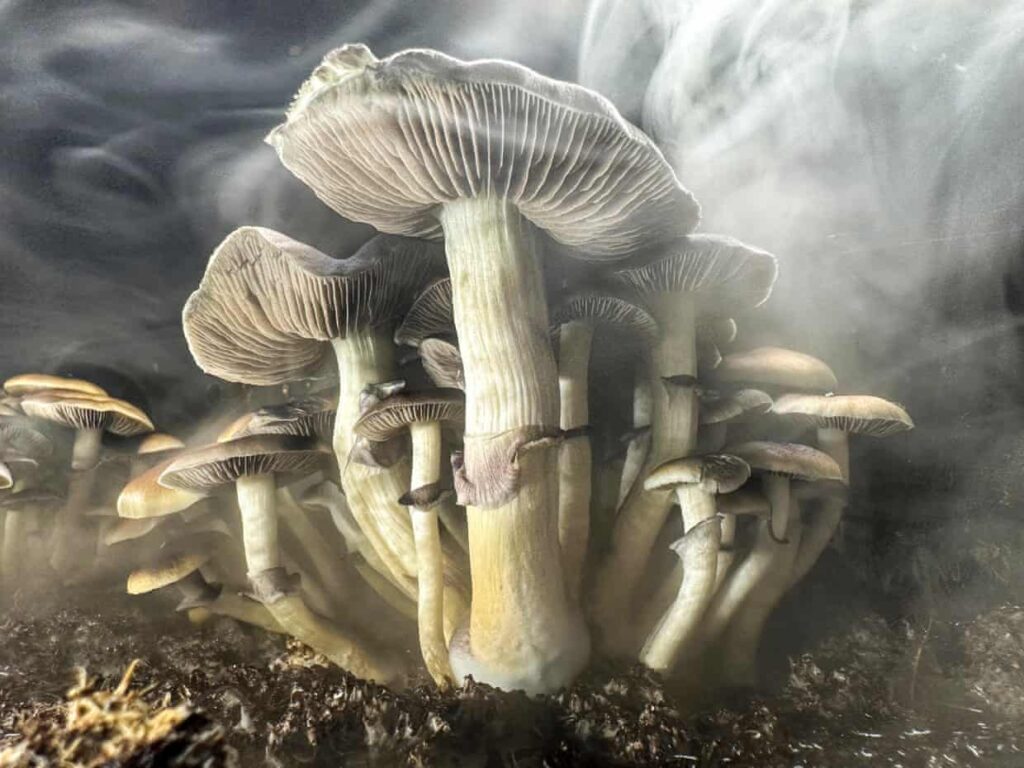
Yet, the intersection of psychedelics and religion is not without its challenges. Church leaders often face logistical issues such as securing insurance and property while operating underground. The risks became starkly apparent for Bridger Jensen, founder of the religious group Singularism in Provo, Utah. In November, Jensen was surrounded by a SWAT team after an undercover officer posed as a potential church member. The police raided Singularism’s center, confiscating its psilocybin mushrooms. However, Jensen’s group responded by suing, successfully halting criminal proceedings against him and regaining their seized substances.
If Singularism prevails in court, it would become the first recognized mushroom church in the US, potentially paving the way for other psychedelic practices. While all currently exempted churches have utilized ayahuasca, numerous underground churches experiment with a variety of substances, including LSD and MDMA. This raises questions about the future legality of multi-sacrament groups, as noted by Jeffrey Breau, who oversees a psychedelics and spirituality program at Harvard University.
Jensen acknowledges the potential for his church’s legal battles to influence others. “There will be more practices getting recognition after this,” he stated, “but it won’t be without tremendous casualties as well.” As the legal landscape continues to evolve, the future of psychedelic churches in the United States remains uncertain, yet increasingly promising.