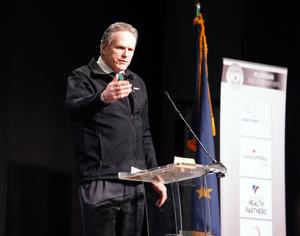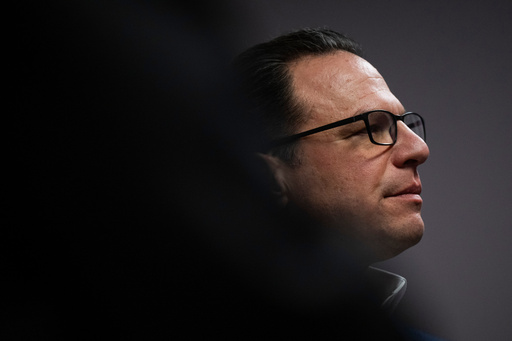
Pennsylvania Gov. Josh Shapiro is seen after a B'nai B'rith Youth Organization International Convention on Thursday, Feb. 12, 2026, in Philadelphia. (AP Photo/Joe Lamberti)
As antisemitism escalates across the United States and tensions over Israel intensify, Pennsylvania’s Governor Josh Shapiro is publicly embracing his Jewish identity. At the recent BBYO conference, the world’s largest gathering of young Jewish leaders, he received a rousing welcome, demonstrating his popularity within the community.
Shapiro addressed a crowd of thousands, many waving Israeli flags, emphasizing the challenges faced by the Jewish community today. He remarked, “This is a moment where I lean on my faith. I am proud of my faith.” Despite his rising profile, Shapiro has been open about the personal challenges he has faced, including an arson attack on his family home last year.
Balancing Faith and Politics
At 52, Shapiro stands out as one of the most prominent Jewish politicians in the U.S., particularly as antisemitism surges. He has made his faith a cornerstone of his political identity, describing it as living his beliefs “out loud.” As he approaches a likely reelection campaign this fall, his navigational skills between being a Jewish progressive and a staunch supporter of Israel will be crucial to his political future.
Shapiro’s advocacy for Israel has drawn both support and criticism. Following the October 7, 2023, Hamas attack, he affirmed Israel’s right to defend itself while also expressing concern for Palestinian civilians. His comments have sparked backlash from some progressive activists who have labeled him “Genocide Josh.” In his recent book, he recounted an experience during his vetting for vice president under Kamala Harris, where an aide questioned his loyalty to Israel.
Shapiro’s approach reflects a broader struggle within the Democratic Party regarding views on Israel and Palestine. Polling indicates that public opinion is divided; about six in ten American Jews believe Israel has committed war crimes in Gaza, while three-quarters see Israel’s existence as vital for the Jewish future.
Confronting Antisemitism
During an interview with The Associated Press, Shapiro described antisemitism as “a very real problem” affecting both political parties. He cited recent incidents, including the arrest of a man charged with making terroristic threats against him. Jonathan Greenblatt, CEO of the Anti-Defamation League, highlighted that the organization is witnessing the highest levels of antisemitic hate crimes in over fifty years.
Shapiro’s leadership has faced scrutiny, particularly as protests against Israel grow. He insists that universities must not tolerate antisemitic behavior any more than they would allow for white supremacy, a comparison that has drawn ire from some on the left. Critics argue that his stance on Israel does not align with the views of many in his constituency, including American Jews.
In his book, “Where We Keep the Light,” Shapiro reflects on the vetting process for a potential vice presidential candidacy and the implications of being a Jewish politician in today’s political climate. He remarked on the offensive nature of questions regarding his loyalty, underscoring the sensitivities surrounding Jewish identity in American politics.
Shapiro emphasizes the importance of addressing antisemitism directly while fostering open dialogue about U.S. foreign policy. He advocates for a peaceful coexistence between Israel and a secure Palestinian state, stating, “That creates more stability in the globe.”
The emotional toll of his public service has been significant. Last year, after a Passover celebration, Shapiro and his family were targeted in a violent attack at their home. A man broke in and launched Molotov cocktails, leading to charges of attempted murder and terrorism. Shapiro expressed that the incident haunts him but also reinforces his resolve to continue his work without fear.
As he navigates the complexities of his faith and political identity, Shapiro maintains that his experiences allow him to connect with various communities. He stated, “I refuse to live in fear, I refuse to back down.” His commitment to his beliefs and the well-being of his family continues to motivate his leadership as he prepares for the challenges ahead.