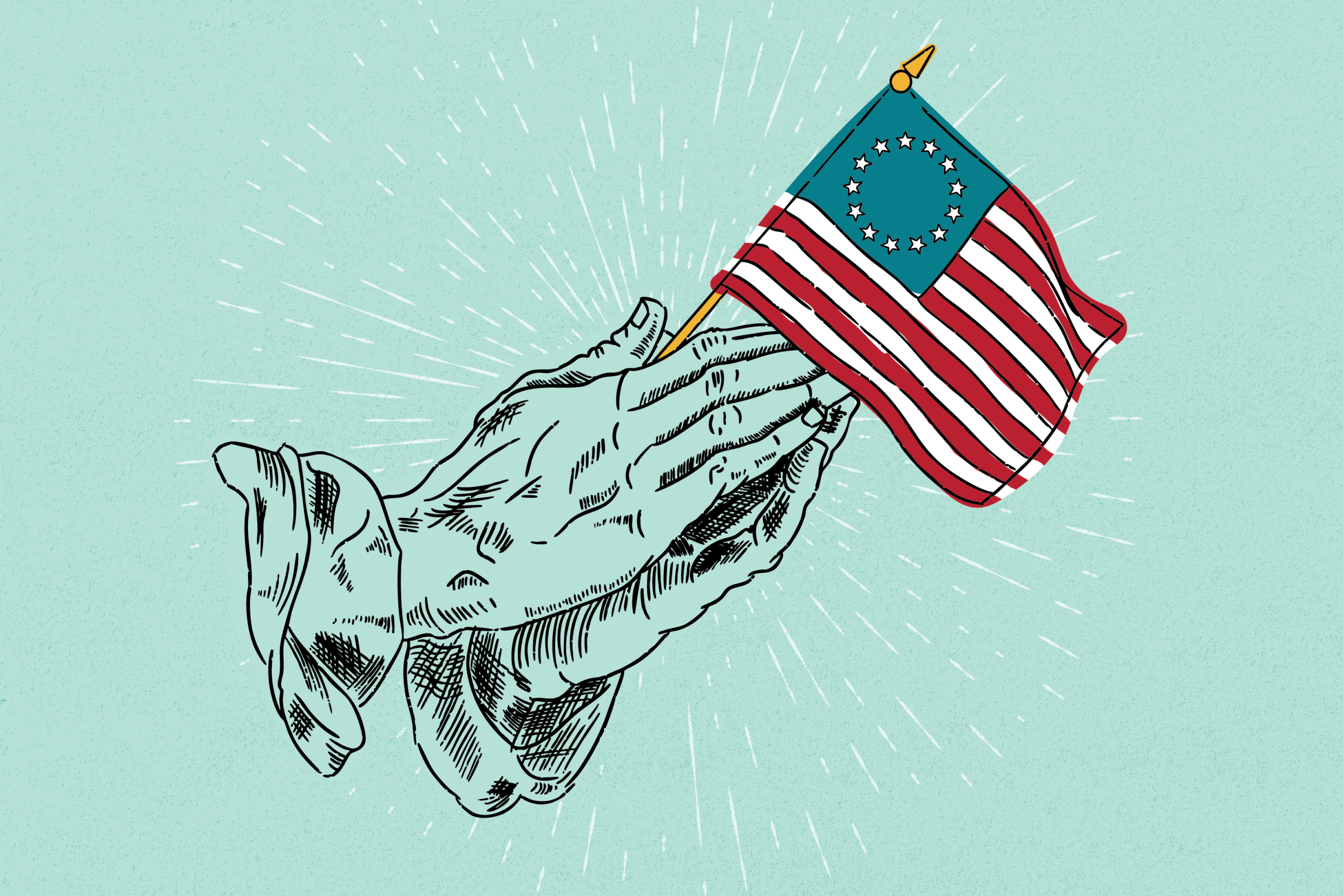
In the mid-18th century, the town of Bethlehem, Connecticut, was a peaceful community driven by agriculture and trade. Residents held a strong loyalty to Great Britain, appreciating the crown’s protection against French threats. However, as the year 1776 approached, this allegiance transformed dramatically. Nearly three-quarters of Bethlehem’s adult males took up arms against British rule, influenced significantly by the town’s pastor, Joseph Bellamy, who denounced the British as “unnatural enemies.” This shift raises a crucial question: how did a loyal population evolve into fervent American revolutionaries?
Historians have long debated the motivations behind the American Revolution. Was it primarily rooted in religious fervor or secular Enlightenment ideals? Mark Valeri, the Reverend Priscilla Wood Neaves Distinguished Professor of Religion and Politics at Washington University in St. Louis, provides insight through his works including “The Opening of the Protestant Mind” and “Heavenly Merchandize.” He suggests that religious leaders played a pivotal role in framing this transformation throughout the Colonies. Specifically, figures from various denominations—Presbyterians, Congregationalists, Baptists, and Catholics—advocated passionately for the revolutionary cause.
Religious Conviction and Political Transformation
Valeri emphasizes that the first major contribution of religion to the Revolution was the concept of conversion. The 1740s and 1750s saw a wave of religious revivals across the American Colonies, where the notion of conversion—turning away from a superficial existence toward a genuine relationship with God—became central. This spiritual framework allowed colonists to reinterpret their political loyalties. Valeri explains, “By framing independence as a necessary conversion from tyranny to liberty, religious thought made the treasonous act of rebellion feel like a righteous moral duty.”
A key figure in this movement was Sarah Osborn, a schoolteacher in Newport, Rhode Island. After her own religious conversion, she hosted revivals and helped others understand their political choices. Osborn blended spiritual freedom with the idea of liberation from imperial rule. Meanwhile, preachers like Jonathan Mayhew in Boston urged the American people to recognize the political dangers posed by British tyranny, equating their previous acceptance of British rule with a false sense of security.
Valeri notes that understanding the process of conversion is essential to grasping its political implications. Initially, it required self-reflection, prompting individuals to critique their circumstances. This was followed by the promise of reward; just as spiritual conversion brought joy, political conversion offered freedom from oppression. The intertwining of spiritual and political dimensions became a powerful catalyst for change.
From Political Theory to Moral Imperative
While Enlightenment thinkers like John Locke articulated ideas about natural rights, these concepts often remained abstract. It was the clergy—sometimes referred to as the “black-robed regiment” by the British—that transformed these ideas into a divine mandate. Pastors such as Samuel West from Massachusetts elevated political discourse to a narrative of good versus evil.
West argued that legitimate political authority was contingent upon justice and compassion. He preached that unjust rulers would be overthrown by divine intervention, asserting that tyrants, once they became oppressive, forfeited their right to govern. This rhetorical shift was significant; it reframed political dissent from mere disagreement to a moral obligation against evil.
In a sermon delivered in May 1776, just months before the Declaration of Independence, West addressed members of the colonial Massachusetts government, stating, “The British are endeavoring to deprive us… of the inalienable rights that the God of nature has given us.” His words helped galvanize a collective sense of purpose among the colonists.
As the Revolutionary War progressed, the hardships faced by towns like Bethlehem—including smallpox, starvation, and death—fueled a need for hope. Religion offered a framework for understanding their suffering as part of a larger, divinely orchestrated narrative. Drawing from the Puritan belief in providence, Americans likened their struggles to those of the ancient Israelites, believing they were undergoing a divine test that would ultimately lead to redemption.
Valeri explains that this narrative served two key purposes. It contextualized the tragedies faced by families, such as Bellamy’s loss of a son in the Continental Army, as part of a redemptive struggle. It also instilled optimism; if America was akin to Israel in a divine drama, victory seemed inevitable. This “sacred history” contributed to a new American identity distinct from British heritage, rooted in narratives of suffering and eventual salvation.
Ultimately, the American Revolution was motivated by more than mere taxation and trade disputes. It was energized by a religious conviction that transformed political grievances into a moral struggle. Through the concepts of conversion, the sanctification of liberty, and the establishment of a sacred narrative, religion provided the necessary strength for farmers and shopkeepers to challenge an empire and forge a new nation.
Valeri, however, cautions against interpreting this story as one of American exceptionalism or religious nationalism. He highlights that figures like West and Osborn emphasized the importance of self-critique. They believed divine law applied universally, not exclusively to America. For instance, Samuel Hopkins, who pastored Osborn, prohibited slaveholders from church membership after 1784, demonstrating their critical stance on moral issues.
In conclusion, while the American Revolution was influenced by religious sentiment, it should not be misconstrued as a justification for a uniquely Christian nation. Valeri asserts that the focus should remain on how the nation adhered to principles of justice and equity, aligning itself with a broader narrative of divine justice applicable to all nations. The interplay of religious conviction and political action during this transformative era continues to inform discussions about the nature of American identity.