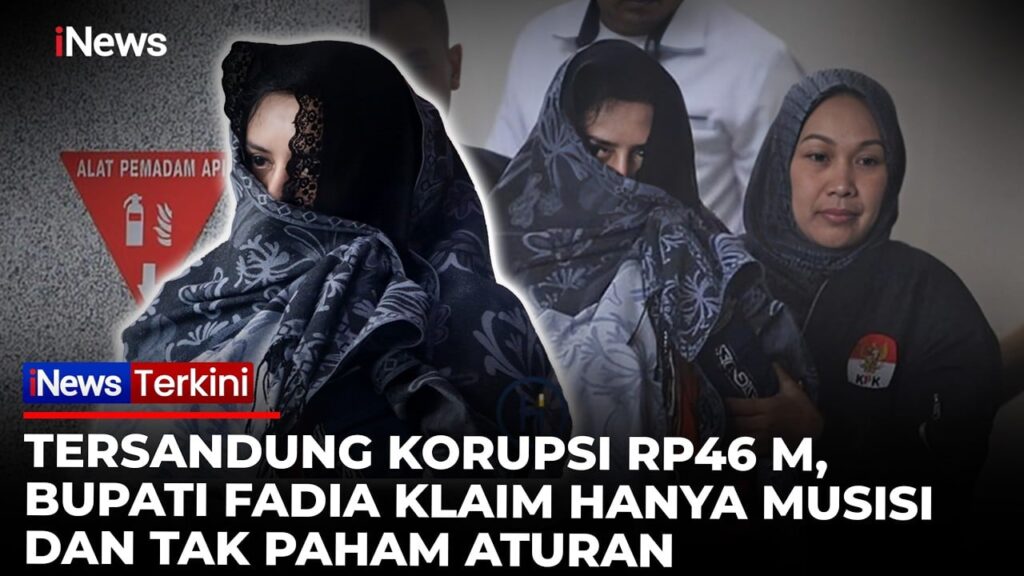
Fadia Arafiq, the Regent of Pekalongan, has stirred controversy following her recent designation as a suspect in a corruption case tied to the procurement of outsourcing services within the local government. The decision was announced by the Corruption Eradication Commission (KPK), which reported that Arafiq was apprehended during a sting operation on March 3, 2026.
In a statement made shortly after her status was made public, Arafiq expressed her surprise, claiming ignorance of the legal frameworks governing her actions. She described herself primarily as a dangdut singer and suggested that her focus had been on ceremonial duties rather than the intricacies of bureaucratic processes. “I leave the technicalities of governance to the regional secretary,” she stated, indicating her belief that she was not deeply involved in the decision-making processes.
The KPK, however, has rejected Arafiq’s assertions, underscoring her extensive history in executive roles. The commission emphasized that Arafiq should have a comprehensive understanding of the principles of good governance, especially given her position. KPK spokespersons pointed out that her involvement in local administration for several years contradicts her claims of unfamiliarity with the relevant regulations.
The corruption case centers on alleged irregularities in the outsourcing procurement for the Pekalongan government for the years 2023 to 2026. Arafiq’s situation highlights ongoing struggles with corruption in various levels of government in Indonesia, where efforts to combat such issues have been a priority for the KPK.
As Arafiq navigates these accusations, the implications for her political career remain uncertain. The case has attracted significant media attention, reflecting broader concerns regarding transparency and accountability in government operations across the country.
The KPK’s action against Arafiq is part of a larger campaign to address corruption, with the commission frequently conducting operations to catch officials engaged in illicit activities. This incident not only reinforces the KPK’s commitment to tackling corruption but also raises questions about the thresholds of accountability for public officials in Indonesia.
The unfolding situation will be closely monitored, as Arafiq’s public statements and the KPK’s subsequent actions may significantly influence public perception and trust in local governance.