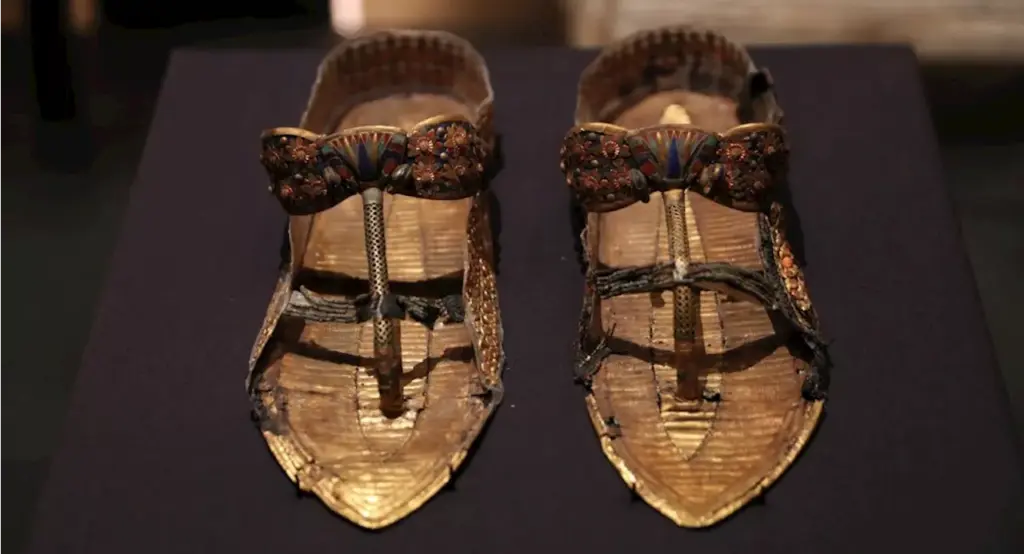
The recent opening of the Grand Egyptian Museum in Giza, Egypt, has unveiled a treasure trove of artifacts from the tomb of the famed pharaoh, King Tutankhamun. Among the over 5,500 items on display, at least 82 pairs of shoes provide fascinating insights into ancient Egyptian culture and the significance of footwear. Notably, the exhibition features sandals crafted from grass, palm leaves, and papyrus, highlighting the craftsmanship of that era.
Dr. André J. Veldmeijer, a noted archaeologist and paleontologist, shared his expertise on the history and importance of these footwear styles. He explained that the shoes found in King Tutankhamun’s tomb serve as important markers of status. “Research has shown that these sandals were worn by the royal family and by officials who were rewarded by the king,” Veldmeijer noted. The simplicity of the materials used raises questions about why such footwear was held in such high regard.
The golden sandals placed on the mummy’s feet, along with two additional pairs of golden open shoes found in the tomb, are particularly striking. These luxurious items are detailed remakes of the simpler sewn sandals, featuring intricate gold embossing that mimics the stitching found in the original designs. This craftsmanship suggests a blend of artistic expression and symbolic significance.
Insights into Ancient Egyptian Footwear
Veldmeijer elaborated on how studying these ancient shoes allows for a deeper understanding of the technology and culture of the time. Each pair of shoes tells a story about its wearer, the fashion trends of the period, and the available resources. “Footwear was not just a practical item; it also conveyed social status and group identity,” he said.
For example, luxury padded sandals adorned with bright colors and intricate decorations are typically found only in elite tombs, particularly in Luxor. Veldmeijer also highlighted a fascinating belief that footwear could serve to ward off evil, a notion still held in some cultures today.
While ancient Egyptian fashion was not commercialized in the way it is now, Veldmeijer pointed out the evolution of footwear styles over time. He noted that styles varied significantly from region to region and country to country, offering valuable clues for archaeologists and historians. “Footwear, like clothing and all aspects of material culture, provides pieces of the puzzle that help us build a comprehensive picture of ancient life,” he stated.
The Grand Egyptian Museum’s exhibition not only showcases the iconic treasures of King Tutankhamun but also invites visitors to ponder the cultural and historical narratives woven into the fabric of ancient Egyptian society. As Veldmeijer concludes, exploring these artifacts enriches our understanding of the past and reveals the intricate connections between fashion, identity, and status in one of history’s most fascinating civilizations.