On January 19, 2024, members of the Hood River community came together at Riverside Community Church to honor the legacy of Martin Luther King Jr. through a celebration filled with music and a compelling panel discussion. The event, themed “Hope is in Our Hands,” featured gospel singer Cynta Butts and focused on the importance of collective action in today’s sociopolitical landscape.
Panel Discussion on Community and Advocacy
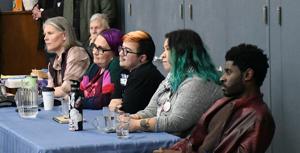
The gathering began with an interactive panel discussion led by Rev. Vickie Stifter, who introduced five panelists representing diverse and intersectional backgrounds. Each participant shared their experiences and insights on navigating joy, hope, and advocacy amidst current challenges.
“We want to acknowledge the fact that these are hard times,” Stifter stated. “Sometimes we get so focused on responding to hard times that we forget to pause and recognize that there’s some lament needed.” This sentiment resonated throughout the discussions, which tackled emotional and social issues impacting the community.
Panelists included Breen Goodwin, director of the Columbia Gorge Food Bank; Amber Rose, community engagement coordinator at the Hood River Latino Network; Kit Clasen, project coordinator for the Columbia Gorge Pride Alliance; August Oaks, creative producer with Black in the Gorge; and Rosie Strange, a registered member of the Confederated Tribes of the Warm Springs and project coordinator for Áqwłtpwisha Chúushna.
Sharing Perspectives on Joy and Challenges
During the Q&A session, panelists explored themes of joy and sorrow in their work and personal lives. When asked what brings them joy, Oaks shared, “Gardening. It’s good for us.” Strange spoke of the spiritual connection found in movement, stating, “I’m very lucky to have found that dance and movement serve my soul.”
Stifter prompted deeper reflection on the year’s hardships, asking about the tears shed in their advocacy roles. Goodwin’s response highlighted the impact of reduced federal funding on food security: “There have been a lot of tears this year; there will be tears today.”
Strange expressed a more personal grief, sharing, “I’ve been crying for two and a half years. The injustice, the genocide in Palestine, has cracked open my heart in ways I didn’t think were possible.”
Despite the emotional weight of their experiences, the panelists also emphasized hope. Rose pointed to community action as a source of inspiration, recalling a march that brought together an unprecedented number of participants. “That was shocking and incredible — the energy people brought from all over,” she said.
Oaks emphasized the importance of empathy in fostering engagement, stating, “If you remember to have a bit more empathy, you can engage in conversations with a broader perspective.”
Addressing Community Challenges and Opportunities
The discussion shifted to the challenges facing the community in the coming year. Strange noted the lack of representation among BIPOC individuals at the event, asking, “Why are they hiding? Where are they?” She called for a collective effort to reach out to marginalized groups. “We can become the people that we need in our community,” she asserted.
Clasen urged attendees to engage more deeply with current events, stating, “There are so many folks who say they don’t engage with the news because it’s too hard, too scary, or makes them feel bad. But there are folks who have to engage in order to be safe.”
Rose framed the societal challenges in stark terms, saying, “We’re experiencing a class war driven by white supremacy and patriarchy, and they’re coming for you.” She encouraged attendees to leverage their resources to support one another. “If you have extra time, extra money, an idea, an ear, a car, anything to share, please do,” she urged.
Goodwin concluded with a critical perspective on food insecurity, stating, “This is not a food issue. This is a power issue. This is a class issue.” She called for a broader understanding of how interlinked challenges such as colonialism and capitalism shape their community.
The event provided a space for reflection, empowerment, and a call to action, reinforcing the idea that, despite current difficulties, hope and unity remain essential in the pursuit of justice and community well-being.