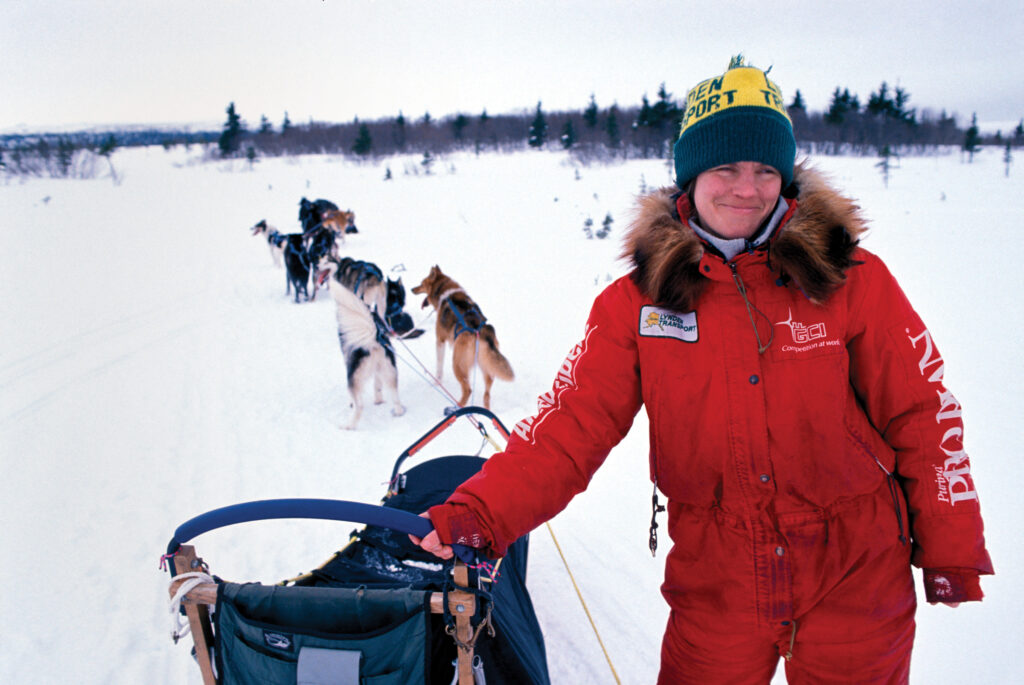
Susan Butcher, a legendary figure in the Iditarod sled dog race, has left a lasting legacy that challenges conventional views on competition and animal care. Butcher, who won the prestigious race four times, demonstrated how nurturing relationships with her dogs led her to victory, reshaping the landscape of competitive mushing.
Memorable Moments in Unalakleet
In the late 1980s, a young admirer witnessed Butcher’s charisma at a checkpoint in Unalakleet, Alaska. The scene was vibrant; the lodge buzzed with excitement as Butcher engaged with her fans, exuding warmth and confidence. For a ten-year-old, it was a moment of awe. The girl, who later shared her experience, felt a mix of admiration and shyness, wishing to approach Butcher but hesitating in the presence of greatness.
During that time, Butcher was en route to her third consecutive Iditarod victory, a feat unmatched at the time. Her success not only elevated her status within the sport but also sparked conversations about the role of women in competitive arenas. Alongside fellow musher Libby Riddles, Butcher became an icon for female empowerment in a field traditionally dominated by men.
Caring Leadership in a Competitive Landscape
Butcher’s approach to mushing was grounded in deep empathy and understanding for her dogs. While some critics dismissed her methods as overly gentle, she insisted that trust and care were critical to success. “Care is soft. In tune. Perceptive and seeking to understand,” she once said, highlighting her belief that nurturing relationships lead to better performance. This philosophy not only made her a champion but also redefined the expectations of what it means to be a successful musher.
Despite facing criticism, including derogatory comments from those who did not respect her methods, Butcher persevered. Today, her legacy continues to influence how sled dogs are treated during training and racing. The Iditarod has since instituted strict animal welfare guidelines, a shift largely credited to the advocacy of Butcher and her contemporaries.
As the Iditarod approaches its 50th anniversary, Unalakleet remains a significant checkpoint, marking a moment of celebration for mushers. The first team to arrive is awarded $3,000 in gold nuggets, reinforcing the community’s ongoing commitment to the sport and its traditions. Events like these remind residents of the vital role the race plays in Alaska’s culture and the enduring impact of champions like Butcher.
Reflecting on Butcher’s influence, the young admirer now recognizes the courage it takes to challenge societal norms. Butcher’s accomplishments serve as a reminder that true leadership can come from compassion, a lesson that transcends the confines of competitive sports.
As the sun warms the Alaskan landscape each March, the spirit of Susan Butcher continues to inspire new generations of mushers and animal lovers alike. In a world that often prioritizes dominance, her legacy stands as a testament to the power of care and trust, proving that these qualities can lead not only to victories but also to lasting change.