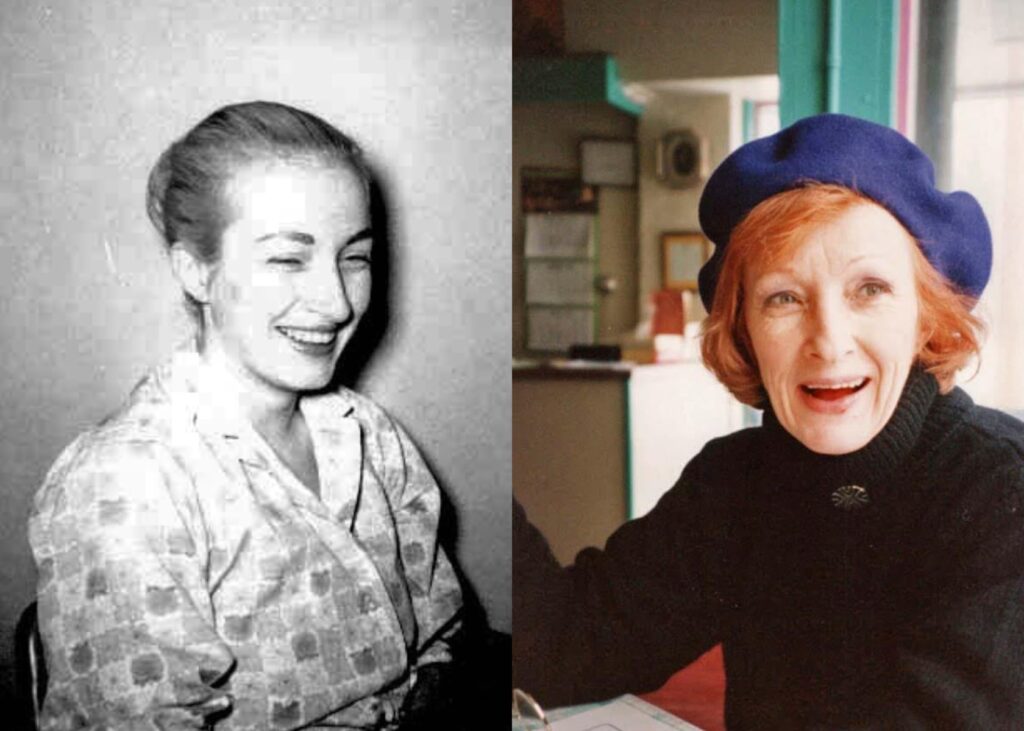
Cleota Rae Reed, a renowned ceramist and art historian based in Syracuse, New York, passed away on November 25, 2023, at the age of 90 due to complications from pneumonia. Reed’s extensive contributions to the field of ceramics and her dedication to the study of the Arts and Crafts movement have left a lasting legacy in the art world.
Born in 1935 in Chicago, Reed initially pursued a career in architecture, a passion she developed during her early years. The family relocated to a chicken farm in Pittsburgh before settling in Elkhart, Indiana, where her father worked as a salesman. Reed excelled academically in high school and briefly attended Indiana University, focusing on studio arts before marrying.
Reed’s artistic journey expanded over the years as she took classes at institutions including St. Mary’s College at Notre Dame, the San Antonio Art Institute, and Iowa State University. She began teaching ceramics from her garage, producing a variety of functional and decorative pieces. Her daughter, Heila Martin-Person, noted, “She made pots, dishes, goblets, casserole dishes, to list a few.”
In 1970, Reed and her four children moved to Syracuse, where she truly flourished. She earned a Bachelor of Fine Arts from Syracuse University in 1975 and completed a Master’s degree in art history a year later. During her graduate studies, she developed a close relationship with her thesis advisor, David Tatham, a professor of American art history, and they eventually married.
Reed’s home, designed by architect Ward Wellington Ward, became a focal point of her research. She dedicated herself to documenting Ward’s work and played a crucial role in identifying over 200 of his pieces across Syracuse and the surrounding region. Samuel Gruber, a friend and colleague, highlighted her efforts in advocating for Ward’s creations to be listed on the National Register of Historic Places.
Her passion for architecture extended to her home, which featured remarkable decorative clay tiles by Henry Chapman Mercer and leaded-glass windows crafted by local artisan Henry Keck. This interest propelled Reed into a scholarly exploration of the Arts and Crafts movement, a significant cultural trend that emerged from 1880 to 1920. Gruber remarked, “She was the main person in reviving interest in that whole important, creative period of Syracuse and Central New York.”
Reed published extensively on American decorative arts, ceramics, and architecture, authoring ten books on the subject, including critical studies of Mercer and Keck. Her work brought renewed attention to these previously overlooked figures, changing their recognition within the art community.
In 1994, she co-founded the Arts and Crafts Society of Central New York and served as an archivist and curator for the Syracuse China Company. Gruber praised her as a “very generous teacher and scholar,” noting her eagerness to share her findings with others and encourage community engagement with local architecture.
Reed’s scholarly pursuits extended beyond New York. Every spring semester, she and Tatham traveled to London, where she continued her research on the Arts and Crafts movement. Gruber stated, “We owe her a big debt,” emphasizing her significant role in establishing Syracuse as a pivotal location for this creative movement.
Throughout her life, Reed was not only an influential scholar but also a devoted mother. She is survived by her children, Ragen Tiliakos, Reed Martin, Heila Martin-Person, and John Martin, as well as seven grandchildren and seven great-grandchildren.
Her contributions to the arts and her commitment to education and community engagement will be remembered as a vital part of Syracuse’s cultural history. Reed’s legacy as a ceramist, historian, and teacher continues to inspire future generations.