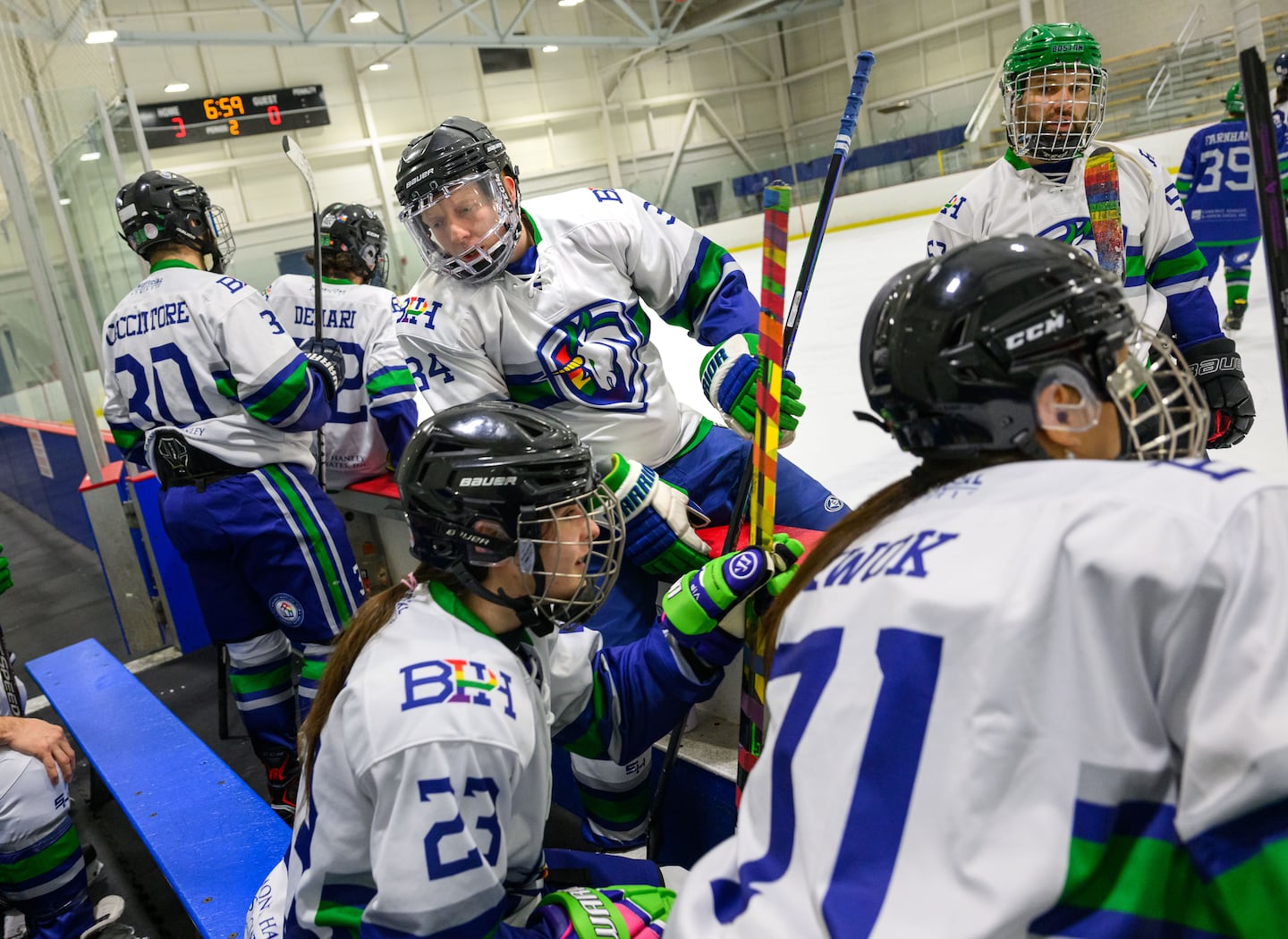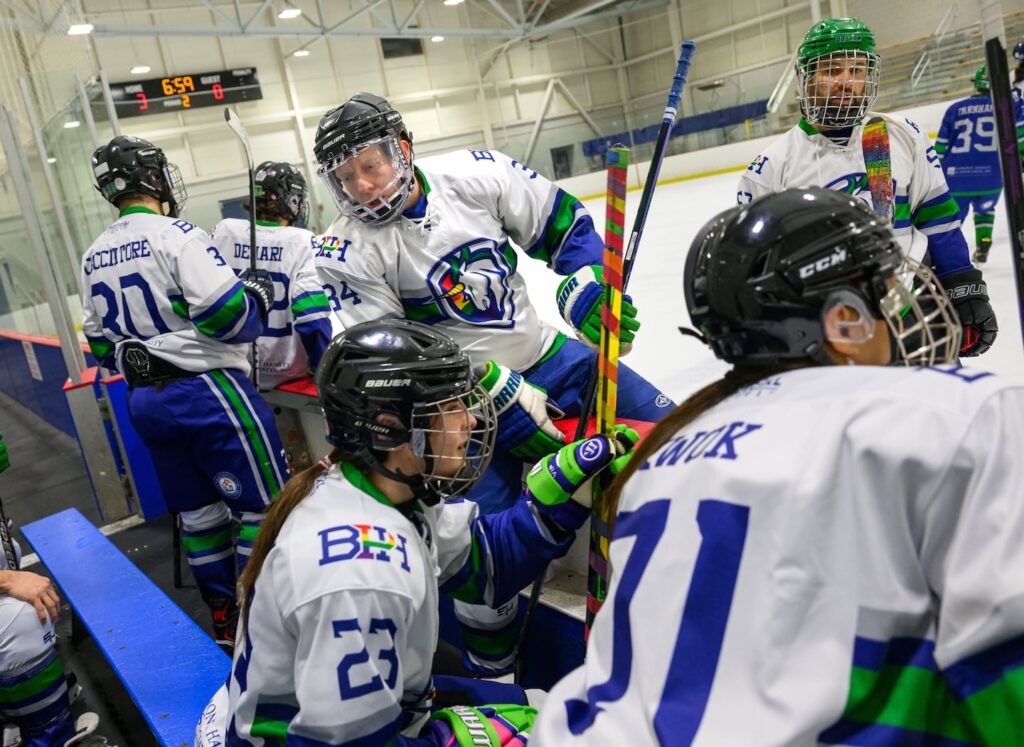
On March 14, 2024, the Boston Bruins will illuminate TD Garden with rainbow lights as part of their annual “Hockey Is for Everyone” night. This event, which has been running for nearly a decade, aims to promote inclusivity within the sport and raise funds for the Boston Pride Hockey league. The celebration coincides with the rising popularity of the HBO series “Heated Rivalry,” which portrays a romantic relationship between two closeted professional hockey players.
The series has quickly become a cultural phenomenon, resonating not only with the LGBTQ+ community but also gaining traction among a broader audience. For a sport that has never had an openly gay player—active or retired—”Heated Rivalry” presents a significant narrative shift, allowing discussions about inclusivity in hockey to gain momentum.
During a recent game, NHL commissioner Gary Bettman acknowledged the show’s impact, stating, “We’re well aware of ‘Heated Rivalry.’ In terms of embracing it, I think it’s a wonderful story.” Bettman highlighted the series as a unique opportunity to attract new fans, particularly younger viewers.
The show’s influence is evident in various local events, including a “Heated Rivalry” look-alike contest that attracted hundreds of participants and trivia nights that consistently sell out. Merchandise related to the fictitious teams, the Boston Raiders and the Montreal Voyagers, has also surged in popularity. Many who previously had little interest in hockey, like Ryan Leblanc from Medford, are now attending games for the first time, inspired by the series.
Despite this surge in interest, some experts remain skeptical about whether “Heated Rivalry” will lead to more players coming out publicly. The decision to reveal one’s sexuality is deeply personal and often fraught with challenges. Jim Buzinski, co-founder of the LGBTQ+ sports news website Outsports, noted, “The process [of coming out] is fraught with so many things for people. No straight athlete has to hold a news conference to announce they’re straight.”
While the show has catalyzed conversations about sexuality in sports, the NHL still has work to do. Luke Prokop made history as the first openly gay player under contract with the NHL, but he has yet to play in a game. Jason Collins became the first active player in the four major American professional sports to come out in 2013, highlighting the challenges athletes face in making such declarations.
Prominent voices in sports management, like Edward Kian, believe “Heated Rivalry” could help shift outdated attitudes within the NHL and among its fans. Kian stated, “If the show can get more hockey fans to accept that some of the 736 athletes on NHL active rosters must be gay, then that could theoretically lead to more gay hockey players feeling welcomed enough to come out publicly.”
The physical and aggressive nature of hockey often perpetuates stereotypes that may discourage players from being open about their sexuality. Jett Stone, a clinical psychologist who studies male behavior, explained that such perceptions can create an environment where players feel pressured to conform to hypermasculine ideals.
Many LGBTQ+ players have left the sport due to hostile environments, often characterized by homophobic language in locker rooms. Kevin Corsino, a member of the Boston Pride Hockey league, shared his experience of navigating these challenges. “I knew how to skate before I could walk… but after years of hearing homophobic locker room banter, I decided it just wasn’t the space for me,” he said.
Fellow player Jackie Farnham echoed Corsino’s sentiments, revealing that the intensity of homophobic slurs drove him away from the sport until he discovered the more inclusive atmosphere at Boston Pride Hockey. “I just assumed if I was going to play the game, I was going to have to make sacrifices in that I wouldn’t get to completely be myself,” Farnham reflected.
The NHL has been actively working to foster inclusivity through initiatives like its partnership with You Can Play, an organization advocating for LGBTQ+ belonging in sports. Teams have also held “Hockey Is for Everyone” nights to promote inclusivity across various demographics.
Despite some setbacks, including a 2023 decision to ban specialty jerseys and Pride tape, the league has shown a commitment to inclusivity. After pushback from players, these restrictions were reversed.
With “Heated Rivalry” capturing attention beyond traditional hockey audiences, there is hope that it will pave the way for a more accepting environment within the sport. Cheryl Cooky, a professor at Purdue University, noted that the show could encourage both players and fans to feel safer and more comfortable expressing themselves in sports settings.
Regardless of whether any NHL players come out in the near future, “Heated Rivalry” has provided the LGBTQ+ community with a compelling love story that resonates deeply. Buzinski stated, “The show has given us a fairy tale romance. Finally, we have one.”
As the Bruins light up TD Garden, the intersection of sports and representation shines brighter than ever, demonstrating the potential for change within a long-traditional sport.