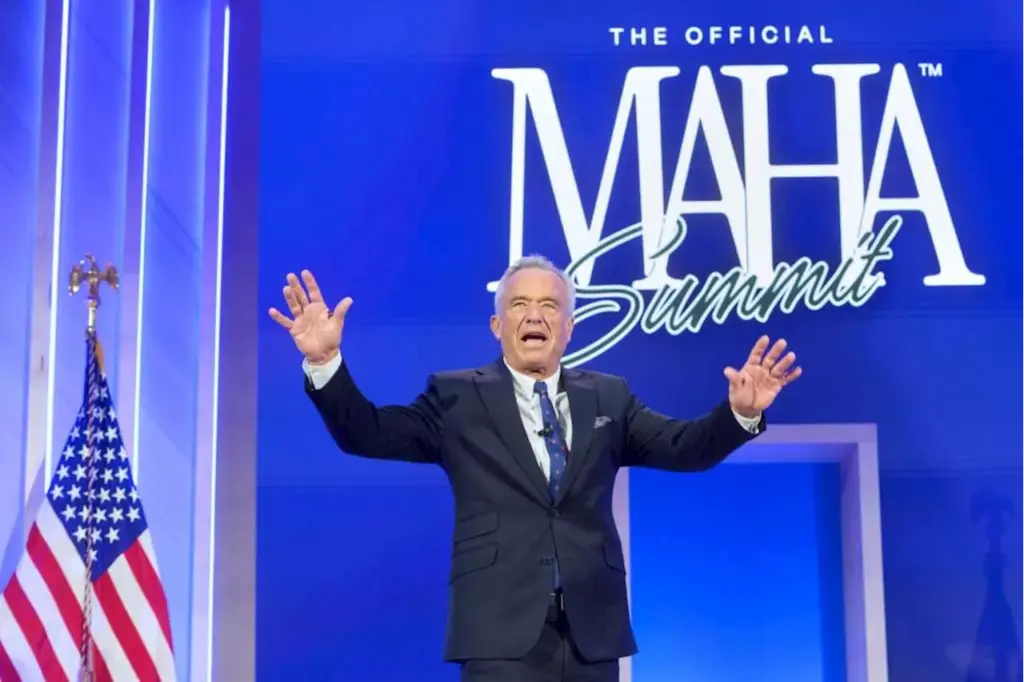
The United States government has implemented a significant reduction in its recommended childhood vaccinations, raising concerns among medical experts and public health advocates. On March 4, 2024, the Department of Health and Human Services (HHS), led by Secretary Robert F. Kennedy Jr., announced a new vaccination schedule that decreases the number of vaccines recommended for all children from the previous total to now cover only 11 diseases.
This change, which is effective immediately, marks a substantial shift in the nation’s approach to preventative healthcare for children. Critics argue that the decision could have dire consequences for public health. The revised recommendations now categorize vaccines for rotavirus, hepatitis A, hepatitis B, certain forms of meningitis, and Respiratory Syncytial Virus (RSV) as optional, advising that these should only be administered to high-risk groups or based on individual physician recommendations—a practice termed ‘shared decision-making.’
Officials from the Trump administration have defended the policy change, asserting that families will continue to have access to these vaccines and that insurance coverage will remain unchanged. They argue that the updated schedule aligns the U.S. with recommendations from other developed nations, potentially enhancing public trust in health guidance.
According to HHS officials, the rationale behind this overhaul was to address the perception that the U.S. was an outlier compared to its peers regarding the number and frequency of recommended vaccinations. Their analysis focused on data from 20 countries, suggesting that the new guidelines target what they view as the most essential vaccinations for children. Vaccines still included in the universal recommendations are those protecting against measles, whooping cough (pertussis), polio, tetanus, chickenpox (varicella), and the Human Papillomavirus (HPV).
While Secretary Kennedy has stated that this decision “protects children, respects families, and rebuilds trust in public health,” many medical professionals have expressed serious concerns regarding its implications. The American Academy of Pediatrics has voiced apprehension over the potential adverse effects of scaling back vaccine recommendations.
Dr. Sean O’Leary, a representative of the American Academy of Pediatrics, emphasized that the new guidelines do not adhere to the principles of evidence-based medical practice. He noted the importance of assessing vaccine recommendations against the prevalence of diseases within specific populations and the overall effectiveness of healthcare systems.
The adjustments also include a modification for the HPV vaccine, reducing the recommended number of doses for most children from two or three to a single dose, depending on age. This alteration, along with the broader reduction in vaccine recommendations, was made without input from the advisory committee typically involved in such decisions.
Experts have raised alarms about the potential repercussions of these changes. Michael Osterholm, director of the Vaccine Integrity Project at the University of Minnesota, warned that the removal of widespread recommendations for vaccines against influenza, hepatitis, and rotavirus, combined with the altered HPV guidelines, could lead to increased hospitalizations and preventable deaths among children, especially in the absence of a transparent process to evaluate the associated risks and benefits.
This significant shift in vaccine policy underscores the intricate relationship between public health, political agendas, and the evolving understanding of vaccine science. The stakes are high as the U.S. navigates this new landscape of childhood vaccinations, with implications that could affect the health outcomes of future generations.