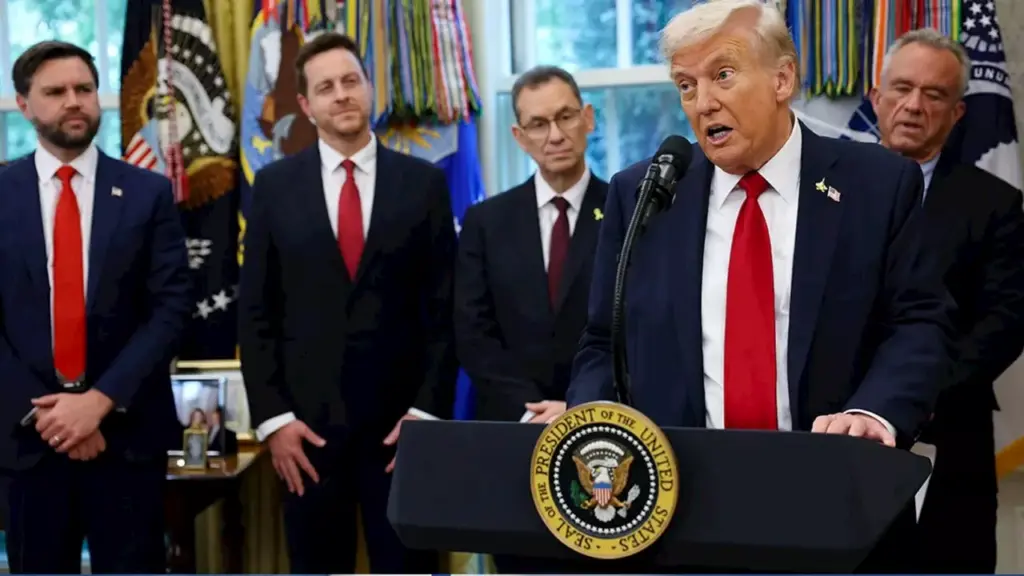
President Donald Trump has announced new agreements with leading pharmaceutical companies aimed at reducing prescription drug costs for Americans. This initiative, which includes participation in the most-favored-nation pricing model, is part of the administration’s broader strategy to enhance healthcare affordability.
In a press conference held in the Roosevelt Room on September 29, 2023, Trump revealed that nine additional drug manufacturers have agreed to the most-favored-nation pricing initiative. This brings the total number of participating companies to fourteen out of the seventeen largest pharmaceutical firms globally. The announcement marks a significant milestone in the ongoing negotiations to make medications more accessible for those enrolled in the government’s Medicaid health program.
The newly formed agreements entail a collective investment of $150 billion directed toward domestic manufacturing and essential research and development within the pharmaceutical sector. Companies involved include major players such as Amgen, Boehringer Ingelheim, Bristol-Myers Squibb, Genentech, Gilead, GSK, Merck, Novartis, and Sanofi. These partnerships reflect a successful negotiation process between the administration and the pharmaceutical industry, aiming for pricing structures that align with international standards.
The negotiations commenced in July 2023, initiated by letters from Trump to the leaders of the seventeen largest drug manufacturers. The objective was to secure agreements that would ensure drug prices for Medicaid recipients are comparable to those in other high-income countries. This approach underscores the administration’s commitment to making healthcare more affordable for all Americans, regardless of their economic status.
In addition to price reductions, the agreements include provisions for the donation of active pharmaceutical ingredients to the United States’ Strategic Active Pharmaceutical Ingredients Reserve (SAPIR). This reserve is intended to bolster national preparedness for emergencies such as pandemics and natural disasters. Several manufacturers, including Pfizer, AstraZeneca, Serrano, Novo Nordisk, and Lilly, have also committed to these terms, emphasizing the significance of public-private partnerships in tackling complex healthcare challenges.
To further promote transparency and accessibility, the administration plans to launch the website TrumpRX.gov early next year. This platform will provide detailed information regarding the newly established pricing agreements and initiatives aimed at reducing drug costs.
The consistent focus on lowering prescription drug prices has been a central theme of the Trump administration’s healthcare policy. With these new agreements, there is potential for a considerable impact on medication affordability across the United States, reflecting a concerted effort to align domestic drug prices with global benchmarks. The developments signal a notable advancement in U.S. healthcare and its ongoing challenges regarding medication costs.