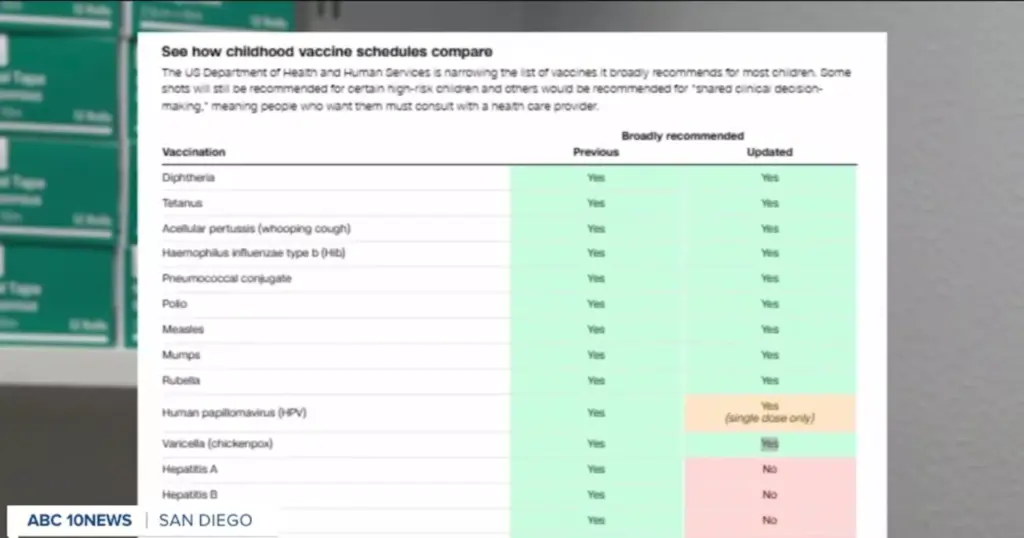
The Centers for Disease Control and Prevention (CDC) has introduced a new tiered system of vaccine recommendations for children, significantly reducing the number of vaccines advised for healthy children from 17 to 11. This announcement has raised concerns among pediatricians, educators, and parents regarding potential public health implications.
Dr. John Bradley, the Medical Director of Infectious Diseases at Rady Children’s Hospital, has been a prominent figure in shaping vaccine guidance through the American Academy of Pediatrics (AAP). He emphasized the collaborative approach historically taken in developing vaccine recommendations, where every member has the opportunity to contribute ideas based on scientific evidence. “Everyone contributes, everyone has a chance to raise their hand and say, ‘What about this? What about that?’” Dr. Bradley stated.
The CDC’s new recommendations, released this week, are expected to influence state vaccination requirements for schools and the coverage of vaccines by insurance providers. The agency’s decision to alter the vaccine schedule without prior consultation with the AAP has triggered a backlash. Dr. Bradley expressed disappointment over the process, stating, “If the CDC had said, ‘Let’s have a meeting, let’s discuss this,’ I would have been really happy.”
The AAP has condemned the CDC’s changes, describing them as “dangerous and unnecessary.” Dr. Bradley pointed out the risk of preventable hospitalizations if essential vaccines are not administered. The concern is that this shift may lead to confusion among parents and pediatricians about vaccine accessibility and insurance coverage.
In light of the changes, many medical offices may need to adapt their procedures. Dr. Bradley noted that the loss of CDC endorsement could undermine the credibility of pediatricians. “If we can’t recommend it in association with the CDC any longer, that takes away some of the credibility the pediatricians may have,” he said.
The potential fallout from these new guidelines has prompted discussions about the future of vaccine policy. Dr. Bradley hopes that the strong response from professional organizations and parent groups will encourage the CDC to reconsider its approach to vaccine recommendations. He remarked, “I hope that they learn that this pushback will have them think twice about just releasing a policy for vaccines without getting everyone’s input.”
As the healthcare community navigates these changes, parents are left seeking clarity on what the new recommendations mean for their children’s health. The CDC’s announcement has ignited a national dialogue on the importance of vaccines and the need for collaborative decision-making in public health policy.