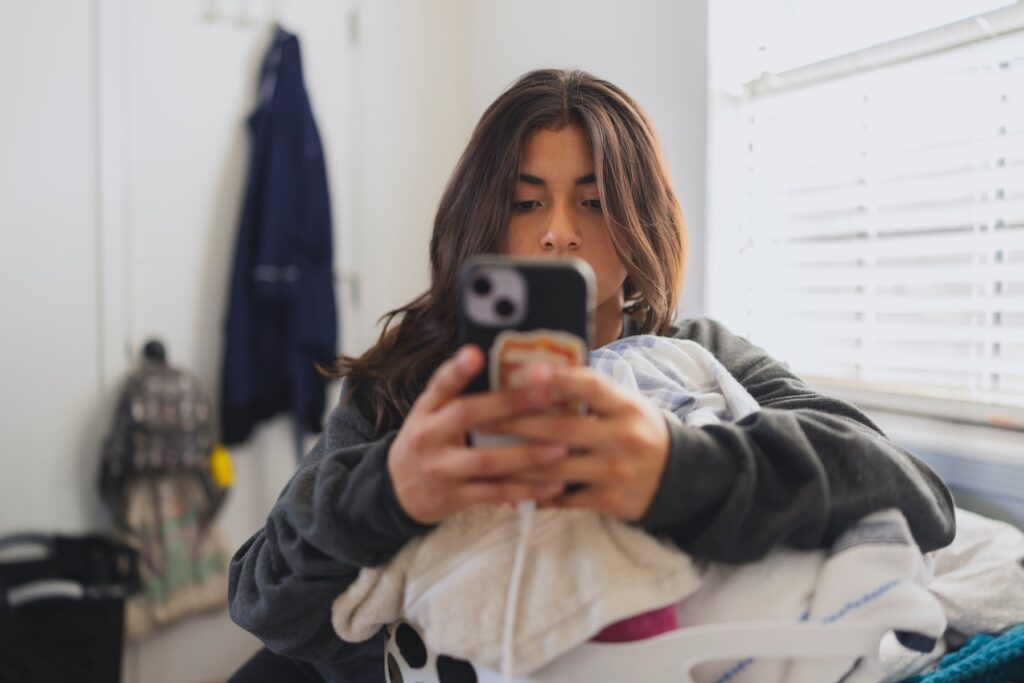
A family dynamic is facing tension as a stepmother expresses concerns over her stepdaughter’s habit of recording daily life at home. The mother, who remains anonymous under the pseudonym “Not Your Content Creator,” has reached out for advice regarding her 16-year-old stepdaughter, Mia, who has taken to filming various moments throughout their household. What began as light-hearted clips has escalated into a source of conflict, leading to feelings of discomfort and invasion of privacy.
The stepmother describes how Mia initially recorded humorous incidents, such as cooking mishaps and playful moments with the family dog. However, the situation shifted when Mia began filming interactions that showcased disagreements between her parents. “If my husband and I disagree about anything, she’ll quietly set her phone on the counter,” the stepmother explained, noting that Mia seems to be waiting for a dramatic moment to capture. She has asked Mia to refrain from filming without permission, but the teenager often dismisses these requests, claiming she is simply creating content.
In response to the stepmother’s concerns, advice columnist Annie Lane emphasized the importance of privacy and consent within a household. “A home is not a stage, and consent matters, especially when filming is used to provoke or embarrass somebody,” Lane stated. She recommended that the family establish a clear household rule prohibiting recording in shared spaces without permission. This approach focuses on mutual respect rather than singling out Mia’s behavior.
Lane also advised enlisting the father’s support in addressing the situation. She encouraged the stepmother to communicate her feelings about how dismissive attitudes toward her concerns leave her feeling unprotected in her own home. It is crucial that both parents agree on consequences for continued filming, such as limiting Mia’s phone access in common areas or requiring her to film in private spaces.
To avoid giving Mia the attention she might seek from filming, Lane suggested maintaining a calm demeanor. Ignoring the provocative behavior can help prevent escalation and discourage the teenager from seeking out dramatic reactions.
The situation reflects a broader challenge faced by many blended families, where establishing boundaries can be complicated. As the family navigates this issue, Lane’s guidance offers a framework for addressing privacy concerns while fostering a respectful household environment.
For further insights, readers can explore Lane’s third anthology, “Out of Bounds: Estrangement, Boundaries and the Search for Forgiveness,” which addresses themes of anger and the importance of personal boundaries. More information can be found at Creators Publishing or on Instagram at @dearannieofficial.