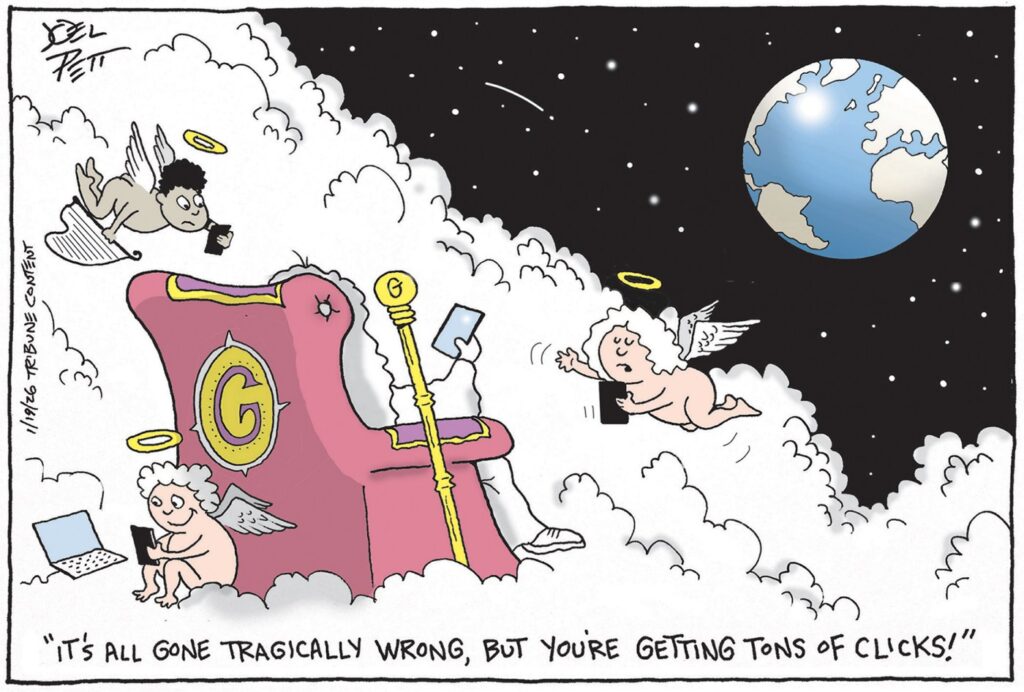
The relentless pursuit of clicks has led to a growing trend where apocalyptic themes dominate digital media. Various platforms have capitalized on public anxiety surrounding environmental and geopolitical issues, using sensationalist content to drive engagement and advertising revenue. This phenomenon reflects a broader shift in how news is consumed and highlights the complex relationship between fear and digital engagement.
Understanding the Click Economy
In recent years, editorial cartoonists and digital media outlets have increasingly focused on apocalyptic imagery and narratives. The interplay between fear and engagement has proven lucrative; advertisers are drawn to content that generates high traffic. According to data from the Digital Media Association, articles that evoke anxiety about climate change or global instability see a significant uptick in readership, translating into higher advertising revenues.
This trend raises important questions about the responsibility of content creators. As audiences gravitate toward sensational headlines, the challenge lies in balancing informative content with the demand for engagement. It prompts a critical examination of ethical boundaries in journalism, particularly in how stories are framed to attract clicks.
The Role of Social Media
Social media platforms have played a pivotal role in amplifying these apocalyptic narratives. With algorithms designed to prioritize engaging content, platforms such as Facebook and Twitter often promote posts that feature striking visuals or alarming headlines. A recent report from the Pew Research Center found that over 70% of users engage with news primarily through social media, underscoring its influence on public perception.
Editorial cartoonists have deftly navigated this landscape, using their art to both comment on and contribute to the prevailing narratives. Their work often reflects societal anxieties, encapsulating complex issues into digestible, visual formats. This creative approach not only garners attention but also provokes dialogue among audiences.
The financial implications are substantial. As digital media outlets monetize their content through advertisements, the focus shifts toward producing material that ensures high engagement rates. This cycle perpetuates a reliance on sensationalism, which can overshadow critical discussions on pressing issues like climate change or political instability.
The challenge becomes maintaining journalistic integrity while navigating the increasing demands of the click-driven economy. As audiences become desensitized to constant apocalyptic messaging, there is a risk of trivializing significant issues.
In conclusion, the intersection of fear, engagement, and revenue in the digital media landscape presents a complex dilemma. As the appetite for apocalyptic narratives grows, so too does the responsibility of content creators to provide accurate and meaningful information. The future of journalism may well depend on finding a balance that respects both audience engagement and the critical need for informed discourse on global challenges.