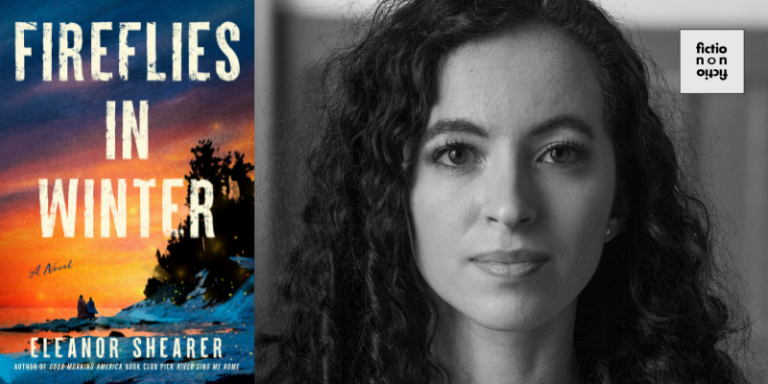
Novelist Eleanor Shearer recently joined co-hosts V.V. Ganeshananthan and Whitney Terrell to discuss her latest work, Fireflies in Winter. The novel uncovers the largely overlooked history of the Leeward Maroons of Jamaica, a free Black community descended from formerly enslaved Africans and Indigenous peoples, who migrated to Nova Scotia at the end of the 18th century.
Shearer, who has Caribbean ancestry, delves into the dual nature of the Maroons’ legacy. They are celebrated for their successful resistance against British colonial forces but also criticized for their role in capturing and returning runaway enslaved individuals. This complex history serves as a backdrop for Shearer’s exploration of freedom, identity, and systemic injustice.
During the conversation, Shearer draws parallels between the historical struggles of her characters and the current experiences of immigrants in the United States and beyond. She emphasizes the importance of understanding both the past and present to grasp the ongoing challenges faced by marginalized communities.
Exploring Themes of Grief and Freedom
In her novel, Shearer introduces a cast of characters, including Cora, who grapples with loss and identity. Cora is mourning her home in Jamaica and the recent death of her close friend, who was married to Silas, a captain among the Maroons. The narrative structure reflects Cora’s grief while also exploring themes of community and resilience.
As Shearer explains, “This is a grief book as well as a book about freedom.” Cora’s relationships within the Maroon society reveal a complex web of connections, highlighting both the supportive and exploitative aspects of community life. Silas, while a figure of authority, presents challenges for Cora, as he embodies the martial structure of Maroon society.
The novel also deals with themes of queerness and the search for identity in a time when being openly queer was perilous. Cora’s journey reflects the intricate balance between societal expectations and personal freedom, prompting readers to consider where true liberation lies.
The Impact of Children in Displacement Narratives
Children play a significant role in Fireflies in Winter, with the character Benjamin representing the lasting impact of displacement and trauma. Shearer highlights the struggles faced by young individuals during times of upheaval, drawing attention to the emotional scars left by such experiences.
She notes that the challenges faced by children today, such as separation from parents due to immigration policies, echo the historical experiences of her characters. “The fracturing of families, which was something that was so common during enslavement, continues to resonate today,” she observes.
The portrayal of Benjamin underscores the complexities of childhood resilience. Although he appears to cope with his grief, moments of vulnerability reveal the underlying trauma he carries. This duality reflects Shearer’s understanding of how children navigate loss and uncertainty in their lives.
Shearer’s insights into the ongoing impact of historical injustices, particularly as they relate to family and community structures, resonate strongly in today’s context. The connections between her characters and contemporary issues serve as a powerful reminder of the enduring legacies of colonialism and migration.
Through her evocative storytelling, Eleanor Shearer invites readers to explore a rich tapestry of Caribbean history while addressing the universal themes of loss, identity, and resilience. As the conversation unfolds, it becomes clear that Fireflies in Winter is not just a historical narrative but a poignant reflection on the human experience in the face of adversity.