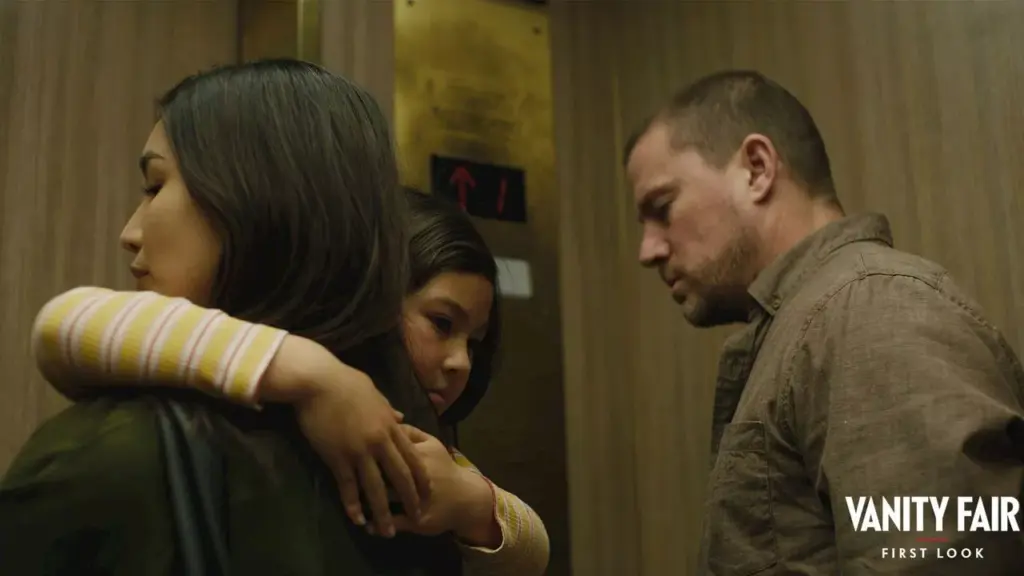
Beth de Araújo’s film Josephine will make its world premiere at the Sundance Film Festival on January 23, 2026, showcasing a gripping narrative focused on childhood trauma and its aftermath. Starring Channing Tatum and Gemma Chan, the film explores the harrowing journey of parents grappling with the emotional fallout after their daughter witnesses a violent crime.
The story unfolds in Golden Gate Park, where a young girl named Josephine accidentally witnesses a brutal sexual assault. This deeply personal project required a sensitive approach from de Araújo, Tatum, and Chan, as it confronts a subject that is both painful and painfully common, yet often left unspoken.
De Araújo notes, “There’s so much silence around it—even saying the word rape is very uncomfortable for everyone, and I totally understand why. But if we say that this is accepted in society, what else are we willing to accept?” She began writing the screenplay in 2014 and developed it further through the Sundance Labs. Her dedication to authenticity led her to observe a sexual assault case in detail at the San Francisco Hall of Justice, which significantly shaped her writing.
While refining her script, de Araújo also worked at the Los Angeles Rape and Battering Hotline, gaining firsthand experience as a witness advocate for sexual assault victims. Although she had not directed a film prior, she first helmed Soft & Quiet, a thriller that premiered at the South by Southwest film festival in 2022. This project caught the attention of Tatum’s then-girlfriend, Zoë Kravitz, who suggested he might be ideal for the lead role.
Tatum described reading the script as “really painful,” acknowledging the genuine emotions that informed de Araújo’s writing. “She’s so brave and really is never, ever not taking a swing at really trying to tell something from an honest and special place,” he stated. After their meeting, de Araújo adapted the character of Damien, Tatum’s role, to reflect his own Southern upbringing, making it resonate more authentically with the actor’s personal experiences.
Chan, who joined the project after her success in Crazy Rich Asians, was initially hesitant about taking on such a challenging role. “At first, I was a little apprehensive because she’s so beautiful, and I didn’t want her beauty to interfere with the reality of this being a really everyday situation,” she explained. However, she found a deep connection with the character, noting, “I am a sexual assault survivor myself, and there are some things in Claire’s background that really spoke to me.”
De Araújo incorporated elements from her own upbringing into the narrative. Like Chan’s character, her mother was a professional dancer with the San Francisco Ballet. However, de Araújo noted significant differences in how the parents in the film communicate with their daughter about trauma. “My parents never talked to me about that morning until I was in my 20s,” she recalled, emphasizing the need to modernize the dialogue around such experiences.
The film portrays the couple’s struggles and disagreements about how to address the traumatic event with their young daughter. As the court case approaches, tensions rise, creating a complex emotional landscape. Chan reflects on this dynamic, saying, “It’s such a difficult situation… neither of them are really right or wrong.”
The search for the right actor to portray Josephine was extensive, leading de Araújo to discover Mason Reeves at a farmer’s market in San Francisco. Although Reeves had no prior acting experience, her performance is described as tender and authentic. Just eight years old during filming, she brought a unique energy to the set, which was particularly demanding given the heavy themes. Chan praised her resilience: “There were times where Channing and I would be really flagging, and she would be full of energy. She kept us going a lot of the time on these long days.”
The film’s portrayal of a brutal attack through the eyes of a child presents challenges for both the actors and the audience. De Araújo aimed for a visceral representation, employing a trauma therapist on set to support cast members during intense scenes. “I wanted it to be as visceral and as real as I could remember it,” she explained, acknowledging the emotional toll of revisiting such painful memories.
As the production progressed, de Araújo experienced a profound transformation. “Seeing how small Mason was did give me a sense of empathy for my childhood self,” she reflected, adding that the project became a therapeutic release for her.
Both Tatum and Chan found the experience enlightening. “At the end of the process, I felt lighter,” Chan remarked, emphasizing the cathartic nature of their collaboration. Tatum, a father to a twelve-year-old daughter, gained valuable insights into parenthood and the complexities of love. “I’m not ever going to do right, and really put down the fear of fucking up because we’re flawed people,” he expressed, highlighting the difficulties inherent in parenting.
De Araújo hopes that Josephine will resonate with audiences, offering a transformational experience. “I do always want the audience to feel like with any of my work, they’re guaranteed something worthwhile,” she stated. “I think perhaps my work will always be an invitation to accept that a better world is possible—maybe, hopefully.”