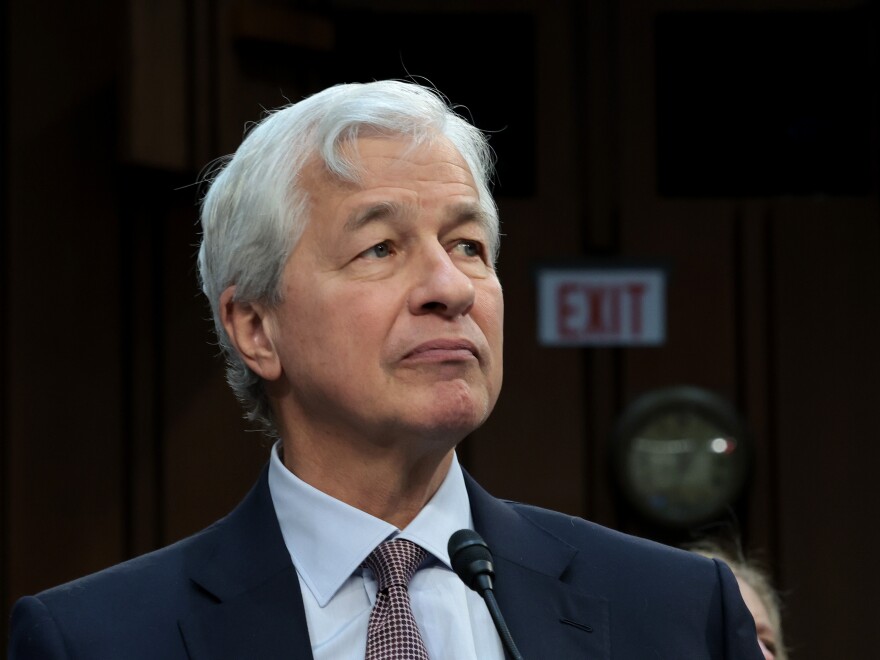
Former President Donald Trump has initiated a lawsuit against JPMorgan Chase and its CEO, Jamie Dimon, seeking at least $5 billion in damages. The suit, filed in Miami-Dade state court on Thursday, alleges that the bank closed Trump’s accounts due to political motivations rather than legitimate banking reasons.
The lawsuit follows a threat from Trump made on his Truth Social platform over the weekend. Trump claims that JPMorgan Chase closed his accounts in 2021, shortly after the January 6 attack on the U.S. Capitol, as part of a broader effort to distance itself from his conservative political views. He characterized the bank’s actions as influenced by “unsubstantiated, ‘woke’ beliefs.”
In response, a JPMorgan Chase spokesperson stated that the lawsuit “has no merit” and emphasized the bank’s policy of closing accounts only when there is a legal or regulatory risk. The spokesperson noted, “We regret having to do so but often rules and regulatory expectations lead us to do so.” They also indicated that the bank has consistently advocated for changes in regulations that would alleviate such situations.
Trump’s accusations reflect a broader narrative he has pursued regarding what he perceives as “debanking” of conservatives. He has previously targeted major U.S. banks, including Bank of America, in similar contexts. Last year, he filed a lawsuit against Capital One over comparable claims. In August 2023, Trump issued an executive order aimed at what he described as “politicized or unlawful debanking.”
Tensions between Trump and Dimon have intensified over various issues. While most U.S. CEOs have avoided direct public criticism of Trump, Dimon has openly opposed certain policies, including Trump’s attempt to exert control over the Federal Reserve. Last week, following a Department of Justice lawsuit against the Federal Reserve, Dimon reiterated his support for an independent central bank and its chair, Jerome Powell.
During a recent appearance at the World Economic Forum in Davos, Switzerland, Dimon voiced strong opposition to Trump’s proposal to impose a cap on credit card interest rates, calling it “an economic disaster.”
As the lawsuit progresses, it will likely draw significant attention, not only for its financial implications but also for its potential to further complicate the relationship between the financial sector and political figures in the United States. The outcome may reveal how institutions navigate the intersection of finance and politics in an increasingly polarized environment.