A team of researchers at South Korea’s Ulsan National Institute of Science and Technology (UNIST) has developed an innovative rain-powered generator that transforms raindrops into electrical signals capable of operating smart drainage systems and issuing flood warnings. This breakthrough technology converts the mechanical impact of raindrops into electrical energy without reliance on batteries or external power sources, addressing a growing need for sustainable urban infrastructure.
Led by Professor Young-Bin Park from the Department of Mechanical Engineering, the team created the Superhydrophobic Fiber-Reinforced Polymer Droplet-Based Electricity Generator (S-FRP-DEG). This device harnesses energy instantaneously as raindrops hit its surface, facilitating a self-sufficient mechanism for stormwater management.
The generator operates on principles similar to static electricity. Raindrops accumulate positive charges while falling through the atmosphere. Upon striking the device’s negatively charged, superhydrophobic surface, charge transfer occurs. This interaction causes the droplets to detach quickly, generating an electric current through embedded carbon fibers, yielding electrical signals nearly immediately.
To enhance efficiency, researchers incorporated a textured surface and a lotus-leaf-inspired coating, which improves water repellency and prevents the accumulation of dirt and soot. The durability of the carbon fiber-reinforced polymer (CFRP) ensures that the device remains effective in harsh outdoor conditions, unlike traditional droplet-based generators that often suffer from corrosion due to moisture and urban pollutants.
In laboratory tests, a single raindrop with a volume of approximately 92 microliters produced up to 60 volts and a few microamps of current. The researchers demonstrated scalability by connecting four units in series, which successfully powered 144 LED lights at once, showcasing the potential for broader applications in urban settings.
Innovative Smart Flood Control
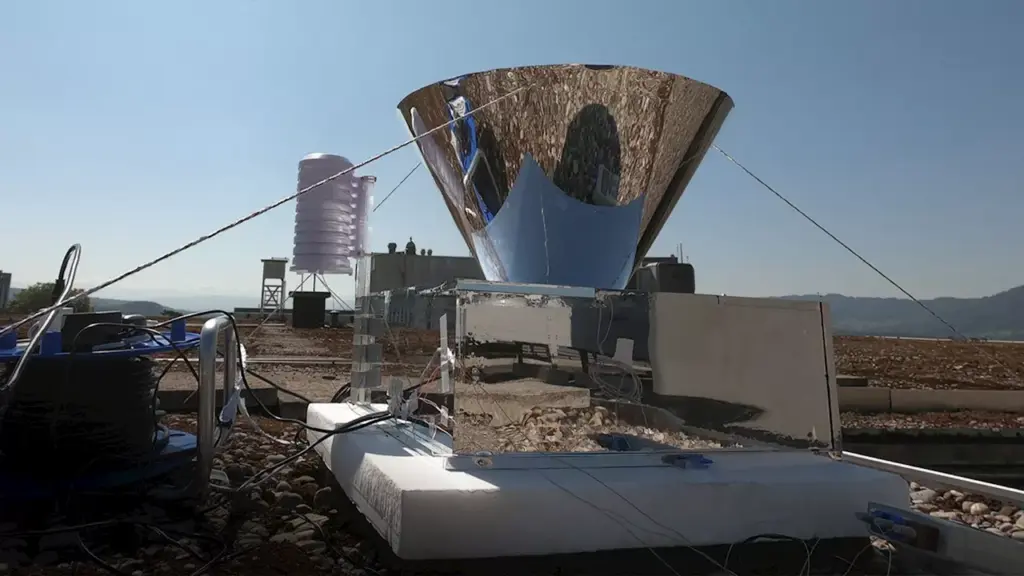
The team extended their research beyond the laboratory by installing the technology on building rooftops and drainage pipes. They observed that as rainfall intensity increased, the electrical signals generated became stronger and more frequent. This responsiveness enabled the system to differentiate between light, moderate, and heavy rain events, activating drainage pumps only as necessary. Such adaptability is crucial in urban environments, where flood prevention is vital.
“This technology enables urban infrastructure to monitor rainfall and respond to flood risks using only the energy of rain itself,” stated Professor Park. He envisions future integration into mobility systems, such as vehicles and aircraft, where CFRP materials are already prevalent.
The study’s first authors, Dr. Seong-Hwan Lee and Dr. Jae-Jin Kim, received support from Korea’s Ministry of Science and ICT and the National Research Foundation. The findings were published in the journal Advanced Functional Materials, highlighting the significant implications of this technology for sustainable city planning and climate resilience.
This advancement not only represents a leap forward in renewable energy utilization but also offers a practical solution to managing urban flooding, potentially transforming how cities respond to extreme weather events.