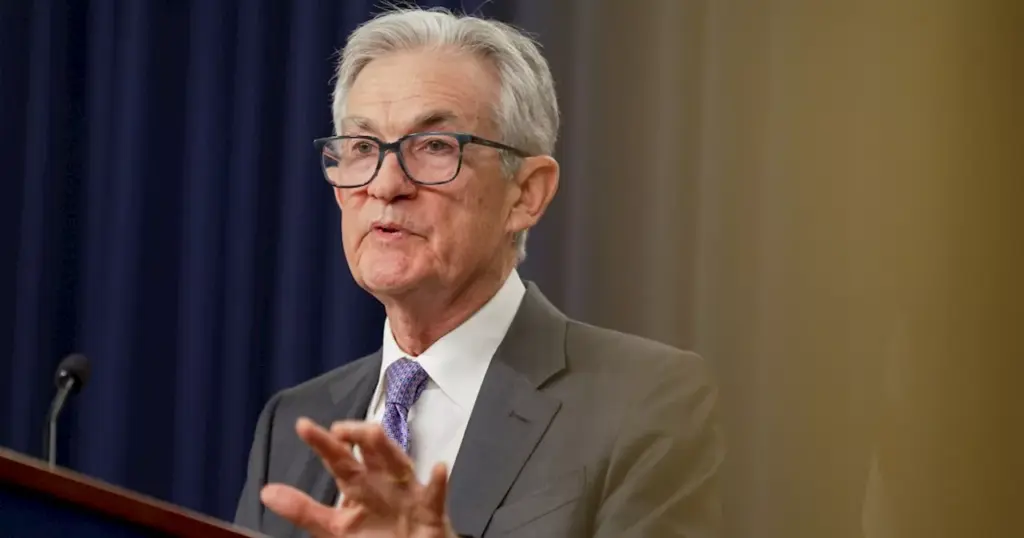
Federal Reserve Chair Jerome Powell is set to attend oral arguments at the Supreme Court on Wednesday, focusing on whether former President Donald Trump has the authority to terminate Fed governor Lisa Cook. This case comes amid ongoing tensions regarding the independence of the Federal Reserve and the political pressures surrounding its leadership.
The Supreme Court, which previously allowed Cook to remain in her position during its deliberations, is expected to hear the arguments in January. Powell’s attendance signals a strong commitment to preserving the autonomy of the Federal Reserve, particularly as he faces challenges from political figures advocating for direct influence over monetary policy.
Earlier this month, Powell revealed that the Department of Justice had served the Federal Reserve with grand jury subpoenas related to a $2.5 billion renovation of Fed buildings. The subpoenas emerged following Trump’s repeated calls for the central bank to lower interest rates and his public criticisms of Powell, whom he labeled as “too late” and “a major loser.”
The Federal Reserve has not commented on Powell’s attendance, which was initially reported by the Associated Press. NBC News has reached out to the White House for further insights regarding this high-profile legal matter.
In response to the potential indictment linked to his June testimony about the renovations, Powell stated, “those are pretexts.” He emphasized that the threat of criminal charges is a result of the Federal Reserve prioritizing public interest over presidential preferences.
In August, Trump announced his intent to remove Cook from her position, citing allegations of mortgage fraud made against her by William Pulte, director of the Federal Housing Finance Agency. However, the Federal Reserve Act restricts presidential authority to dismiss governors unless there is substantial evidence of wrongdoing. Cook has categorically denied the allegations, and reports suggest that financial documents may contradict Pulte’s claims.
Abbe Lowell, Cook’s attorney, asserted shortly after Trump’s announcement that the president “has no authority to remove Federal Reserve Governor Lisa Cook.” He described the attempt to dismiss her as lacking “any factual or legal basis.”
Cook’s term as a Federal Reserve governor is scheduled to conclude in January 2038, making this case particularly significant for the future of the Fed. As the Supreme Court prepares to hear arguments, the outcome may have lasting implications for the independence of the central bank and its governance structure.
The decision in this case could set a precedent regarding the limits of presidential power over independent regulatory agencies. As Powell navigates these turbulent waters, the focus remains on the broader ramifications for monetary policy and economic stability in the United States.