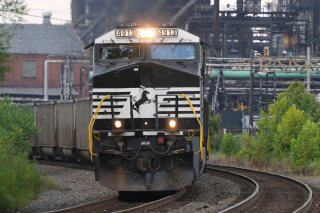
Norfolk Southern’s quarterly profit decreased by 12%, reflecting the challenges posed by an uncertain economy and significant one-time costs associated with its proposed merger with Union Pacific. In the fourth quarter, the Atlanta-based railroad reported a profit of $644 million, or $2.87 per share, down from $733 million, or $3.23 per share, during the same period the previous year. The figures were impacted by unusual expenses related to the merger and the 2023 derailment in East Palestine, Ohio, which added approximately $81 million in costs.
Despite these setbacks, Norfolk Southern’s adjusted earnings, excluding the merger and derailment charges, would have resulted in a profit of $725 million, or $3.22 per share. This figure surpasses the expectations of analysts surveyed by FactSet Research, who had predicted earnings of $2.78 per share.
Focus on Efficiency and Regulatory Challenges
CEO Mark George emphasized the company’s commitment to improving efficiency while progressing with the merger application that will be reviewed by the Surface Transportation Board. The initial application was rejected due to insufficient details, necessitating further documentation to satisfy regulatory requirements. Meanwhile, Norfolk Southern reported achieving $215 million in annual productivity savings last year.
In a statement, George noted, “In 2025, we strengthened the foundation of our railroad. We kept our cost commitments, maintained reliable service, and delivered measurable safety gains with the company’s best injury and accident rates in more than a decade.” These achievements come at a time when the broader economic landscape remains unpredictable, influenced significantly by the shifting trade policies of the current administration.
The proposed merger with Union Pacific, valued at $85 billion, aims to create a transcontinental railroad that would span over 50,000 miles across 43 states, connecting major ports on both coasts. However, the path to approval is likely to be complex, with various stakeholders, including shippers, competitors, and labor unions, voicing differing opinions on the implications of the merger.
As Norfolk Southern navigates these challenges, the focus remains on enhancing operational efficiency while awaiting regulatory clarity regarding the merger. The outcome of this high-stakes endeavor could reshape the freight rail landscape in the United States, impacting not only the company but also the broader economy.