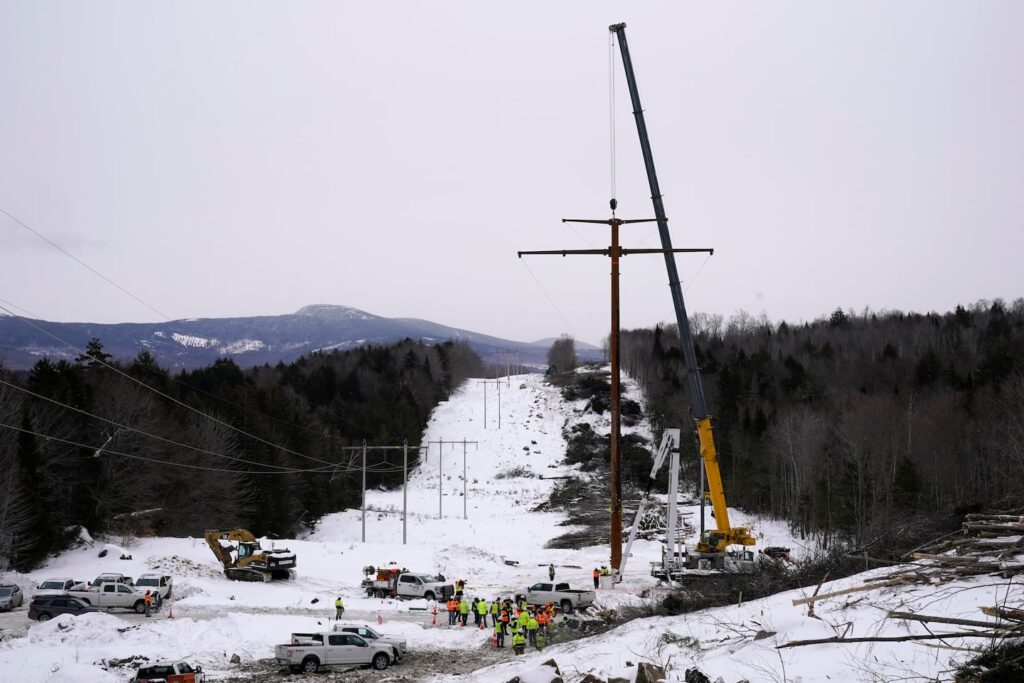
A new hydropower transmission line aimed at supplying electricity from Canada to Massachusetts has failed to deliver during a recent winter storm that hit New England. The 145-mile, $1.6 billion line, known as the New England Clean Energy Connect (NECEC), was celebrated just days before the extreme weather, which saw significant snowfall and frigid temperatures across the region.
The line, constructed by Avangrid, was expected to provide more than 1,000 megawatts of power, particularly crucial during severe weather conditions. However, the NECEC effectively went offline on the afternoon of January 27, 2024, as Hydro-Quebec, the public utility responsible for supplying the power, prioritized its own needs amid the cold snap. This situation arose during a period when the New England grid was most dependent on additional electricity supplies.
“Unfortunately for them, they went online the week before the coldest week in the last three or four years,” remarked Phil Shapiro, former chair of ISO New England, the organization overseeing the regional power grid. During the peak demand period, Hydro-Quebec not only withheld power from the NECEC but also imported electricity from New England through an older transmission line.
Despite the absence of power from the new line, the reliability of the New England grid was not compromised. However, the reliance on older, oil-fueled turbines to fill the power gap resulted in a significant rise in emissions. Reports indicated that nearly 40 percent of New England’s electricity was sourced from oil-fired plants during this period, leading to a two- to three-fold increase in carbon dioxide emissions compared to the previous Friday.
Serge Abergel, Hydro-Quebec’s US chief operating officer, highlighted the extreme cold in Quebec, which increased local demand for electricity. He assured that deliveries via NECEC would resume “as soon as we have the flexibility to do so.” The contracts between Hydro-Quebec and the three major electric utilities serving Massachusetts—Eversource, National Grid, and Unitil—include provisions for penalties should Hydro-Quebec fail to meet delivery obligations, although the specific repercussions for this incident remain uncertain due to the extreme weather conditions.
The NECEC project was initiated following a clean energy law passed in Massachusetts in 2016, which aimed to facilitate long-term contracts with Hydro-Quebec for hydropower. Governor Maura Healey, during a State House event on January 16, 2024, touted the line as a means to supply electricity for approximately one million homes, or up to one-fifth of the state’s electricity requirements.
However, the practical contribution of this new hydropower source during winter months may be limited. Hydro-Quebec has faced challenges in recent years, including drought conditions that have reduced its hydropower capacity, necessitating imports from New England. The recent events raise concerns about the NECEC’s reliability, especially during extreme weather when demand spikes.
Industry consultant Robert McCullough noted, “Hydro-Quebec is short on water and capacity this January. They quite possibly need our help even more than we need theirs.” In response to the high demand for heating during the cold snap, many power plant operators in New England shifted to backup oil generators, highlighting the need for fuel diversity within the grid.
The US Department of Energy granted ISO New England permission to allow various generators to operate beyond their typical environmental limits, a move made necessary by the extreme weather conditions. This request marked the first time ISO New England sought such an emergency measure under a provision of the Federal Power Act, designed to assist in weather-related emergencies.
As the region navigates these challenges, Dan Dolan, president of the New England Power Generators Association, emphasized the importance of maintaining older oil-fired plants as a necessary backup. “Prices are high, emissions are high,” he stated, “but this is why we maintain the fuel diversity of the grid online.”
State officials continue to monitor the situation closely, aware of Hydro-Quebec’s obligations and the penalties they may incur for failing to supply power. A spokesperson from Governor Healey’s office affirmed, “Our contract ensures that ratepayers will still see lower-priced electricity, regardless of the power flowing over the line.” As New England grapples with the implications of this event, the focus remains on ensuring reliable energy sources amid increasing demand in extreme weather conditions.