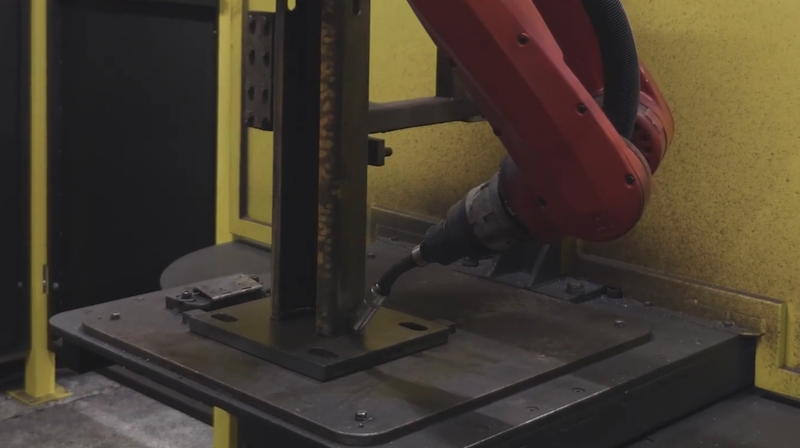
Comau, a leading provider of automation solutions, has unveiled a new robotic arc welding system designed to enhance productivity and reduce costs through the integration of artificial intelligence (AI). This development responds to the increasing challenges faced by steel companies in efficiently managing welding applications while ensuring the highest standards of production quality.
As the demand for skilled labor continues to decline, companies in the manufacturing sector are increasingly turning to advanced robotic solutions. These intelligent systems aim to address the dual challenges of labor shortages and the inherent risks associated with manual welding processes. By adopting automation, organizations can not only streamline their operations but also improve safety and consistency in their production lines.
The new robotic arc welding system incorporates state-of-the-art AI technology that allows it to adapt to various welding tasks with precision. This versatility enables manufacturers to optimize their processes, resulting in significant improvements in operational efficiency. Comau claims that their system can increase overall productivity by up to 30% while simultaneously lowering costs associated with labor and material waste.
Responding to Industry Challenges
The steel industry is facing unprecedented challenges that include not only a shortage of skilled workers but also increasing pressure to maintain high-quality output. According to industry reports, the need for automation solutions has never been more critical. The robotic welding system from Comau is positioned as a solution that meets these pressing needs by providing a reliable and efficient alternative to manual welding.
With this new technology, Comau aims to empower steel companies to enhance their production capabilities. The system is designed to be user-friendly, allowing operators to easily program and manage welding tasks, thereby reducing the learning curve associated with adopting new technologies.
Furthermore, the implementation of AI in welding applications enables real-time monitoring and adjustments, ensuring optimal performance at all times. This level of oversight can significantly mitigate the risks of defects and rework, which are common in traditional welding processes.
Future Implications for the Manufacturing Sector
The introduction of Comau’s robotic arc welding system is expected to have far-reaching implications for the manufacturing sector, particularly in regions where skilled labor shortages are acute. By investing in automation technologies, companies can not only secure their production lines but also create new opportunities for innovation.
The proactive approach taken by Comau aligns with a broader trend within the industry towards digital transformation. As manufacturers seek to remain competitive, the integration of AI and robotics will likely become a standard practice rather than an exception.
As the manufacturing landscape continues to evolve, the adoption of advanced robotic solutions will play a crucial role in shaping the future of production. By addressing labor shortages and enhancing efficiency, technologies like the one introduced by Comau are paving the way for a more sustainable and productive industrial environment.
In summary, Comau‘s latest development in robotic welding not only responds to existing challenges faced by steel companies but also sets the stage for a new era of manufacturing driven by automation and AI. This innovation reflects the ongoing evolution in the industry, highlighting the importance of adaptability in a rapidly changing economic landscape.