The Director of Citizenship and Immigration Services, Joseph Edlow, has proposed significant changes to the U.S. citizenship test, describing the current version as “too soft.” This push for reform comes on the heels of two recent terrorist attacks in the United States, which have amplified discussions around immigration vetting and national security.
On October 5, 2023, a gunman drove a vehicle into Temple Israel, a synagogue located in West Bloomfield Township, Michigan, injuring one security guard in what was labeled a targeted act against the Jewish community. On the same day, a military veteran and supporter of ISIS opened fire at Old Dominion University in Norfolk, Virginia, resulting in two fatalities, including the shooter, and injuring two others.
Edlow, who took office in August 2023, has been vocal about the need for a complete overhaul of the naturalization process. He argues that the current civics and English language exam does not adequately reflect the knowledge and integration expected of prospective citizens. In an exclusive interview, Edlow stated, “The test needs to reflect the letter and the spirit of what Congress intended. It’s important for people to understand English, our history, our government… and the way the test is written and executed right now doesn’t meet that bar.”
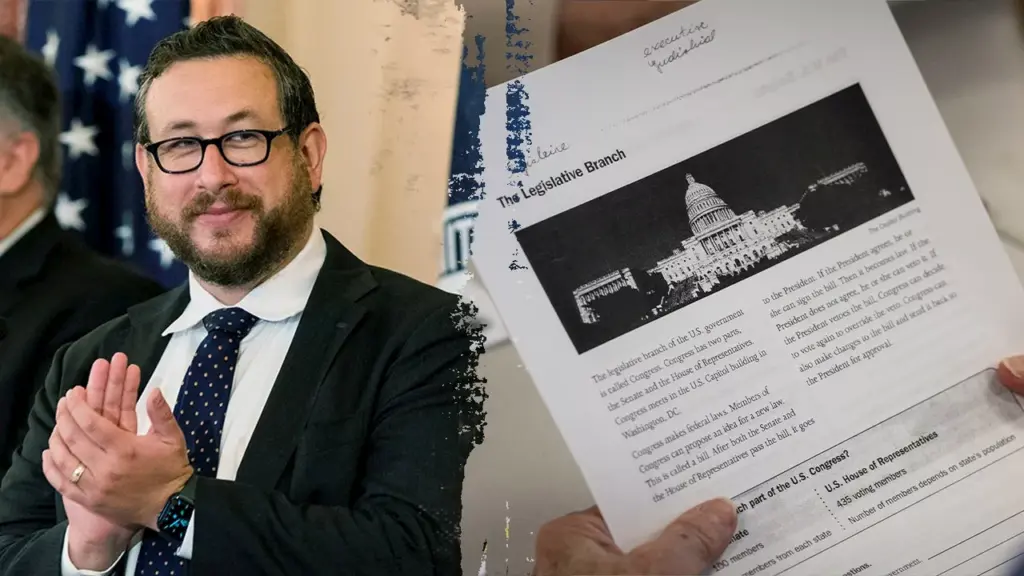
Under the existing structure, applicants must answer six out of ten civics questions correctly from a pool of 100, covering fundamental aspects like the Constitution and U.S. history. They are also required to read and write simple sentences in English. Edlow contends that these requirements are insufficient. He envisions a more rigorous test that assesses a wider range of U.S. principles and evaluates English proficiency throughout the entire interview process.
Edlow emphasized the importance of ensuring that the integrity of the naturalization process is upheld and that it reflects genuine assimilation expectations. He pointed to a recent executive order that designates English as the national language, asserting that fluency is “an imperative part” of the American dream.
In addition to citizenship reforms, Edlow addressed longstanding issues within the H-1B visa program, which permits U.S. employers to hire skilled foreign workers. He criticized companies for hiring the highest-skilled workers while offering the lowest wages, a practice he believes undermines U.S. graduates, particularly in STEM fields. Edlow highlighted instances where third-party contractors facilitated layoffs of American workers, forcing them to train their foreign replacements.
This sentiment has gained traction among some political figures. In July 2023, Vice President JD Vance condemned Microsoft for laying off approximately 9,000 American employees while simultaneously applying for 4,700 H-1B visas, labeling this contradiction as “a bulls— story.”
The H-1B visa program has become a contentious issue within the Republican Party, creating divisions between populist factions and pro-business conservatives. Prominent business leaders, such as Elon Musk, have expressed strong support for the program, even referring to its opponents as “hateful, unrepentant racists.”
To enhance oversight of the H-1B program, Edlow announced that the U.S. Citizenship and Immigration Services (USCIS) will collaborate with the Department of Labor to improve worksite enforcement, ensuring that wages and job descriptions accurately reflect actual employment conditions. He stated, “We want to make sure those brought over are truly commensurate with the roles they’re filling — and not part of a cost-cutting scheme.”
In addressing welfare-related immigration policies, Edlow indicated that USCIS plans to revisit the public charge rule, a legal standard that restricts green card eligibility for applicants likely to rely on public assistance. This rule, which has existed for over a century, was more strictly enforced during the Trump administration but reverted to less stringent guidelines under the Biden administration. Edlow acknowledged that any changes would require careful study to ensure accurate evaluation of applicants’ potential reliance on taxpayer-funded benefits.
Beyond policy adjustments, Edlow has flagged the growing backlog of cases at USCIS as a pressing operational challenge, which he claims poses national security risks. “Backlogs that continue to grow are nothing short of a national security threat to this country,” he stated, attributing this issue to the Biden administration’s resource allocation, which he argues shifted away from legal immigration priorities amid record levels of illegal border crossings.
While Edlow has committed to reducing adjudication times, he cautioned that the process may involve short-term difficulties. “There may be short-term pain,” he said, “but we will decrease the backlog at a steady clip while protecting the integrity and security of the system.”
As discussions around immigration policy continue to evolve, the proposed reforms represent a significant shift in the approach to U.S. citizenship, emphasizing both national security and the importance of assimilation for new citizens.