UPDATE: Scientists forecast that by the year 2001, humans could embark on round trips to both Mars and Venus, but ticket prices are projected to vary dramatically. Two prominent scientists made these claims at a symposium held on March 15, 1966, in Washington, D.C., generating excitement and debate about the future of space travel.
Dr. Eugene B. Konecci of the National Aeronautics and Space Council estimated that a round-trip ticket to Mars would cost about $6,400 for a 160-pound traveler. However, Dr. Wesley A. Kuhrt from United Aircraft Laboratories projected the cost could soar as high as $35,000, reflecting differing visions of the future of space exploration.
This bold prediction comes as part of a larger discussion on the potential for commercial space travel. Konecci emphasized that prices might drop significantly, potentially to as low as $1,600 for one-way travel, as advancements in interplanetary transportation continue to develop. He highlighted that a round trip would require additional calculations for food and oxygen, leading to his higher estimate.
Konecci stated, “We figure about double a person’s weight for the overall cost for a one-way trip.” This insight underscores the complexities and costs associated with space travel, making it imperative for future travelers to consider additional factors beyond body weight alone.
Kuhrt, envisioning the future of space travel, suggested a variety of options for different budgets. He proposed a 24-hour Earth-orbit trip for $1,250 and a six-day round trip to the moon for $10,000. For those aiming for a longer adventure, trips to Venus could last 18 months and cost $32,000, while a leisurely 24-month round trip to Mars might run about $35,000.
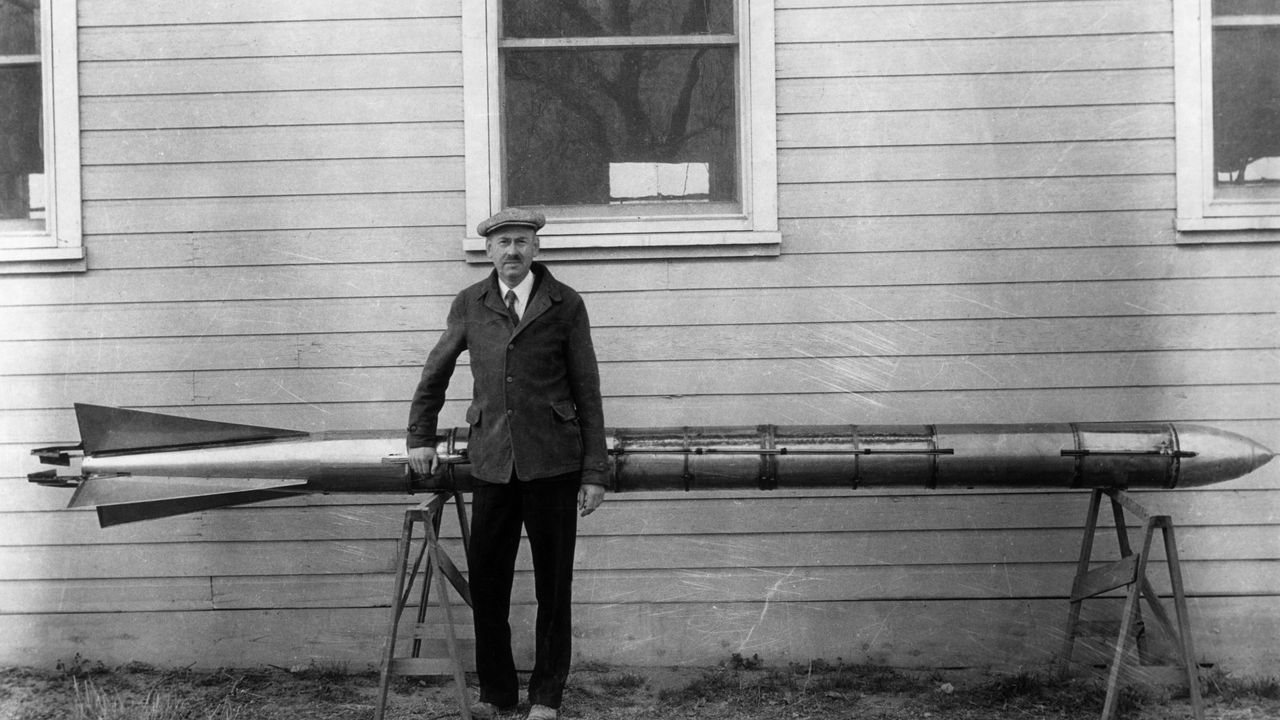
The symposium was held in honor of the late Dr. Robert Hutchings Goddard, recognized as the father of modern rocketry, who launched the world’s first liquid-fueled rocket just over 40 years ago. His legacy continues to inspire new generations of scientists and dreamers alike.
The implications of these predictions extend beyond just ticket prices. Daniel J. Fink, deputy director of the Defense Department’s Division of Defense Research and Engineering, shared his insights on future technological advancements. He highlighted the potential for mechanical robots to perform construction work in space and the evolution of communication technologies, including systems capable of real-time language translation.
Fink remarked, “To call Sweden from Washington in the year 2001, you might pick up your all-language videophone.” This vision paints a picture of a future where global communication is seamless, enhancing connections across borders.
As discussions continue to unfold regarding the feasibility of space travel, the world watches with bated breath. The predictions made today could pave the way for a new era of exploration, entertainment, and human connection.
Stay tuned for further updates as this story develops and scientists work toward making these ambitious plans a reality. The future of interplanetary travel is closer than we think!