An international team of researchers has made significant strides in resolving the long-standing Hubble tension, a discrepancy in the measured and calculated rates of the universe’s expansion. By simulating magnetic forces present in the early universe, the team suggests that these primordial magnetic fields could play a crucial role in understanding cosmic phenomena.
The Hubble tension arises from the difference between the universe’s expansion rate as measured by the Hubble Space Telescope and the rate predicted by the cosmic microwave background data. This inconsistency has puzzled scientists, prompting various theories and investigations. The latest research, published in March 2024, presents a novel approach that could bridge this gap.
Magnetic Forces in the Early Universe
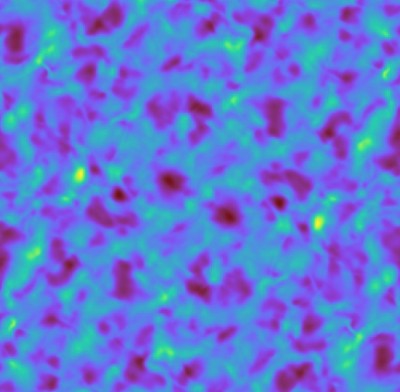
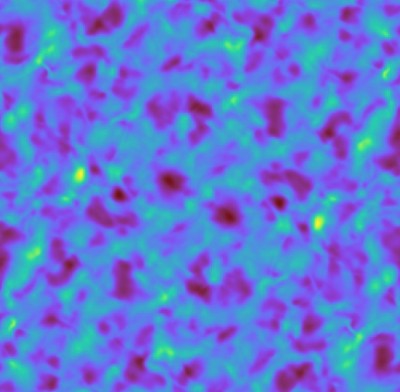
The researchers conducted simulations that modeled the behavior of magnetic fields shortly after the Big Bang. They found that these primordial magnetic forces could influence the rate of expansion by affecting the dynamics of cosmic structures. This effect may account for the discrepancies observed in current measurements.
According to the lead researcher from the University of California, Berkeley, the simulations indicate that these magnetic fields were not merely passive bystanders in the evolution of the universe. Instead, they actively contributed to shaping the cosmos by influencing the distribution of matter and energy. The findings suggest that a deeper understanding of these forces could provide insights into other cosmic mysteries as well.
The team utilized advanced computational techniques to simulate the universe’s conditions during its infancy, focusing on the interactions between magnetic fields and matter. Their results reveal a complex interplay that could help astronomers reconcile the conflicting data surrounding the Hubble constant.
Implications for Cosmology
This groundbreaking research holds implications not only for the Hubble tension but also for our comprehension of the universe’s overall structure. By integrating magnetic fields into cosmological models, researchers could refine their understanding of the early universe and its evolution.
The European Space Agency is closely monitoring these developments, as they could influence future missions aimed at exploring cosmic phenomena. Improved models may enhance the accuracy of measurements taken by telescopes and other observational tools, allowing for a more precise understanding of the universe’s expansion.
The findings underscore the importance of interdisciplinary collaboration in tackling complex scientific questions. By bringing together experts from various fields, the international team has opened new avenues for research that could redefine our grasp of the cosmos.
As the study gains traction in the scientific community, further investigations will be necessary to validate these results and explore their broader implications. The research not only sheds light on the Hubble tension but also sets the stage for future breakthroughs in cosmology and astrophysics.