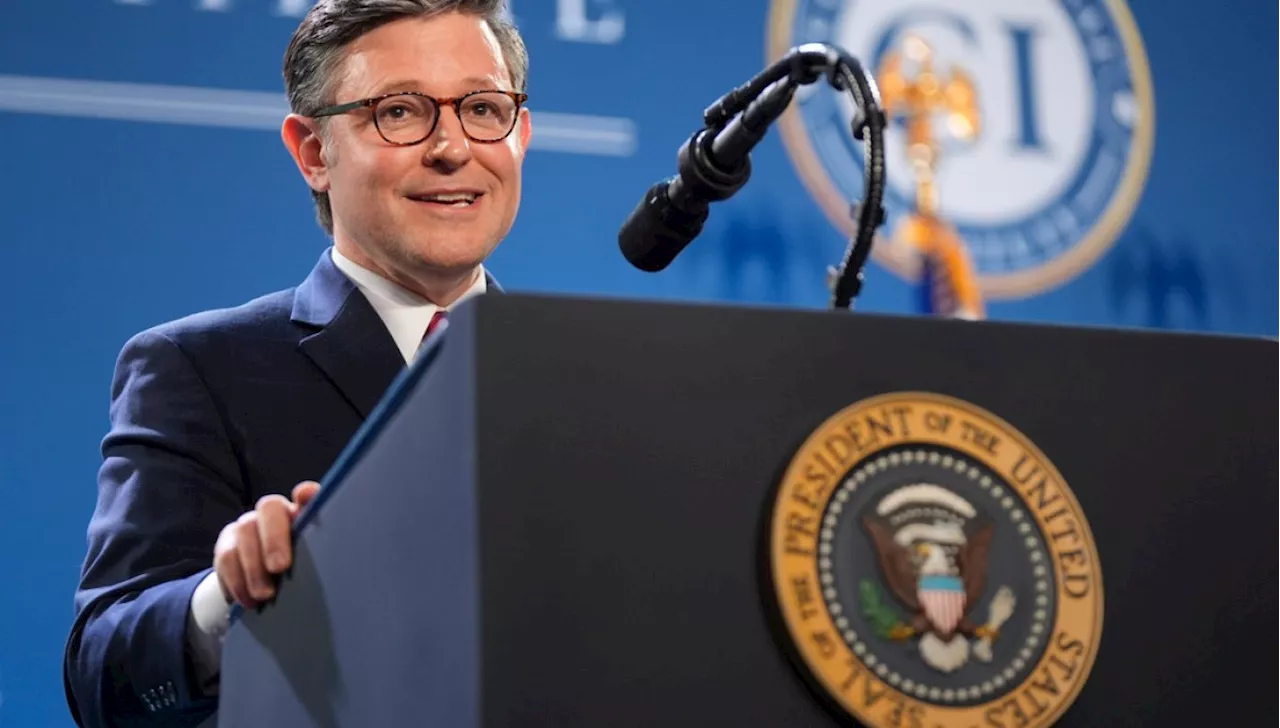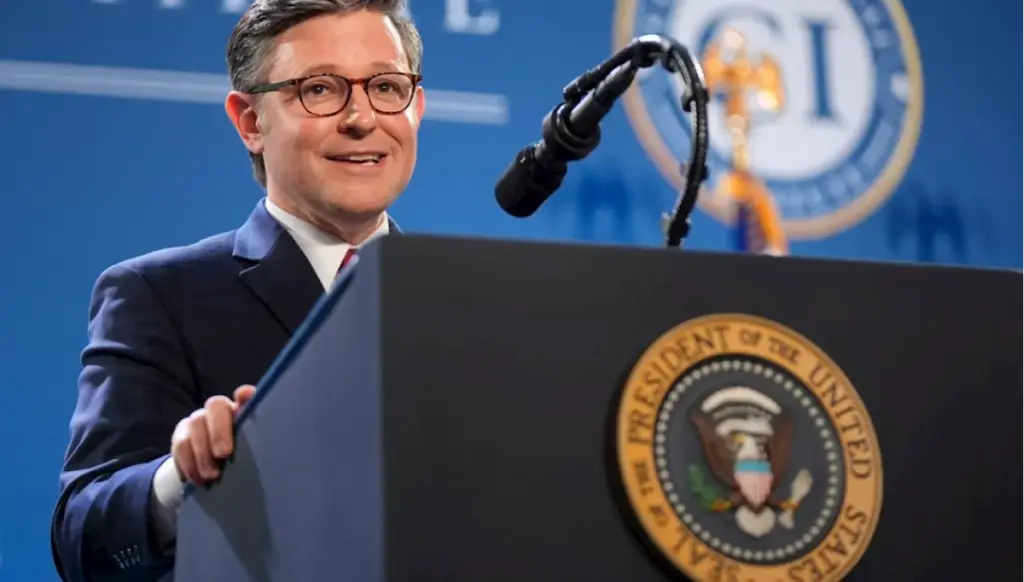
House Speaker Mike Johnson expressed optimism regarding the possibility of a second Republican reconciliation bill before the upcoming November midterm elections. This statement comes despite skepticism from key members of his party, including Jason Smith, the top Republican tax writer, who indicated that such legislation is unlikely to materialize.
During a fireside chat at the House GOP’s issues conference held at the Trump National Doral hotel in Florida, Johnson stated, “It will not be as big, but it can be just as beautiful.” His remarks aimed to rally support for the initiative, even as internal doubts about its feasibility were voiced by others in the GOP.
Johnson’s assertion of potential success contrasts sharply with Smith’s assessment. When asked about the likelihood of a second reconciliation bill passing, Smith remarked, “If you look at history, it is extremely rare for two partisan reconciliation bills to ever pass in the same Congress.” He went on to express his desire for such a bill but emphasized the challenges, commenting, “I just don’t think it will ever happen.”
The passage of the initial reconciliation legislation, dubbed the One Big Beautiful Bill Act, took approximately seven months to finalize. At that time, the House GOP held a three-seat majority. Currently, Johnson’s party holds only a slender one-seat margin, complicating efforts to pass any substantial legislation.
In a strategic approach, Johnson mentioned that he has been mapping out the priorities of various Republican factions using a whiteboard. He aims to identify overlapping interests to ensure unified support for any proposed bill. “I’m a little more optimistic than Jason Smith… but I’ve encouraged him, encouraged all our colleagues, ‘Look, let’s be realistic,’” Johnson said.
Despite the obstacles, Johnson reiterated that reconciliation remains a priority for his leadership team. He alluded to having three pages of potential policies for inclusion in a new bill, stating his intent to refine the list based on areas of consensus. However, he acknowledged the existing divisions within Congress, particularly concerning issues like funding for the Department of Homeland Security, which he believes hinder bipartisan cooperation.
Johnson concluded with a realistic outlook, saying, “I understand, really, the only tool we have in the toolbox to do something that’s very important… I don’t think [Democrats] will do it. And so we can’t take reconciliation off the table.”
As the midterm elections approach, the prospects of additional legislation will be closely monitored, with party dynamics playing a pivotal role in shaping the legislative landscape.