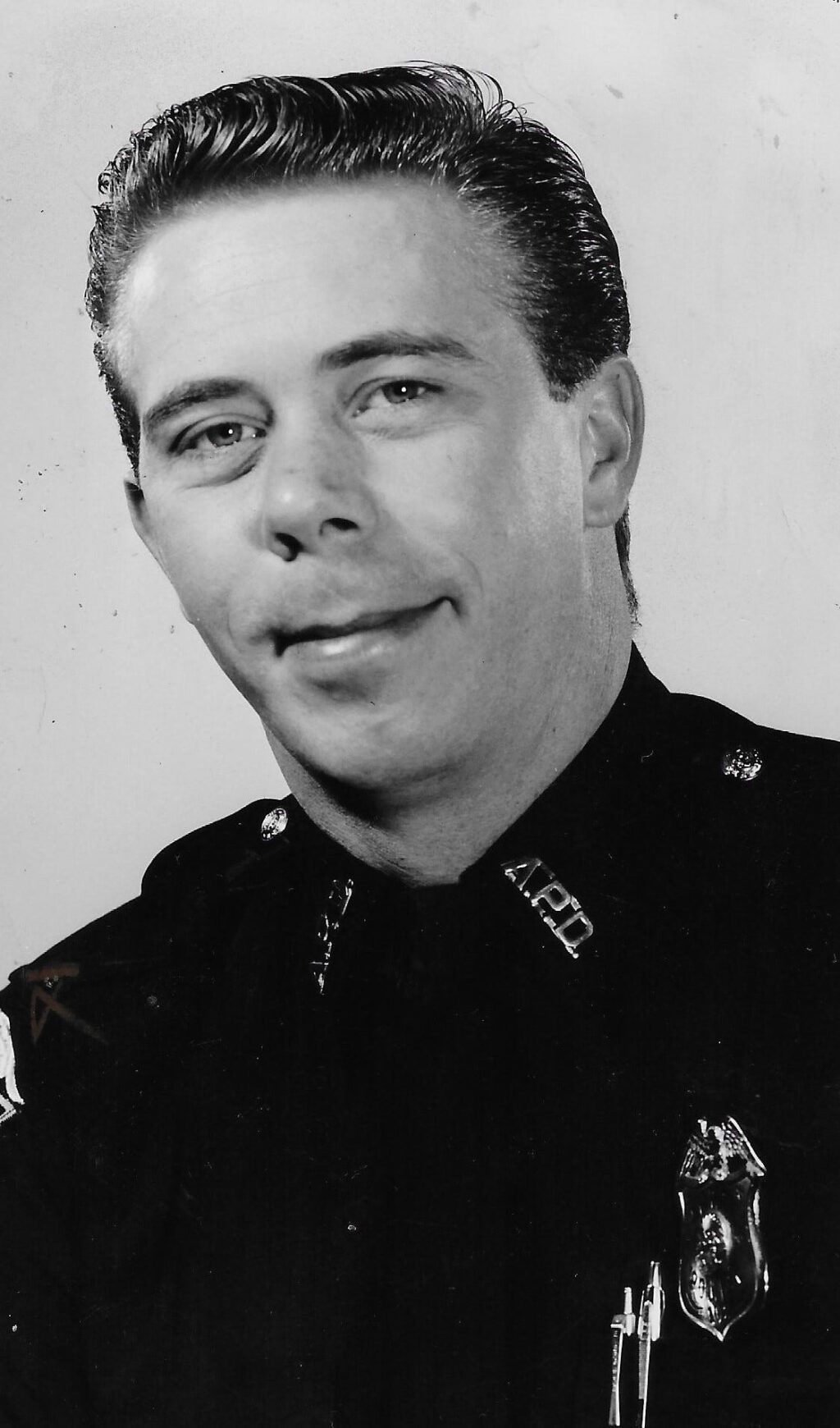
In a remarkable story that intertwines music and law enforcement, Harvey Russell, known as “The Singing Policeman,” forged a unique path in Akron, Ohio. Born on October 22, 1933, Russell balanced a career as a police officer with his passion for music, becoming a local celebrity in the process. His journey reflects the vibrant culture of rock ‘n’ roll in the 1950s and the dedication of a public servant.
Russell, originally named Harvey R. Petrafka, grew up in a modest household on Noah Avenue. His father worked as a Firestone tire inspector while his mother was a homemaker. The family anglicized their surname in the 1950s. He graduated from Buchtel High School in 1951, where he was actively involved in football and even won a birdhouse-building competition sponsored by the local education board.
After serving four years in the U.S. Air Force during the Korean War, Russell returned to Akron in 1955. He married Jane Morgan, a fellow Buchtel graduate, and began working as a telephone installer. Yet, the allure of music beckoned. As rock ‘n’ roll gained traction, Russell formed a doo-wop group with friends, initially named The Nomads and later rebranded as The Wonders.
The group gained attention with their song “Cuttin’ Out,” which caught the ear of radio disc jockey Joe Mayer at WAKR. Mayer offered to manage the group, leading to their recording of “Cuttin’ Out” and its flipside, “Well Now,” on Reserve Records. They opened for iconic artists such as Chuck Berry and Jerry Lee Lewis, performing at venues including the renowned Copacabana in New York City.
In 1959, The Wonders recorded new tracks for the Ember label, but Russell soon felt the strain of life on the road, missing his family. In 1960, he applied to join the Akron Police Department and began working as a patrolman. His annual salary of $5,200 (approximately $57,000 today) was modest, prompting him to continue writing and performing music on the side.
As a solo artist, Russell recorded “Out of My Teens” and another version of “Cuttin’ Out.” In 1963, he partnered with former Four Aces singer Al Alberts, leading to the successful recording of “Fly Me to the Moon,” which sold over 10,000 copies in one week in Cleveland. This success garnered attention from music industry publications like Billboard and Variety.
From Music to the Badge
In 1964, Russell and audio engineer Jerome Wilson launched the Akron Recording Co., a professional studio. They catered to local musicians seeking to record their work, highlighting the challenges and realities of the music business. Russell emphasized the importance of exposure over profits, noting that even a modest record release could lead to enhanced opportunities for artists.
In a pivotal moment in 1966, Russell collaborated with his teenage neighbor, keyboardist Jerry Buckner, and his band, The Rogues. Together, they recorded “Shake Sherry,” which became a regional hit, topping charts in Akron and Cleveland for four weeks. The song’s success propelled them to appearances on local television shows and led to a contract with Roulette Records, where “Shake Sherry” reached No. 35 on the Billboard Hot 100.
Russell took a 90-day leave from the police force to tour with Dick Clark and make appearances on television shows like “American Bandstand.” Following this brief burst of fame, the band attempted to replicate their success with the single “Keep-A-Knockin’,” but it did not achieve the same level of popularity.
In 1969, Russell released “A Policeman’s Prayer,” a heartfelt tribute to his fellow officers. The record resonated deeply within the law enforcement community and was later inducted into the American Police Hall of Fame & Museum in Miami.
A Lasting Impact
By the 1970s, Russell shifted his focus entirely to his policing career, earning promotions to sergeant and lieutenant. He oversaw various units within the police department, including juvenile affairs and auto theft. Notably, he earned accolades for his compassionate handling of sensitive situations, such as when he successfully defused a tense standoff involving a veteran with PTSD.
Reflecting on his career, Russell expressed pride in his role as a uniformed officer, emphasizing the daily interactions that allowed him to assist his community. After retiring in January 1991 due to a heart attack, Russell enjoyed a peaceful life with his family, traveling with his wife.
Russell passed away on December 20, 2018, at the age of 85. His legacy as “The Singing Policeman” continues to resonate, with new generations discovering his music through platforms like YouTube. His story serves as a reminder of the unique ways individuals can blend their passions with their professions, leaving a lasting mark on their communities.