The U.S. Space Force has decided to pause all national security launches involving the Vulcan Centaur rocket due to a recurring malfunction with its solid rocket boosters. This decision follows an incident during the rocket’s most recent mission on February 12, 2024, which raised significant concerns regarding the vehicle’s reliability for critical operations.
The Vulcan Centaur, developed by United Launch Alliance (ULA), had its inaugural flight in January 2024 and has since completed four missions. During two of these flights, including the recent USSF-87 mission, one of the rocket’s boosters exhibited an anomaly shortly after liftoff. Although the rocket’s core-stage engines compensated effectively, the recurrence of these issues prompted the Space Force to take precautionary measures.
Col. Eric Zarybnisky of the U.S. Space Force addressed the situation during a media roundtable at the Air Force Association’s Warfare Symposium on February 25. He noted, “This is going to be a many-months process as we work through the exact technical issue that happened and the corrective actions we need to take to make sure this doesn’t happen again.”
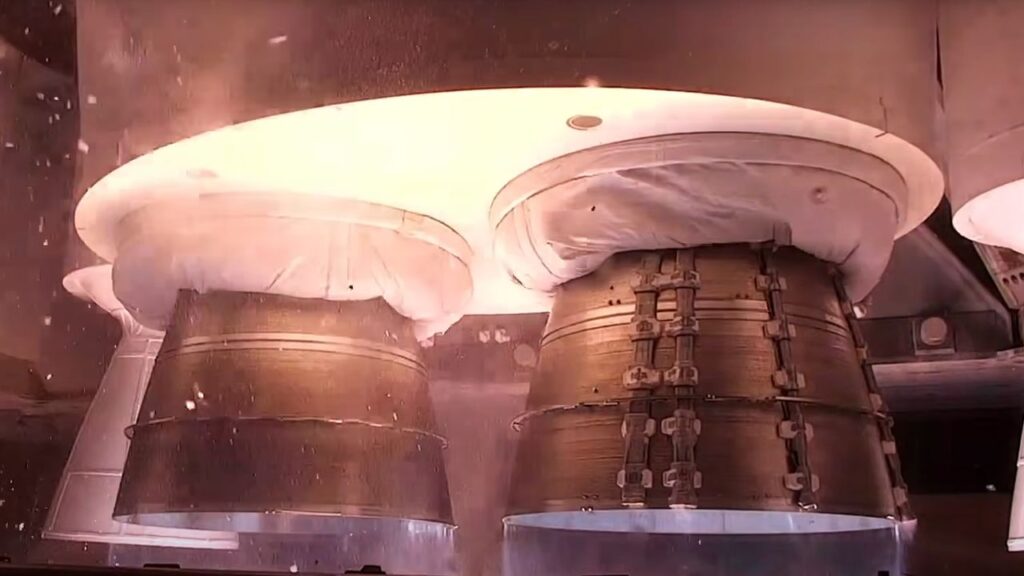
The USSF-87 mission, which was intended to enhance the United States’ Geosynchronous Space Situational Awareness Program (GSSAP), involved deploying two reconnaissance satellites into a geosynchronous transfer orbit. Approximately 20 seconds into the flight, one of Vulcan’s four solid rocket boosters displayed a visible anomaly; the two BE-4 engines managed to stabilize the rocket, ensuring the mission’s success despite the setback.
This incident is not the first for the Vulcan rocket. In October 2024, during a national security payload certification launch, a manufacturing defect led to a nozzle detachment from one of the solid rocket boosters, temporarily veering the vehicle off its intended course. Currently, it remains unclear what caused the anomaly during the recent USSF-87 launch, as ULA’s investigation is still in progress.
“We are going to work through this anomaly until we launch again on Vulcan,” Zarybnisky reiterated to reporters on February 25. He emphasized, “Until this anomaly is solved, we will not be launching Vulcan missions.”
The suspension of Vulcan launches presents a considerable disruption for ULA, which has plans for over two dozen national security missions with this rocket in the coming years. The company faces additional challenges following the resignation of longtime CEO Tory Bruno at the end of 2025. Bruno has since taken a position at Blue Origin, a competitor that also manufactures the BE-4 engines used in the Vulcan rocket.
As ULA works to address the technical issues with the Vulcan Centaur, the U.S. Space Force will remain vigilant in ensuring that national security objectives are not compromised. The outcome of this investigation and the subsequent corrective actions will play a crucial role in determining the future of ULA’s launch schedule and the reliability of the Vulcan rocket for critical missions.