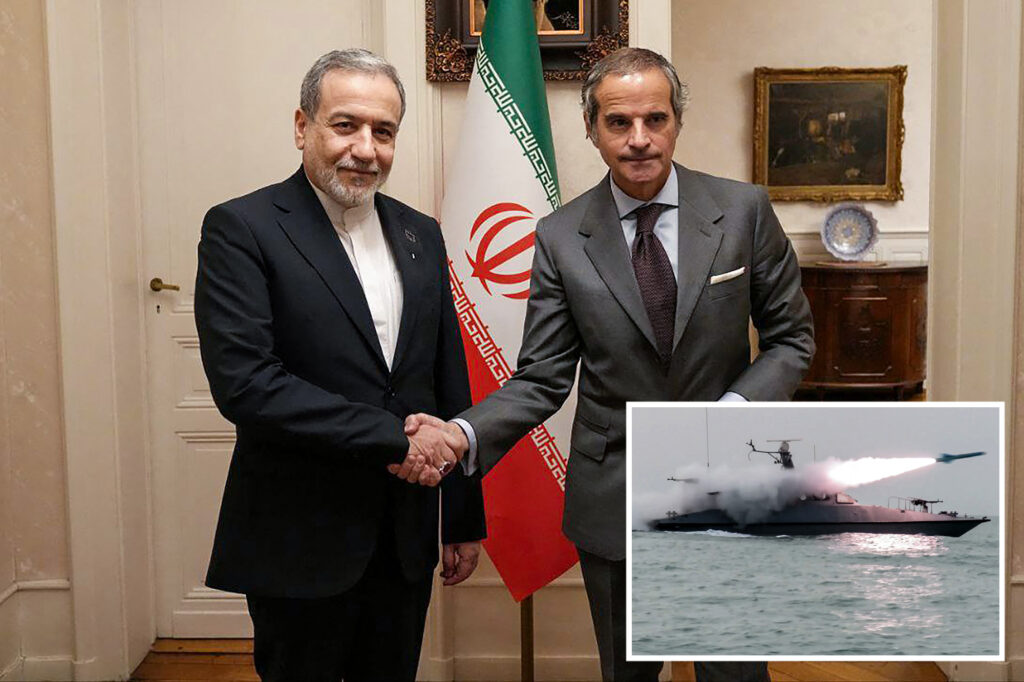
In this handout photo released by the Iranian Ministry of Foreign Affairs, Iran's Foreign Minister Abbas Araghchi (L) shakes hands with International Atomic Energy Agency head Rafael Grossi during a meeting in Geneva on February 16, 2026. Iran's foreign minister has arrived in Geneva ahead of a second round of negotiations with the US, Iranian state television said February 16, as Washington keeps up pressure on the Islamic republic. (Photo by Iranian Ministry of Foreign Affairs / AFP via Getty Images) / XGTY / RESTRICTED TO EDITORIAL USE - MANDATORY CREDIT "AFP PHOTO / Iranian Ministry of Foreign Affairs" - NO MARKETING NO ADVERTISING CAMPAIGNS - DISTRIBUTED AS A SERVICE TO CLIENTS SWITZERLAND-UN-IRAN-US-NUCLEAR-DIPLOMACY
The head of the United Nations atomic watchdog has urged the United States to secure a nuclear deal with Iran, highlighting the urgency of monitoring the Islamic Republic’s enriched materials. Rafael Grossi, the director general of the International Atomic Energy Agency (IAEA), emphasized that despite military actions against Iran’s nuclear facilities last year, the country still possesses significant quantities of highly enriched uranium.
During recent discussions in Geneva, Grossi warned that Iran’s uranium enrichment, currently at 60%, remains dangerously close to the 90% weapons-grade threshold. According to US intelligence assessments, if Iran were to reach this level, it could produce an atomic weapon in a matter of weeks. Grossi stated, “The problem is, we don’t have much time,” indicating that immediate action is necessary to prevent further escalation.
Grossi elaborated on the situation, stating, “Most of the material that Iran had accumulated up until June 2022, despite the bombings and the attacks, is still there, in large quantities.” He noted that while some material may be less accessible, it remains under their control. “From a non-proliferation standpoint, the material remains,” he added, underscoring the critical need for a diplomatic resolution to avoid military conflict in the region.
The urgency of securing a deal is compounded by rising tensions. Former President Donald Trump has publicly declared that he would not permit Iran to develop nuclear weapons, threatening military action if a deal is not reached soon. “If it doesn’t happen, it doesn’t happen. But bad things will happen if it doesn’t,” Trump stated, hinting at possible aggressive measures within the next week.
As the US bolsters its military presence in the Middle East, the USS Gerald R. Ford, a second aircraft carrier, is en route to the region. This increase in military resources raises concerns about escalating tensions and the potential for conflict that could destabilize the already volatile Middle East.
Grossi’s remarks highlight a critical juncture in international diplomacy regarding Iran’s nuclear program. The IAEA chief emphasized the need for a robust agreement to prevent military action and ensure ongoing monitoring of Iran’s nuclear activities. “There is so much interest—I would say urgency—in reaching an agreement that would prevent new military action in the region,” he said.
The international community watches closely as negotiations continue, recognizing the high stakes involved in the bid to rein in Iran’s nuclear ambitions. The call for decisive action from the US underscores the delicate balance of diplomacy and security in addressing one of the most pressing challenges in global nuclear non-proliferation efforts.