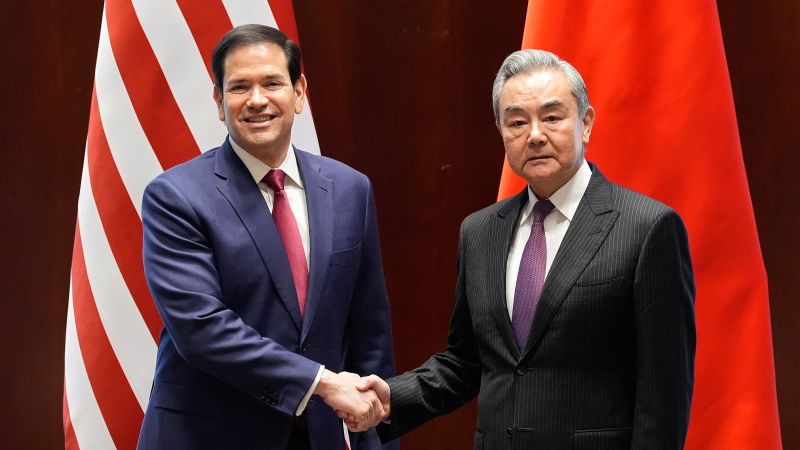
UPDATE: Tensions escalated at the Munich Security Conference on February 18, 2023, as Chinese Foreign Minister Wang Yi directly challenged US Senator Marco Rubio in a high-stakes diplomatic showdown. Just minutes after Rubio asserted that the United States and Europe “belong together,” Wang declared, “China and the EU are partners, not rivals,” signaling a strategic bid to strengthen ties with Europe while undermining US influence.
The clash underscores a significant moment in international relations, as the US reassesses its long-standing alliances and China seeks to fill the void. “As long as we firmly grasp this point, we will be able to make the right choices… and promote the continuous progress of human civilization,” Wang emphasized.
Rubio’s conciliatory speech aimed to reassure European leaders of the Trump administration’s commitment to their alliance, even as he urged them to bolster their support. He stated that the current international system must be “rebuilt,” a sentiment that reflects growing discontent with traditional US-led frameworks.
Wang’s remarks were a sharp rebuttal aimed at US policies, suggesting that the problems with the international order stem from “certain countries that magnify differences” rather than systemic failings. He called for China and Europe to reject “unilateral practices” and safeguard free trade, marking a clear challenge to US dominance.
The stakes are particularly high as Donald Trump is expected to make a pivotal visit to China in the coming months. Wang expressed confidence regarding China-US relations but warned of a potential conflict if the US continues down a path of “decoupling” and disregard for China’s interests, particularly concerning Taiwan.
While Rubio characterized communication between the two major powers as essential to avoid geopolitical malpractice, it remains uncertain how receptive Europe is to China’s overtures. European leaders are grappling with a significant trade deficit with China and concerns over its military assertiveness, particularly in the South China Sea and around Taiwan.
Amid these tensions, Taiwan’s Foreign Minister, Lin Chia-lung, criticized Wang’s portrayal of China as a peaceful nation, highlighting the country’s recent “military provocations” as contrary to UN principles. Wang, however, dismissed such claims, positioning China as a “steadfast force for peace.”
The Munich gathering serves as a critical barometer for the evolving dynamics of global diplomacy. With many US allies recalibrating their foreign policies amid a shifting relationship with the US, Beijing sees an opportunity to reshape the narrative. As the chairman of the conference noted, the US-led post-1945 international order is facing unprecedented challenges, and the implications of these developments could reverberate globally.
As the conference unfolds, the world watches closely to see how these diplomatic maneuvers will influence the balance of power between the US, China, and Europe. The urgency of these discussions cannot be overstated, as they will set the stage for future international relations and potentially redefine alliances in a rapidly changing global landscape.