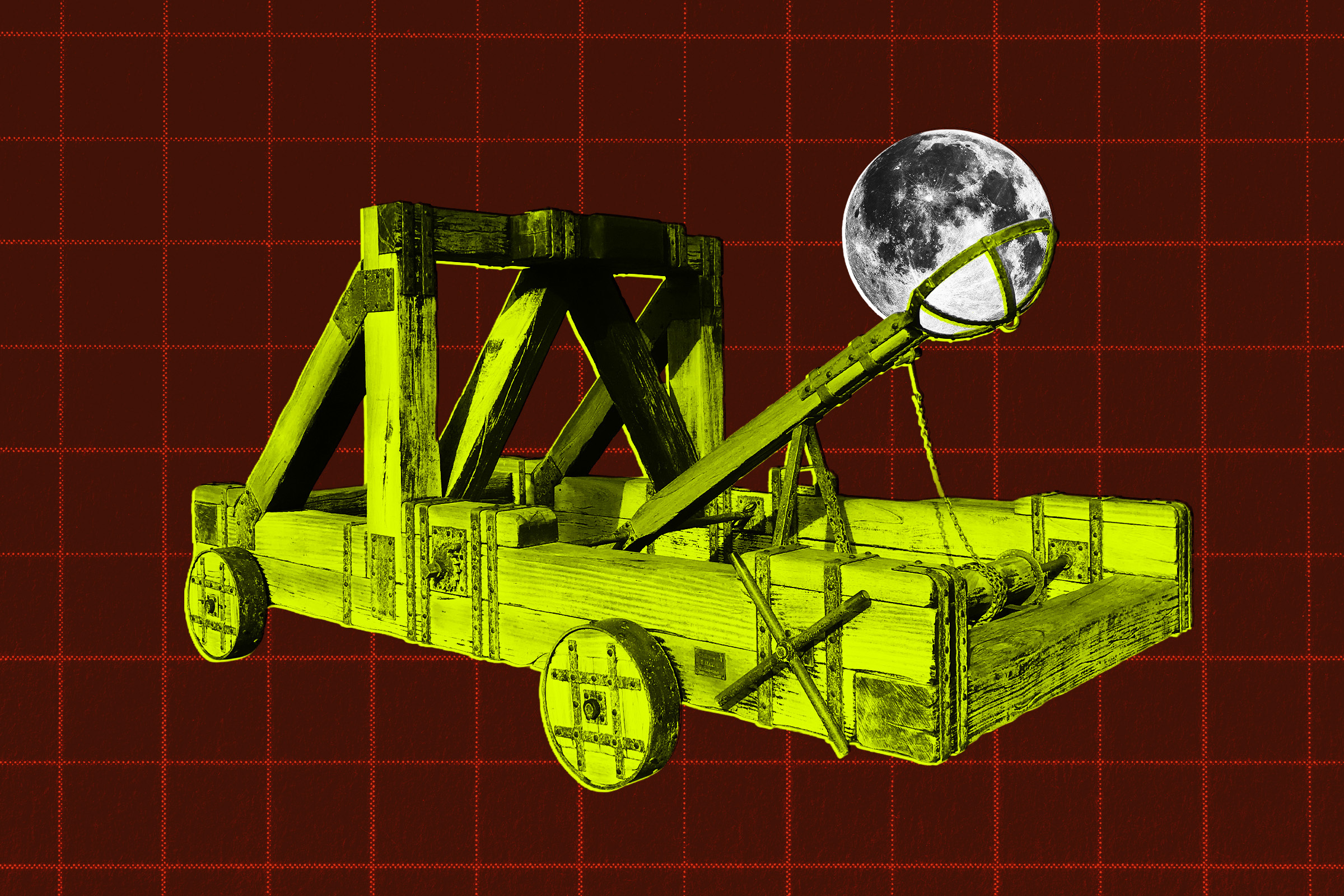
Elon Musk has announced ambitious plans for a lunar factory to produce artificial intelligence (AI) satellites, according to reporting from the New York Times. During a recent all-hands meeting at xAI, Musk’s AI company acquired by SpaceX, he unveiled the proposal to build an enormous electromagnetic catapult on the Moon. This catapult would serve as a launch system for the satellites, which Musk envisions as key components in expanding his AI initiatives.
Musk’s vision for the Moon includes constructing a facility dedicated to manufacturing AI satellites, which he believes will enhance computing power for his projects. He described the concept as a “mass driver,” a technology capable of launching payloads into space using electromagnetic forces. “You have to go to the Moon,” Musk stated during the meeting. He expressed excitement about the potential implications for intelligence at a scale not yet imagined.
The announcement follows SpaceX’s acquisition of xAI, ahead of what is expected to be a significant initial public offering (IPO). Musk has argued that advancing AI technology through space-based infrastructure is essential. He envisions launching data centers into Earth’s orbit to harness unlimited solar energy, alongside a constellation of AI satellites that he likens to a “sentient sun.”
Shifting Priorities: From Mars to the Moon
Musk’s focus on lunar ambitions marks a notable pivot from his previous stance on lunar exploration. Historically, he has criticized Moon missions, branding them as distractions from his overarching goal of colonizing Mars. Musk has consistently promoted the idea of making life “multiplanetary,” emphasizing the importance of sending humans to Mars. He previously set optimistic timelines for achieving this, including a promise in 2017 that the first mission to Mars would launch in 2022.
Despite this shift, Musk maintains that he is not abandoning Mars. He described the Moon as a crucial stepping stone in his long-term plans. In his vision, establishing a self-sustaining city on the Moon will precede human missions to Mars. He outlined a timeline on social media, suggesting that a lunar city could be established within a decade, while Mars colonization might take over twenty years. Musk expressed that the Moon’s development is a more immediate priority for securing the future of civilization.
Musk’s statements reflect a broader strategy for SpaceX, one that prioritizes rapid development and scalability in space technologies. He believes that advancements in AI, particularly when combined with lunar resources, could accelerate the company’s ambitions across the solar system.
As he continues to push the boundaries of space technology, Musk’s latest initiative underscores a significant transformation in his approach to extraterrestrial exploration, indicating a complex interplay between immediate goals and long-term aspirations.
This renewed focus on the Moon, coupled with the integration of AI technologies, could reshape the landscape of space exploration and technology development in the coming years.