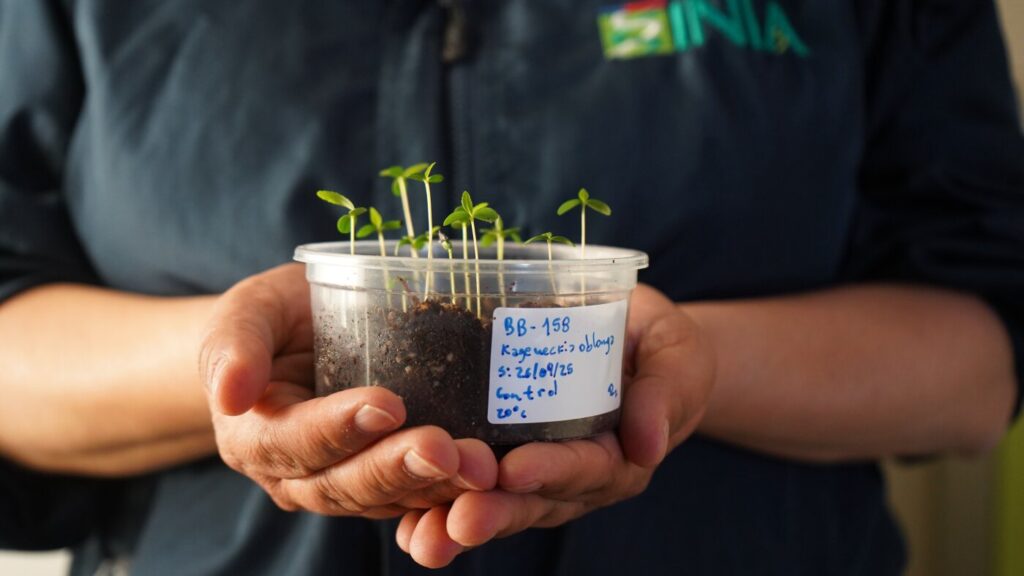
Chile is taking significant steps to preserve its unique plant biodiversity through the Initihuasi seed bank, located in the Atacama Desert, one of the driest places on Earth. This facility plays a pivotal role in safeguarding the genetic material of Chile’s flora, ensuring that the nation’s rich biodiversity can withstand future environmental challenges.
The town of Vicuña, known as the birthplace of Chile’s first Nobel Laureate, Gabriela Mistral, serves as the nearest settlement to the Initihuasi seed bank. The facility is strategically positioned away from large populations to protect its seeds from potential catastrophes, according to researcher Ana Sandoval, who has been with the center for over a decade. “The most important thing for a seed bank is to be away from large populations,” Sandoval noted, adding that its remote location is crucial for preservation efforts.
The Initihuasi seed bank features earthquake-proof concrete walls and utilizes a walk-in freezer set at -4 degrees Fahrenheit with 15% humidity for optimal seed storage. The facility employs aluminum pouches instead of glass vials to minimize risk during seismic events. Inside, researchers handle a diverse collection of seeds, including those from plants previously thought extinct, such as a blue crocus rediscovered in the Andes near Santiago.
Chile boasts a remarkable 4,655 plant species, with approximately 46% of these being endemic, meaning they exist only within the country. While the seed bank is not open to public requests, it supports research initiatives under exceptional circumstances. The team also conducts field expeditions to gather rare seeds from Chile’s diverse climates.
One noteworthy project involves the endangered flower diplostephium paposanum, which was collected and reproduced at the Initihuasi seed bank. A pilot scheme for its reintroduction into the wild is currently in development. Some specimens from Initihuasi are part of a global network of seed banks, with duplicates of various bean species stored in Colombia and maize species held in Svalbard, Norway.
Chile’s agricultural sector significantly contributes to its economy, with fresh fruits, cereals, and wine being key exports. Carlos Furche, director of the national network of seed banks and former Chilean Minister of Agriculture, emphasized the importance of the Initihuasi facility. He described it as a “Noah’s Ark” for Chilean agriculture, preserving essential genetic materials.
Furche, who has dedicated over 50 years to food systems worldwide, pointed out the challenges posed by climate change. “Within a few decades, conditions in Chile will be very different,” he stated, stressing the need for adaptive strategies. The Initihuasi seed bank is positioned to be a crucial resource in meeting these future agricultural demands.
As Chile grapples with the implications of climate change, the preservation efforts at Initihuasi represent a proactive approach to securing the future of its unique biodiversity. The work being done at this seed bank not only safeguards the nation’s flora but also sets a precedent for global conservation efforts.