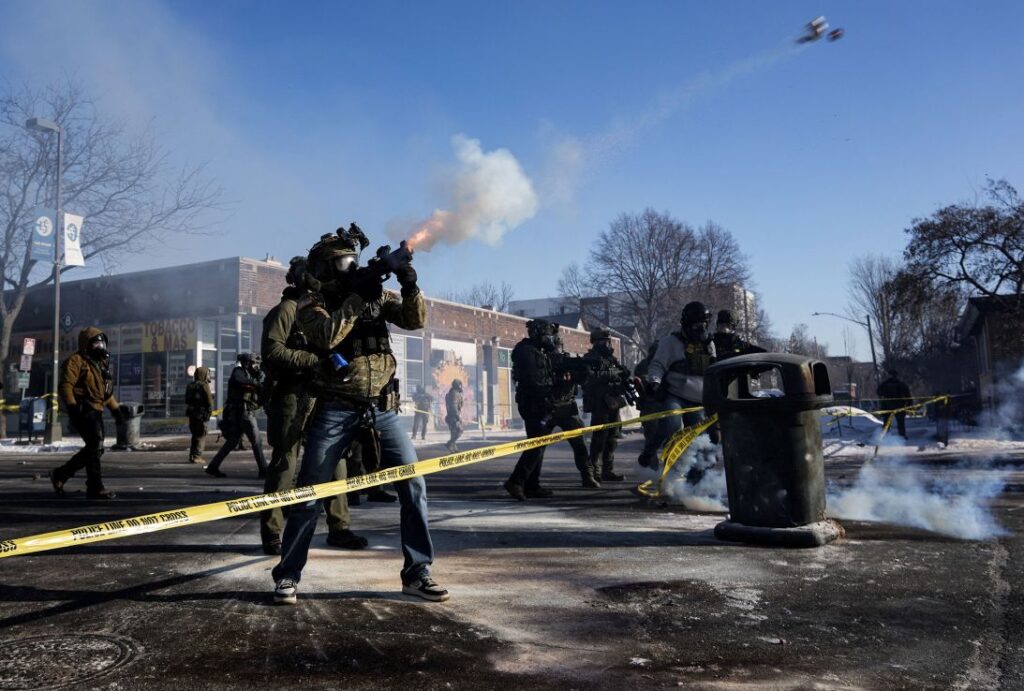
January 2024 marked a tumultuous month for President Donald Trump, characterized by a series of controversial actions both domestically and internationally. As the year began, Trump’s administration ramped up its immigration enforcement tactics, leading to significant turmoil in Minnesota and abroad. The president’s efforts to project strength were met with both fierce resistance and tragic consequences, raising questions about the boundaries of his authority and the implications of his policies.
Amidst a backdrop of escalating tensions, Trump sought to reinforce his position as a powerful leader. A notable event occurred on January 3, when Venezuelan President Nicolás Maduro was apprehended in a bold operation carried out by U.S. special forces. Marco Rubio, Secretary of State, described the raid as a blow to Maduro’s oppressive regime, which has been criticized for its handling of the Venezuelan populace. However, the operation also sparked discussions about the ethical implications of such military interventions.
Tragedy struck in Minnesota, where the enforcement of immigration policies led to the deaths of two individuals, Renee Good and Alex Pretti. Both were killed during confrontations with federal agents while responding to protests against Trump’s immigration agenda. Their deaths have sparked outrage and have positioned them as symbols of the administration’s aggressive stance. Videos depicting these incidents circulated widely, amplifying public concern and leading to a backlash against the Trump administration’s approach to immigration enforcement.
The emotional impact of these events was felt acutely in Minnesota, where communities grappled with the ramifications of federal tactics that many perceived as excessive. Local authorities, including Democratic Governor Tim Walz, have voiced their opposition to the administration’s methods, comparing the current political climate to historical injustices. Walz’s remarks, which drew parallels to the treatment of Jewish children during the Holocaust, highlighted the gravity of the situation and the deep divisions within the state and the nation.
As the administration navigated these complex challenges, Tom Homan, the president’s immigration czar, acknowledged the need to temper enforcement actions. Homan suggested that a reevaluation of tactics might be necessary, particularly as public sentiment shifted. A recent poll indicated that even some members of the Republican Party were beginning to question the administration’s hardline immigration policies.
On the international front, Trump’s ambitions faced hurdles as he attempted to assert U.S. dominance in global affairs. His controversial demand for Denmark to cede Greenland during a speech at the World Economic Forum in Davos drew widespread criticism. The suggestion that military force could be employed to secure the territory raised alarms among allies and further strained transatlantic relations.
The president’s approach to foreign policy has been characterized by a willingness to challenge established norms. His dismissive attitude towards international law, combined with a focus on personal morality as a guiding principle, has led to concerns about the implications for global stability. Critics argue that Trump’s actions risk relegating the U.S. to a position of isolation, while supporters contend that a firmer stance is necessary for national security.
In a notable moment, Trump accepted a Nobel Peace Prize medal on behalf of Venezuelan opposition leader María Corina Machado. This gesture, while symbolic, did little to advance the cause of democracy in Venezuela, leaving many disillusioned with the administration’s ability to effect meaningful change.
As January drew to a close, the situation in Iran escalated, with reports emerging of violent crackdowns on anti-regime protests. Trump’s administration renewed threats against the Iranian government, further complicating an already volatile landscape. The deployment of military assets to the region raised concerns about potential conflict, with implications for U.S. forces and allies alike.
The events of January 2024 illustrated the complexities of Trump’s presidency, highlighting both the power he seeks to wield and the limitations that opposition—both at home and abroad—imposes upon him. As the political landscape evolves, it remains to be seen how Trump’s administration will adapt to the challenges it faces, both from within the United States and on the global stage. The month served as a stark reminder of the ongoing struggles surrounding immigration, international relations, and the moral responsibilities of a global power.