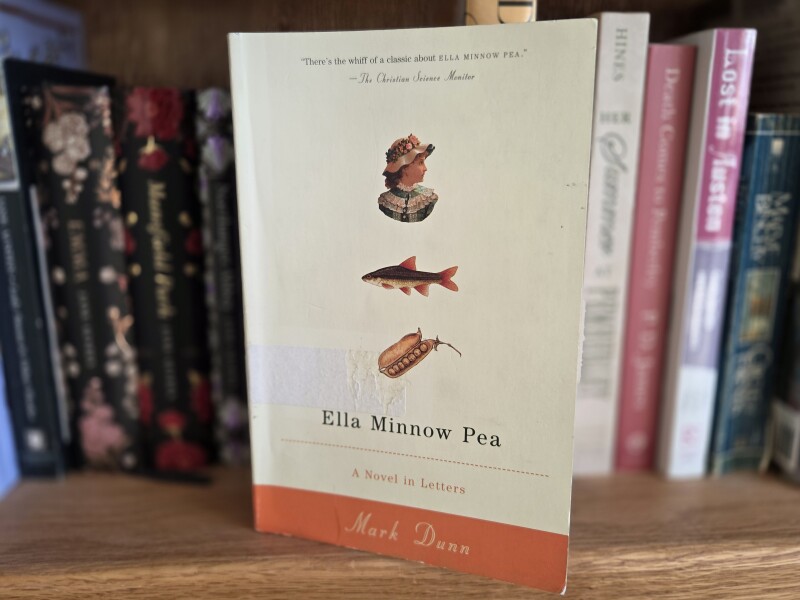
“Ella Minnow Pea” is a unique epistolary novel by Mark Dunn that presents an engaging exploration of language and communication. Set on the fictional Nollop Island, located off the coast of South Carolina, this 2001 publication stands out for its clever narrative style and thought-provoking themes.
A Quirky Premise and Setting
The story unfolds through a series of letters exchanged between characters, immersing readers in a world that values the written word above all else. Nollop Island is dedicated to Nevin Nollop, the fictional creator of the famous pangram, “The quick brown fox jumps over the lazy dog.” Known for its slower pace of life and a purported higher intellect than the continental United States, the island initially appears to be an idyllic haven.
However, the tranquility is shattered when the letter “z” falls from the town’s monument dedicated to Nollop’s sentence. The town council interprets this incident as a divine message, resulting in a bizarre law prohibiting the use of the letter “z.” Those who disobey face severe consequences, including potential banishment from the island.
Challenges and Resilience
The protagonist, Ella Minnow Pea, an eighteen-year-old resident, initially dismisses the ruling as absurd. In an act of defiance, she hosts a farewell party for the letter at midnight. Yet, as more letters fall from the monument, the council extends its prohibitions to other letters, creating a communication crisis that disrupts daily life. The islanders face public humiliation and exile for unintentional infractions, leading to abandoned businesses and broken families.
Despite the mounting challenges, Ella remains determined to restore normalcy to her community. She becomes the last hope for Nollop Island, as she takes on the daunting task of crafting a pangram shorter than Nollop’s original sentence. If she succeeds, the council has pledged to lift its oppressive mandates. As the story progresses, the narrative cleverly mirrors the restrictions imposed on Ella, as each falling letter also disappears from the text.
The author’s innovative approach not only enhances the humor but also emphasizes the importance of language and the freedom of expression. Readers are encouraged to pay close attention to the evolving format, particularly the date notation, as the restrictions tighten.
“Ella Minnow Pea” is more than just a light-hearted tale; it is a thought-provoking commentary on the constraints of communication and the resilience of the human spirit. It invites readers to reflect on the significance of language and the consequences of its limitations. This delightful book promises to leave a lasting impression, making it a recommended read for anyone seeking both entertainment and insight.
For those interested in books, entertainment, and engaging content, follow Bourke’s Bookshelf on Facebook for weekly updates and interactive discussions.