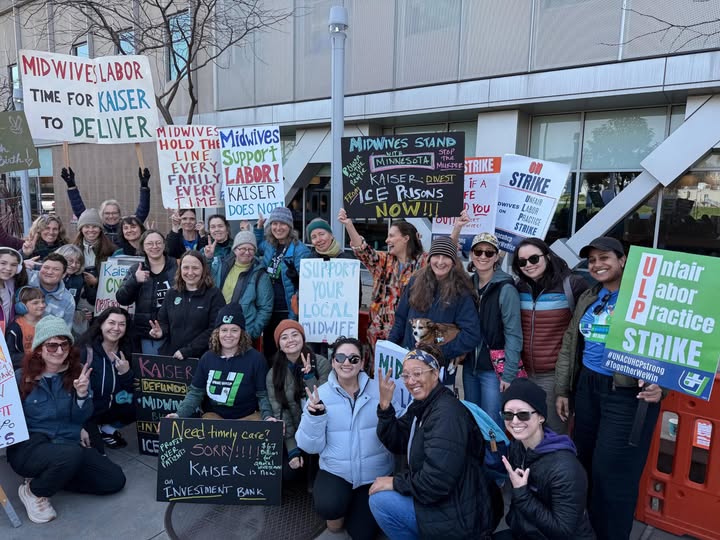
More than 31,000 frontline registered nurses and healthcare professionals began a strike on March 25, 2024, at Kaiser Permanente facilities across California and Hawaii. This protest, the largest strike of healthcare professionals this year, affects over two dozen hospitals and hundreds of clinics. The workers claim that Kaiser management has unlawfully undermined contract negotiations, prompting the strike to continue until a fair agreement is reached that protects patient care and respects the rights of caregivers.
Hannah Bronsky Peña, a certified nurse and midwife who has worked in Vallejo and Vacaville for the past decade, expressed the strong community support during the strike. “It was a really good response, and we had a lot of community support,” Bronsky Peña stated. “There were a few hundred of us showing a lot of energy and fighting the good fight.” She noted that passing cars honked in solidarity, a sign of widespread backing for the striking workers.
The strike is organized by the United Nurses Associations of California/Union of Health Care Professionals (UNAC/UHCP). Bronsky Peña and her colleagues argue that Kaiser’s tactics focus more on silencing workers than addressing critical issues such as unsafe staffing, delayed patient care, and deteriorating working conditions. “Kaiser’s own communications to employees reveal exactly why we are striking,” said Charmaine S. Morales, RN and UNAC/UHCP President. She criticized the company’s messages, which she claims pressure workers not to strike and intimidate them against participating.
In response to the strike, Kaiser Permanente issued a statement on March 24, asserting its commitment to local bargaining. The organization aimed to finalize new contracts for employees and their families. Bronsky Peña mentioned that while there are currently no future meetings scheduled, Kaiser is prepared to negotiate at short notice.
Negotiations between Kaiser and UNAC/UHCP have been ongoing for over seven months, marking the longest negotiations in national bargaining history. Kaiser emphasized that these discussions occur during a period of rising healthcare costs, which pose a risk to millions of Americans. “This underscores our responsibility to deliver fair, competitive pay for employees while protecting access and affordability for our members,” Kaiser stated.
According to Kaiser, employees in the Alliance already earn, on average, about 16 percent more than comparable roles in other healthcare organizations, with some markets reporting up to 24 percent higher pay. The company claims that its current proposal includes a historic 21.5 percent wage increase over the life of the contract, with 16 percent within the first two years. When including step increases and local adjustments, the average increase could reach approximately 30 percent.
Despite these claims, many Kaiser employees disagree with the management’s assessment. They contend that the company has stalled negotiations, which prompted the union to file unfair labor practice charges with the National Labor Relations Board. The charges allege that Kaiser violated federal labor law by abandoning good-faith bargaining and undermining workers’ rights.
Bronsky Peña voiced her frustrations, stating, “This all feels like retaliation for us unionizing. They want to keep wages stagnant and want to take away some aspects of our benefits.” She stressed the importance of advocating for fair treatment while ensuring quality care for patients.
Frontline caregivers have also voiced concerns over Kaiser’s communications, which they say warn employees about potential consequences of striking and encourage reporting union activities to management. Morales emphasized that “caregivers should not be pressured or frightened for standing up for patient safety.” She reiterated that the strike aims to restore safe staffing levels, timely access to care, and respect for healthcare professionals.
While limited talks are anticipated to continue, striking workers are prepared to remain on the picket lines as long as necessary to secure a fair contract and hold Kaiser accountable for its actions. Kaiser’s statement on March 24 acknowledged the strike’s potential to disrupt services, affirming that patient care remains a priority.
“We take any potential disruption to services seriously,” Kaiser stated, adding that contingency plans had been in place for months to ensure continued access to safe, high-quality care. During the strike, Kaiser indicated that hospitals and nearly all medical offices would remain open, with some appointments shifting to virtual care as necessary.
Kaiser also noted that staffing would include physicians, experienced managers, and trained personnel, with additional licensed contract professionals brought in as needed. Many Kaiser employees have volunteered to work in strike locations, demonstrating their commitment to maintaining operational continuity during this challenging period.